Bosnia votes as wartime divides drive campaigns
Voters will elect officials across multiple tiers of government, in a complex system that has held the partitioned country together since a 1995 peace deal.
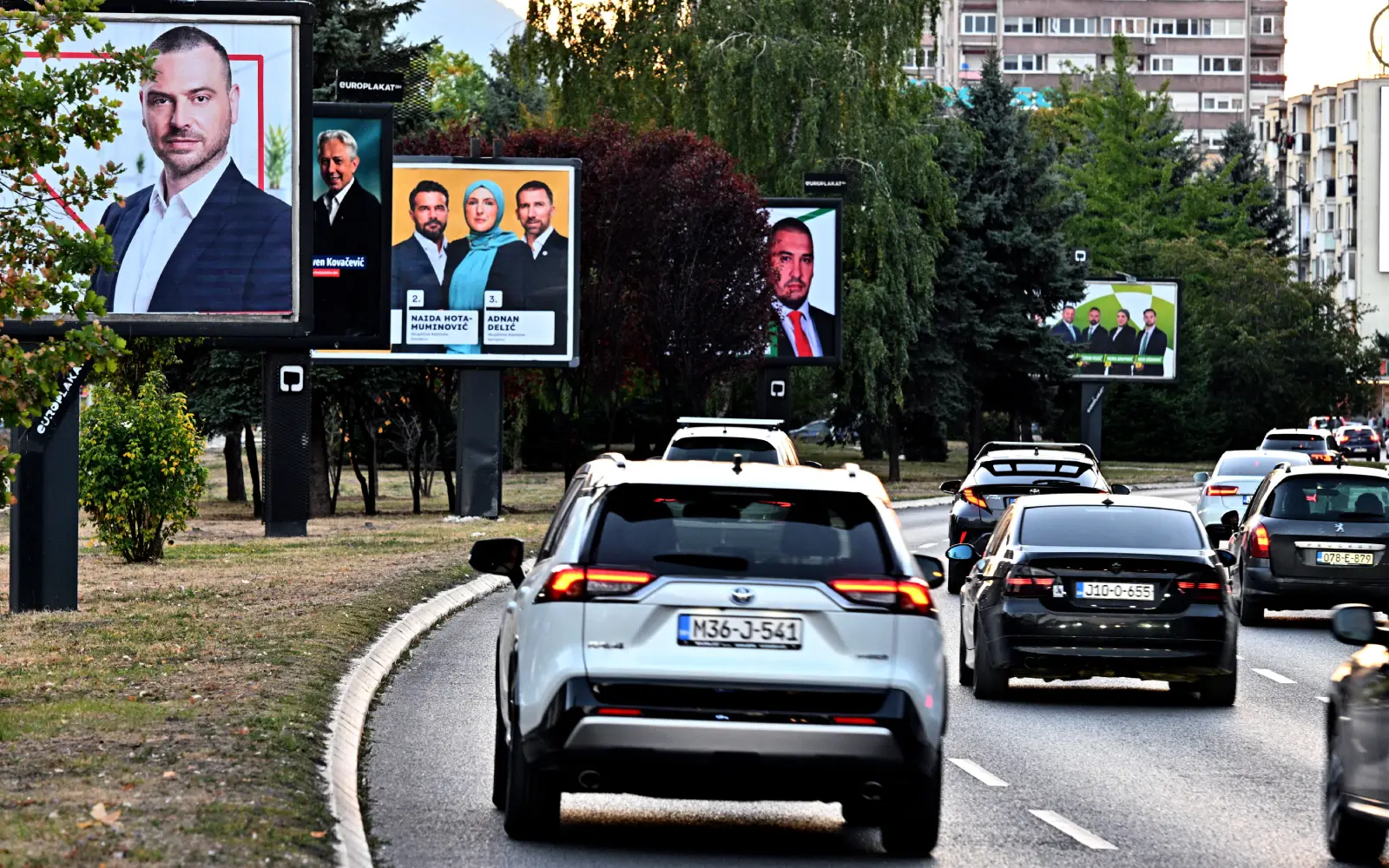
Bosnia and Herzegovina is set to hold general elections on Sunday, following years of political instability and failed reforms. The complex system of government, established in the 1995 peace deal that ended the 1992-1995 war, will see voters elect officials at various levels. The most significant race is for the tripartite presidency, divided among Bosniak, Serb, and Croat ethnic groups. However, the major parties' repeated use of war-era rhetoric and division has frustrated some voters.
Activist Adi Selman of the Karton Revolucija protest group expressed pessimism about the elections, stating that they will not change much. "The choice is limited to political parties that have already been around for 30 years and basically pick up votes by harping on about war, tensions, divisions and the past," Selman told AFP.
The Dayton agreement, brokered by the United States, ended the 1992-1995 conflict but has left Bosnia divided into two semi-autonomous entities: the Serb-run Republika Srpska (RS) and a Muslim-Croat federation. The RS is led by former president Milorad Dodik, who remains influential despite being banned from holding office. Dodik's separatist rhetoric has led to clashes with central authorities and hindered political cooperation.
In the RS, opposition candidate Branko Blanusa could potentially challenge Dodik-backed Savo Minic for the presidency. However, researcher Adnan Cerimagic from the European Stability Initiative remains cautious. The introduction of biometric identification and the scanning of paper ballots at polling stations could also influence the outcome.
In the Muslim-Croat federation, Bosniak parties are pushing for a stronger central state, with incumbent president Denis Becirovic pledging a renewed path to the European Union and Nato. However, researcher Cerimagic notes that the ruling coalition has made little progress on reforms or integration with Western institutions.
The political deadlock has frustrated young Bosnians, with activist Sara Tusevljak citing the lack of opportunities as a reason for many to leave the country. "I know quite a few young people who have left Bosnia precisely for these reasons, because they felt that their state, those in power, had nothing to offer them to make them stay," Tusevljak said. "I feel that, in some ways, the situation has never been worse."
Written by urgent.news from Free Malaysia Today's reporting — not their text. Machine-written — may contain errors; check the original before relying on it.
Also reported by 2 other outlets
- Bosnia votes as wartime divides drive campaigns freemalaysiatoday.com
- Bosnia votes as wartime divides drive campaigns nst.com.my