Woodlands project records more trees than expected
The Lost Woods of the Low Weald and Downs project aims to restore some of Sussex's ancient woodland.
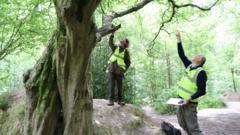
The Lost Woods project in Sussex has surpassed expectations by recording over 5,500 trees in its first year of operation. Volunteers have been mapping ancient, veteran, and notable trees across a 121-square-mile area between Lewes and Storrington. Bob Epsom, the outreach adviser for the project, expressed that the number of recorded trees is a significant milestone for the initiative.
The Lost Woods partnership involves four charities and is funded by the National Lottery Heritage Fund. The project is part of a broader restoration program comprising 19 individual projects. Volunteers are assigned specific square-kilometer areas to cover, and once trees are recorded and verified, they are added to the Ancient Tree Inventory.
As of now, 5,570 trees have been recorded, including 348 ancient trees and 2,467 notable trees. The remaining 2,743 trees are classified as veteran. Epsom emphasized that the mapping process is only the beginning, with the ultimate goal being to ensure the preservation of these trees for future generations to support wildlife and communities.
Written by urgent.news from BBC Science's reporting — not their text. Machine-written — may contain errors; check the original before relying on it.