Who Has Expertise in the AI Age?
Artificial intelligence could unmake a crucial human achievement.
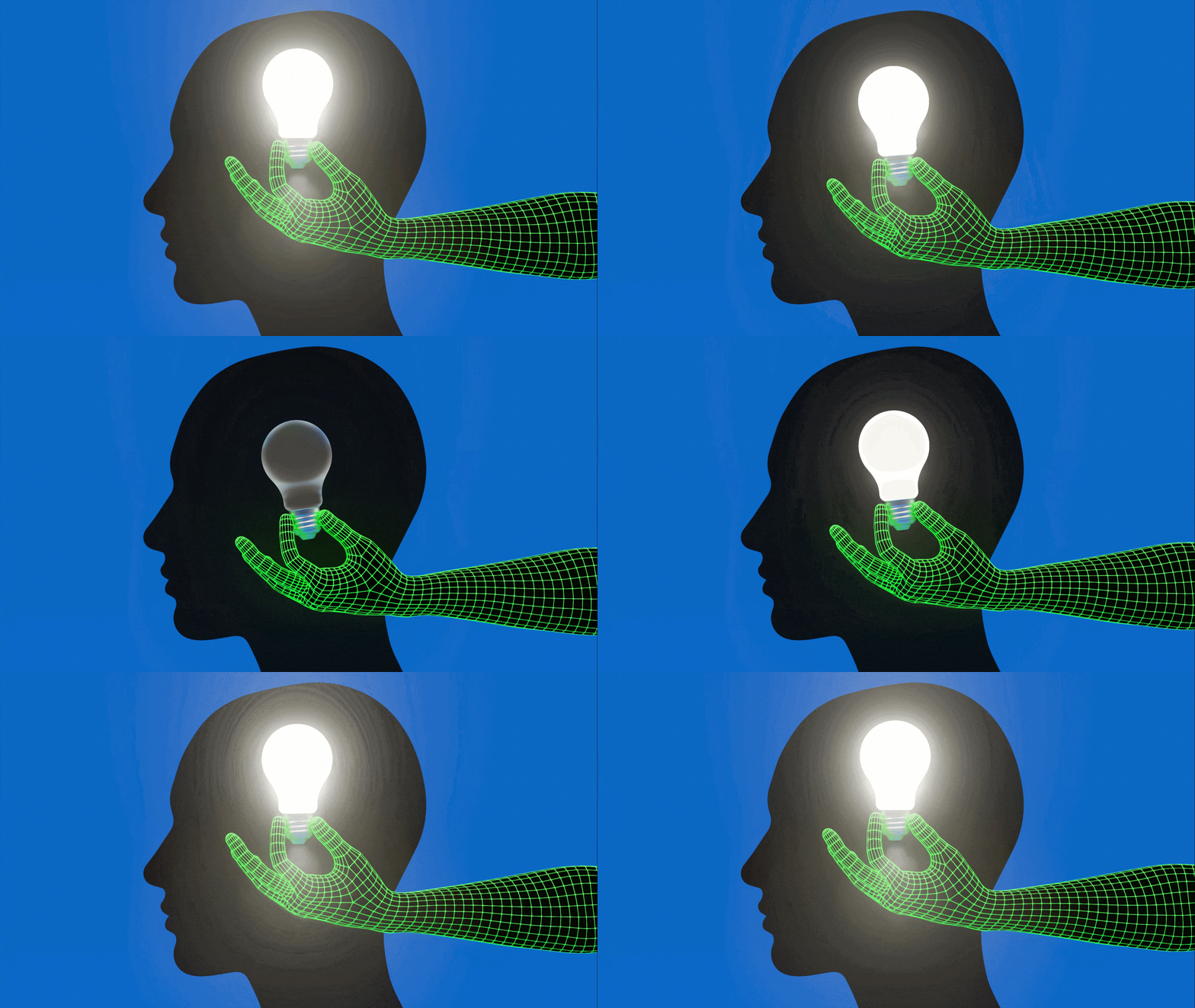
The ability to distinguish one's own understanding from that of experts has been a crucial part of human cultural development. When faced with a fever, one consults a pediatrician for an explanation, without necessarily understanding the underlying mechanism. This divide-and-conquer approach has facilitated advancements across various fields, including medicine, science, engineering, and commerce.
However, this reliance on external expertise can sometimes lead to illusions of understanding. Research indicates that merely having access to expert knowledge can create a false sense of comprehension. For instance, when participants were told scientists had thoroughly explained a glowing rock phenomenon, they reported a sense of understanding, even though the passage did not provide any explanations.
This phenomenon, termed "contagious sense of understanding," suggests that exposure to expert explanations can be misleading.
As AI assistants, chatbots, and other technologies become more prevalent, the risk of illusions of understanding may increase. Studies have shown that individuals who believe they have access to such information overestimate their own knowledge. For example, participants who thought they could access an explanation of how a robo-adviser works were more likely to believe they understood the technology and even more likely to use it themselves.
These findings suggest that as AI becomes more integrated into our lives, it may be crucial to maintain a clear understanding of the limits of our knowledge and the role of expert explanations.
Written by urgent.news from The Atlantic's reporting — not their text. Machine-written — may contain errors; check the original before relying on it.