Präsidentschaftswahl: Lula gegen Bolsonaro: Wie stark wird Trumps Einfluss in Südamerika?
Am Sonntag wählt Brasilien einen neuen Präsidenten – und entscheidet damit, wie eng es sich an die USA bindet. Das Ergebnis könnte Europa unter Druck setzen.
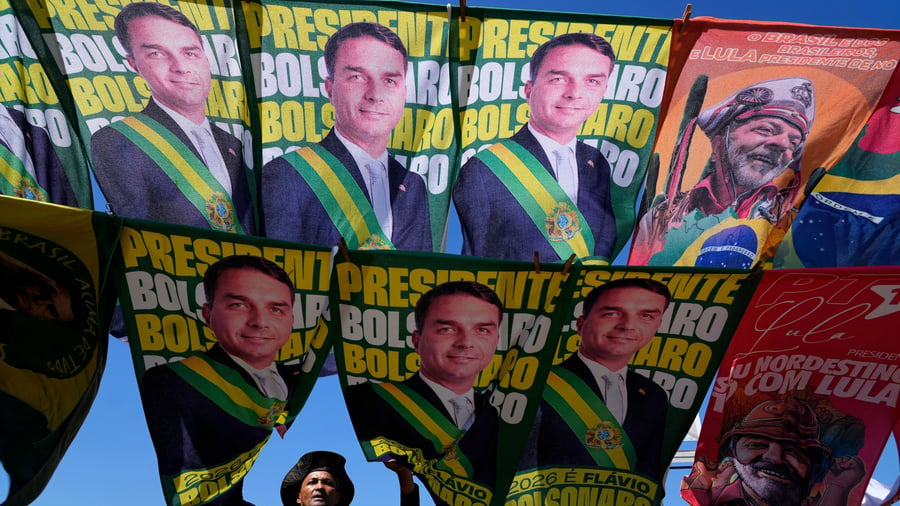
In the Brazilian presidential election on October 4th, two main candidates are battling for the top spot: incumbent President Luiz Inacio Lula da Silva and challenger Flavio Bolsonaro. Both candidates have nearly equal polling numbers, making their victory crucial in determining Brazil's political future for the next four years. The election will decide whether Brazil will align with Washington, Beijing, and Europe or take a different course.
The two candidates represent significantly different political and foreign policies. Lula da Silva, the incumbent, is a socialist who seeks a strong state and seeks to redistribute wealth. He follows Brazil's tradition of multilateralism, working with all global and regional powers without ideological preferences. On the other hand, Flavio Bolsonaro aims to attract the moderate voter base that his father, Jair Bolsonaro, achieved in 2018.
He is economically liberal, advocating for reduced state influence on the economy, and has proposed granting Brazil unconditional support to Trump and US companies in exchange for rare earth mining rights.
The geopolitical implications of the election are substantial. Brazil is the second-largest economy in the Western Hemisphere with a GDP of approximately $2.64 trillion, a key player in agriculture, energy, and critical resources, and China's most important partner in South America. With 215 million people, it represents one-third of Latin America's population.
The election will also determine the political direction of Latin America's largest country, which is the only major country south of the US currently led by a left-center government.
Apart from the presidential election, voters will also choose all 27 governors, all federal deputies, and two-thirds of the Senate senators. A possible runoff is scheduled for October 25th. The future of Brazil's political landscape could vary greatly depending on the outcome. Lula and Bolsonaro have vastly different foreign policies.
Lula's approach is characterized by multilateralism, working with all global and regional powers without ideological preferences. In contrast, Bolsonaro's plan involves unconditional support for Trump and US companies in exchange for rare earth mining rights. The most fundamental difference in their approaches lies in their foreign policies, which most Brazilians seem to care little about. Instead, they are more concerned with public safety, rising living costs, and corruption.
Written by urgent.news from Handelsblatt's reporting — not their text. Machine-written — may contain errors; check the original before relying on it.