Underwater Umbrellas Reduce—and Reverse—Coral Bleaching in the Caribbean
When corals get too hot, the algae that feed them can disappear, leaving them bleached. Blocking the Sun could help.
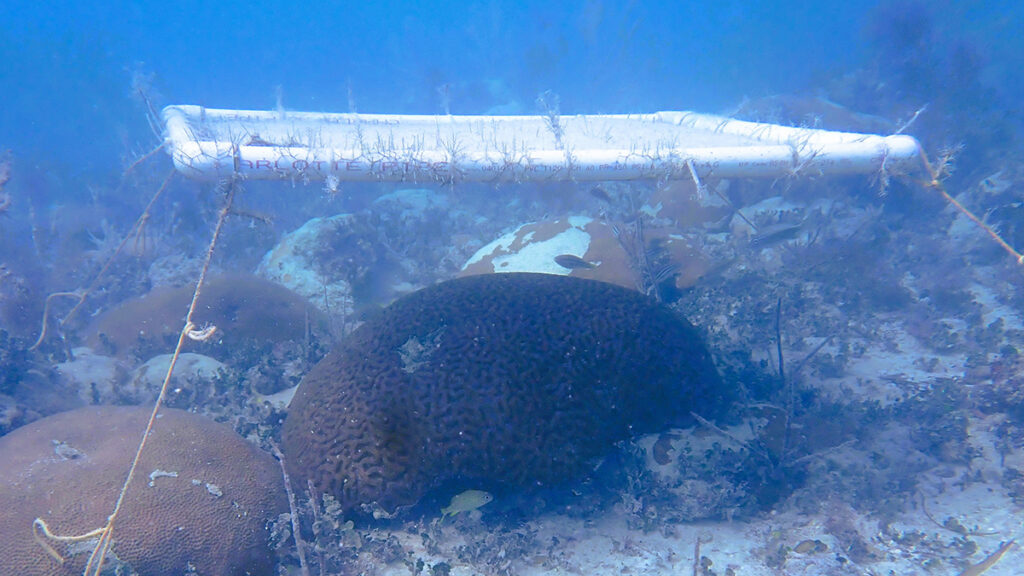
Climate change is causing marine heat waves to become more frequent, leading to widespread coral bleaching around the world. Scientists are exploring various interventions to protect coral reefs, including underwater shades that can prevent and even reverse coral bleaching. A recent study published in Frontiers in Marine Science has found that shading can help protect two species of Atlantic coral from bleaching in the Caribbean.
These corals, Pseudodiploria clivosa and Colpophyllia natans, were protected by 20 shades made of PVC pipe, foam, and agricultural shade cloth at Newfound Harbor, a protected reef in the Florida Keys. The shades were placed there between August and November 2024, during which time the sea surface temperatures breached the bleaching threshold of 30.5°C (86.9°F) for at least 61 days - the second highest cumulative heat stress on record for the reef.
Despite facing the highest heat stress, the shaded corals showed less overall bleaching compared to unshaded corals, and some even recovered from earlier bleaching events. The researchers also found that the species and rate of symbiont communities, which provide corals with up to 90% of their nutritional needs, were similar between shaded and unshaded corals.
This suggests that the corals were not losing their symbiotic algae any faster than the shaded corals, and may have been acclimating to the high levels of sunlight by decreasing their chlorophyll content. The study's findings provide evidence that shading can be an effective intervention for Atlantic coral species, potentially aiding coral restoration and preservation efforts in the Caribbean and beyond during marine heat waves.
Written by urgent.news from Eos's reporting — not their text. Machine-written — may contain errors; check the original before relying on it.