Silent, motion-resistant fMRI expands scans in behaving mice
The method, called SORDINO, captures brain images in animals while they move and interact.
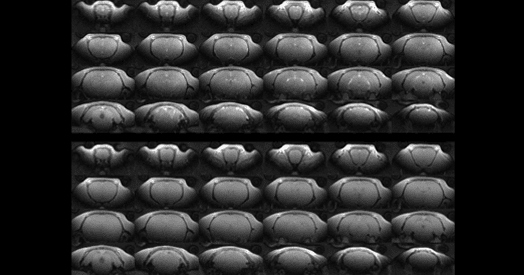
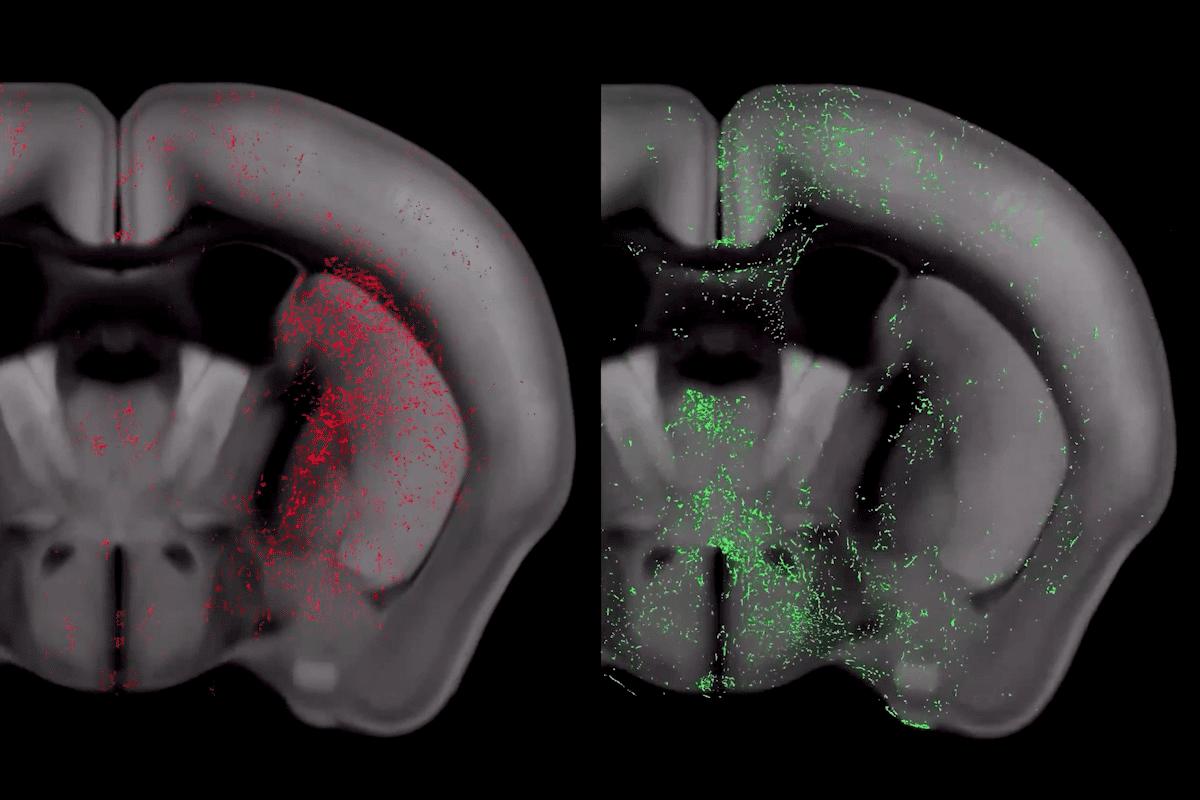
A new functional MRI technique called SORDINO captures brain images in moving animals, expanding the range of possible scans, according to a study published in Nature Neuroscience. This silent, motion-resistant method reduces scanning noise and motion-related artifacts, allowing for awake and behaving animals to be scanned without the need for anesthesia.
SORDINO works by rotating smoothly through space, keeping the magnetic field gradient nearly constant and reducing the time between radiofrequency pulses to nearly zero. This method was used to scan awake mice in various contexts, including measuring resting state activity, mapping motor actions, and simultaneously imaging the brains of two interacting animals.
SORDINO captured clear scans even as the mice moved and reduced electromagnetic interference, making it more compatible with other techniques like electrophysiology. Unlike another fMRI method that faced scrutiny and retraction, SORDINO is rooted in well-established physiology. While the study didn't rule out the possibility of detecting dissolved oxygen in tissue, the technique's potential to provide a more localized signal than BOLD fMRI is particularly exciting.
Researchers are now working on adapting SORDINO for human fMRI experiments, which could benefit people sensitive to noise or with difficulty lying still in a scanner, such as infants or those with autism, PTSD, or movement disorders.
Written by urgent.news from The Transmitter's reporting — not their text. Machine-written — may contain errors; check the original before relying on it.