The AI industry balances Trump and a changing Washington
Despite the warm welcome at the White House, industry leaders are bracing for a Democrat-controlled Congress.
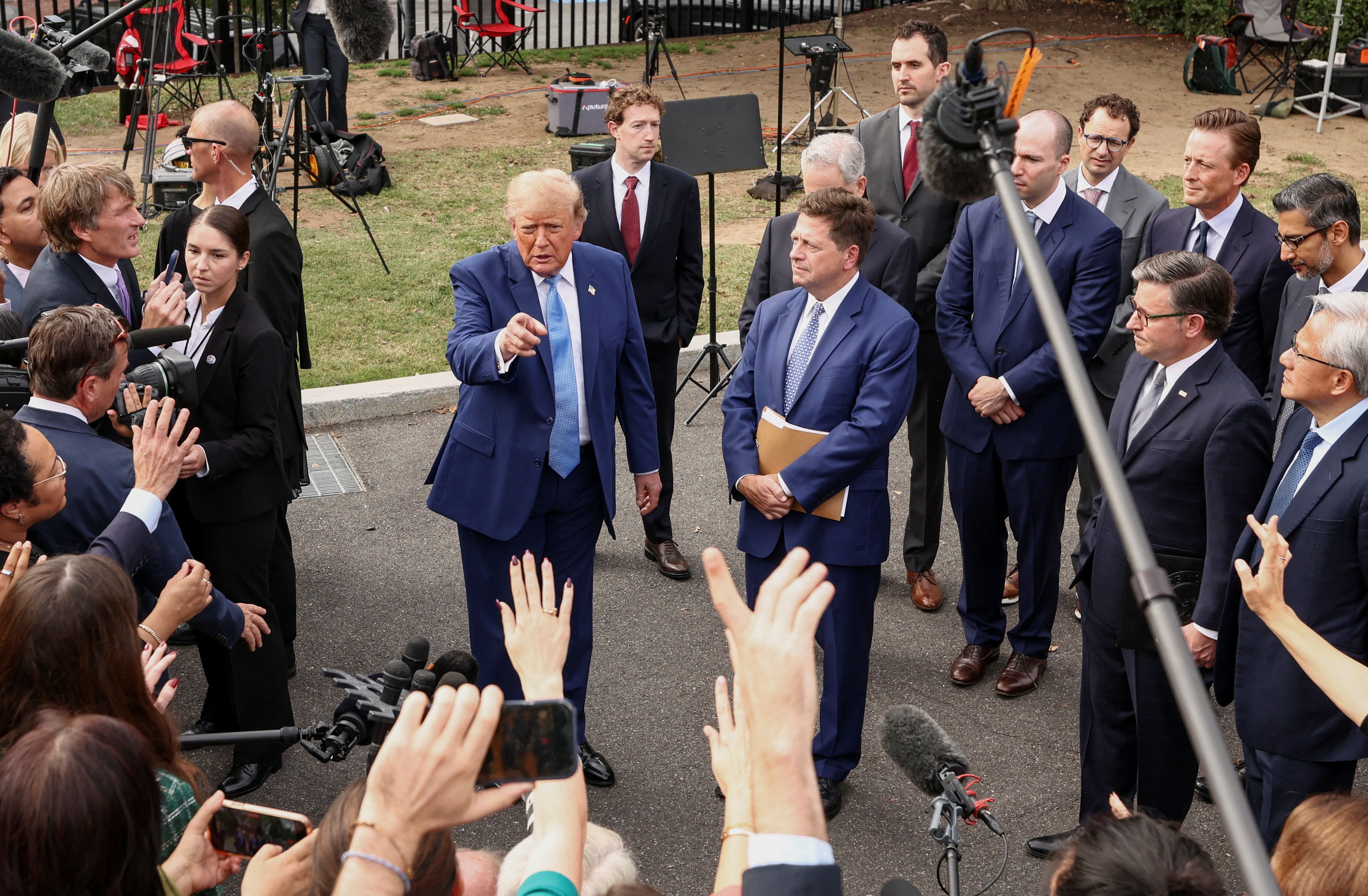
The tech industry faces uncertainty in Washington after meeting with President Donald Trump and senior administration officials this week to sign a "morally binding" agreement on artificial intelligence (AI). While the meeting was largely successful for the companies involved, they now must navigate maintaining relationships with the president while appeasing Democrats who could control both houses of Congress in the upcoming midterms. These Democrats may introduce AI legislation, putting pressure on tech firms.
Chris Lehane, OpenAI's chief global affairs officer, emphasized the need for companies to operationalize the new White House accord on "Super Intelligence." He believes that supporting state-level AI bills and hopeful for a federal bill align with OpenAI's self-interest. OpenAI's support for these bills and its hopes for a federal bill remain unchanged.
AI companies have been actively discussing policies on Capitol Hill as lawmakers prepared to focus on campaigning ahead of the November elections. The midterms are expected to result in a Democratic-run House and possibly a Democratic-run Senate, leading to increased momentum for AI legislation and scrutiny of the companies' operations.
The Federal Trade Commission (FTC) has initiated an AI inquiry, signaling the administration's intention to use existing laws to hold companies accountable for potential consumer harm. Despite this, the White House's pro-AI stance is unlikely to change significantly, with President Trump remaining the most influential voice on AI policy until the end of his term.
Groups advocating for data center expansion and industry-friendly laws have substantial resources and complex financial ties to AI and tech companies. Anthropic, a company that recently received federal designation as a supply chain risk, experienced significant challenges after its CEO, Dario Amodei, dined with Trump at the White House. Despite opposition from Undersecretary of Defense Emil Michael, the administration continues to view Anthropic as crucial to their operations.
Anthropic CEO Dario Amodei has acknowledged the risks associated with AI, stating that ensuring safe development requires the US to lead. Anthropic's policy lead, Sarah Heck, emphasized the importance of the US taking the lead in AI safety.
Written by urgent.news from Semafor's reporting — not their text. Machine-written — may contain errors; check the original before relying on it.