How accurate is Bengaluru’s AI traffic enforcement? | Explained
Amid debates around the shortcomings of using AI in smart policing and rule enforcement, The Hindu looks at how the Bengaluru Traffic Police’s Intelligent Traffic Management System works, how accurate are the violations flagged, how are the challans generated and the means through which erroneous cases can be challenged.
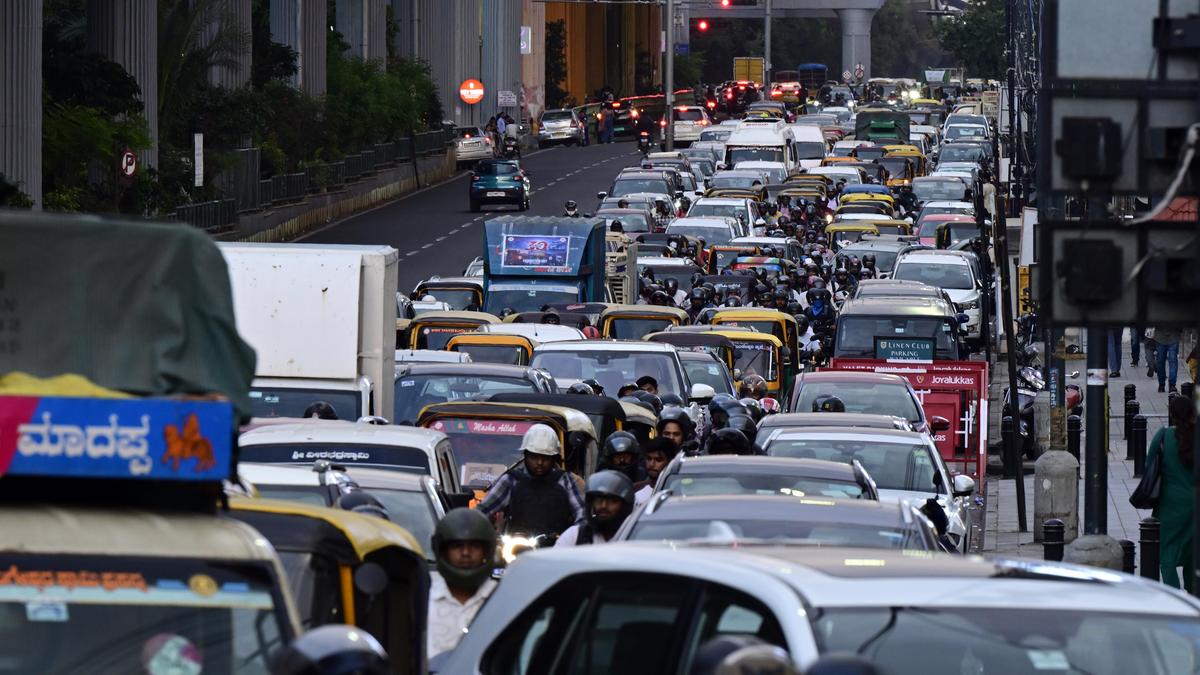
In September, a Bengaluru resident received an online traffic violation notice for pillion riding without a helmet, despite having no passenger. The Bengaluru Traffic Police (BTP) attributed this to an error by their AI-based violation detection system, which mistook a guitar strapped to the rider's back for a human. The police officer acknowledged that while the AI system has an accuracy rate of nearly 99%, there are instances of incorrect flagging.
Following the incident, the BTP released data showing that out of the average 19,000 contactless challans issued daily, about 25 (0.13%) are challenged. However, this challenge rate may not accurately reflect AI accuracy. A senior officer stated that upon manual review of violations flagged by the AI system, the overall accuracy could drop to around 90%.
The BTP has acknowledged limitations of the AI system, particularly in certain violations like pillion riding without a helmet, seatbelt misuse, and signal jumping. In some cases, factors beyond the rider's control, such as faded zebra crossings, contribute to violations detected by the AI cameras. The AI system, named Intelligent Traffic Management System (ITMS), can flag over 10 violations, but predominantly identifies eight, including riding without a helmet, pillion riding without a helmet, and driving without a safety belt.
Among contactless challans issued in 2026, 29% were related to riding without a helmet, 21% to wrong parking, and 14% to pillion riding without a helmet. The BTP acknowledges the necessity of human intervention, especially in cases where civic bodies fail to maintain traffic markers.
Written by urgent.news from The Hindu - Sci-Tech's reporting — not their text. Machine-written — may contain errors; check the original before relying on it.