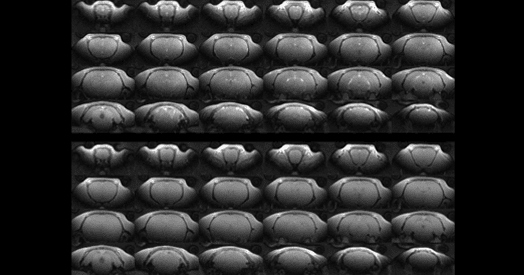
New projectome captures ‘complex beast’ of serotonin system in mice
The whole-brain map—the first of its kind in a vertebrate—identifies five distinct neuron groups.
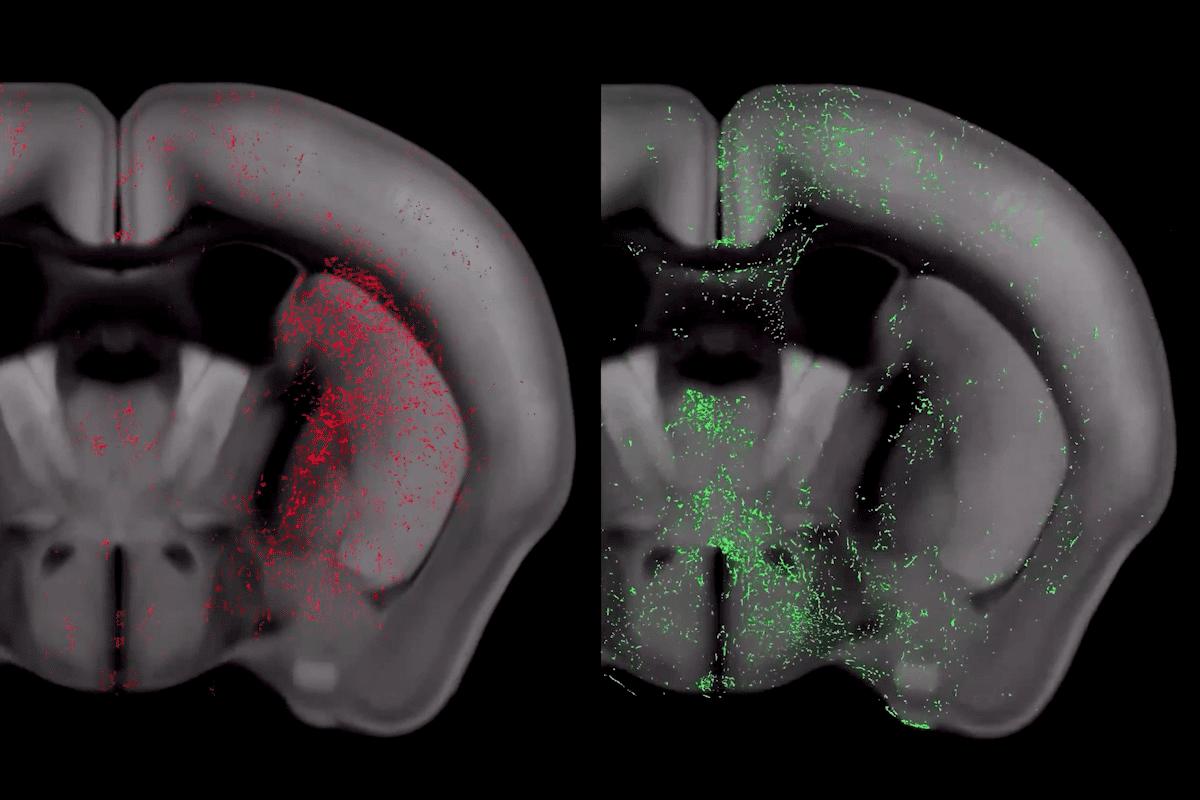
In a groundbreaking study published in Cell, researchers have unveiled a comprehensive whole-brain map of serotonin neurons in mice. This is the first such map for a vertebrate and sheds new light on the complex organization of the serotonin system, which plays a crucial role in various brain functions such as mood and movement.
The map identifies five distinct groups of serotonin neurons, each targeting specific brain regions and demonstrating functional relationships among them. Led by Liqun Luo from Stanford University, the team used viral-genetic tracing and whole-brain imaging to uncover these connections. The research, supported by the BRAIN Initiative, utilized a virus to make the serotonin neurons light up throughout the brain, enabling the team to image all affected areas.
This new projectome, or whole-brain map, reveals how serotonin neurons organize themselves based on functional relatedness rather than proximity to their targets. The five identified groups include the hippocampal-entorhinal network, basal ganglia, cortical regions, medial interbrain, and brainstem and lateral thalamic nuclei. For instance, the central amygdala and basolateral amygdala, responsible for fear learning and emotion, are found in separate groups, differing in developmental origins and cellular makeup.
The projectome also highlights sex-dependent behavioral differences among the serotonin groups. For example, the basal ganglia group influences repetitive behavior, while the cortical regions, medial interbrain, and brainstem and lateral thalamic nuclei impact anxious and repetitive behaviors. These findings suggest that each projectome group contributes differently to behavior, providing valuable insights into the system's function and potential avenues for further research.
Written by urgent.news from The Transmitter's reporting — not their text. Machine-written — may contain errors; check the original before relying on it.