Nepal plans to drain four glacial lakes after deadly floods
The work of draining “through gated structures” will start after a detailed study, and could take up to six years to complete, said Sanjeeb Baral, the Centre’s executive director.
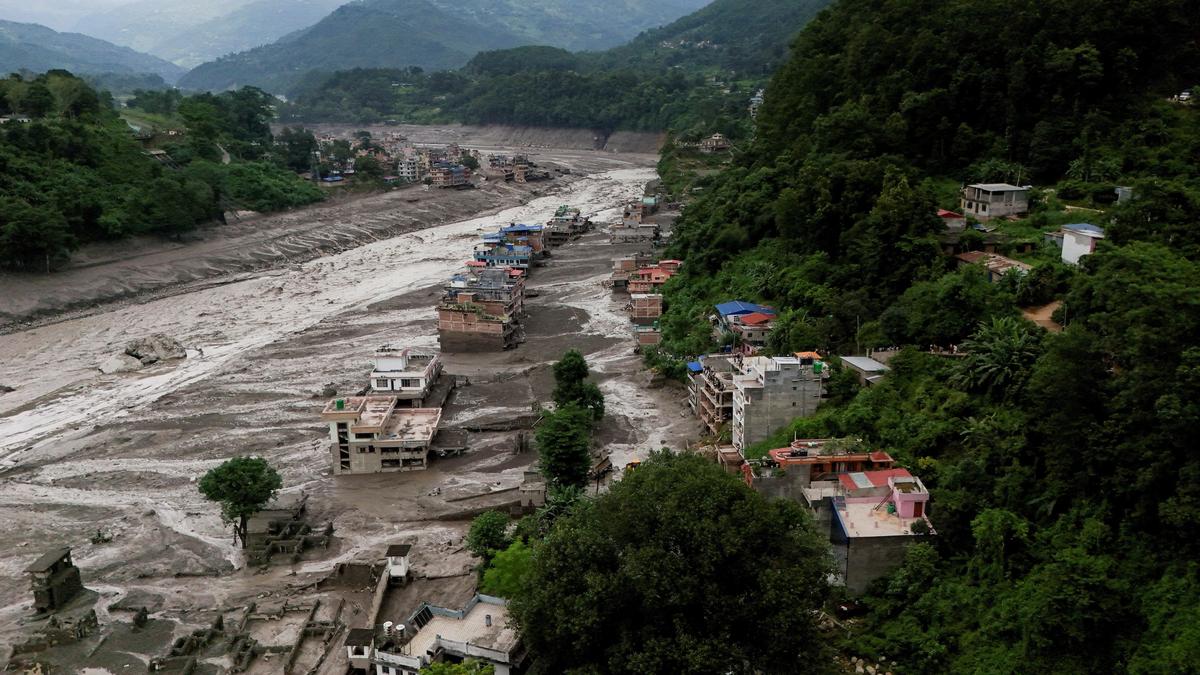
Nepal is preparing to begin a $50-million initiative this fiscal year to drain four glacial lakes located in the mountains, aiming to mitigate the risk of devastating floods, officials revealed following a recent catastrophe that claimed over 1,400 lives. Rescue operations are ongoing for more than 5,000 people missing in the border region that shares a border with China, following a glacier collapse in August that led to landslides and a flash flood.
According to Subash Tuladhar, a government research centre expert overseeing the project, the objective is to reduce the likelihood of the lakes breaching their natural dams and limit downstream flooding. The canals will channel the water into nearby rivers in a controlled manner, but workers face health risks due to high-altitude work and the potential for sudden flooding.
Design and detailed studies for the central and eastern lakes – Thulagi, Lower Barun, Lumding Tsho, and Hongu II – will commence within the fiscal year, which ends mid-July 2027. The lakes, situated at elevations ranging from 4,050 meters to 5,483 meters (13,280 feet to 18,000 feet), are among Nepal's most hazardous, as noted in a 2020 report by the United Nations Development Programme and the International Centre for Integrated Mountain Development.
Nepal possesses the necessary expertise and experience for the project, which is funded by the Green Climate Fund, UNDP, and the government. Once the detailed study is completed, draining the lakes through gated structures will commence, a process that could take up to six years, as stated by Sanjeeb Baral, the Centre’s executive director.
The initiative will also involve the installation of sensors, a flood forecasting and warning system, and efforts to enhance downstream resilience and prepare communities for potential risks. In previous efforts, Nepal successfully lowered the level of the central Himalayan glacial lake Tsho Rolpa by 3 meters (10 feet) in 2000 and that of Imja, near Mount Everest, by 10 years ago.
This latest warning from Prime Minister Balendra Shah to the United Nations emphasizes the impact of climate change, highlighting Nepal's vulnerability due to its minimal emissions. Nepal has reported about 26 Glacial Lake Outburst Flood events in the past four decades, resulting in over 300 fatalities and extensive property damage annually on average.
The recent floods damaged numerous hydroelectric plants, roads, bridges, farms, and settlements, with Nepal requiring nearly $5 billion for early recovery. Climate scientists warn that as temperatures rise, glaciers in the Himalayas are retreating, leaving unstable glacial lakes vulnerable to outbursts triggered by earthquakes, avalanches, climate conditions, and human activities.
Written by urgent.news from The Hindu - Sci-Tech's reporting — not their text. Machine-written — may contain errors; check the original before relying on it.