Johor conservation efforts produce about 5,000 turtle hatchlings a year
MERSING, Oct 2 — Johor continues to make positive progress in turtle conservation, particularly for hawksbill and...
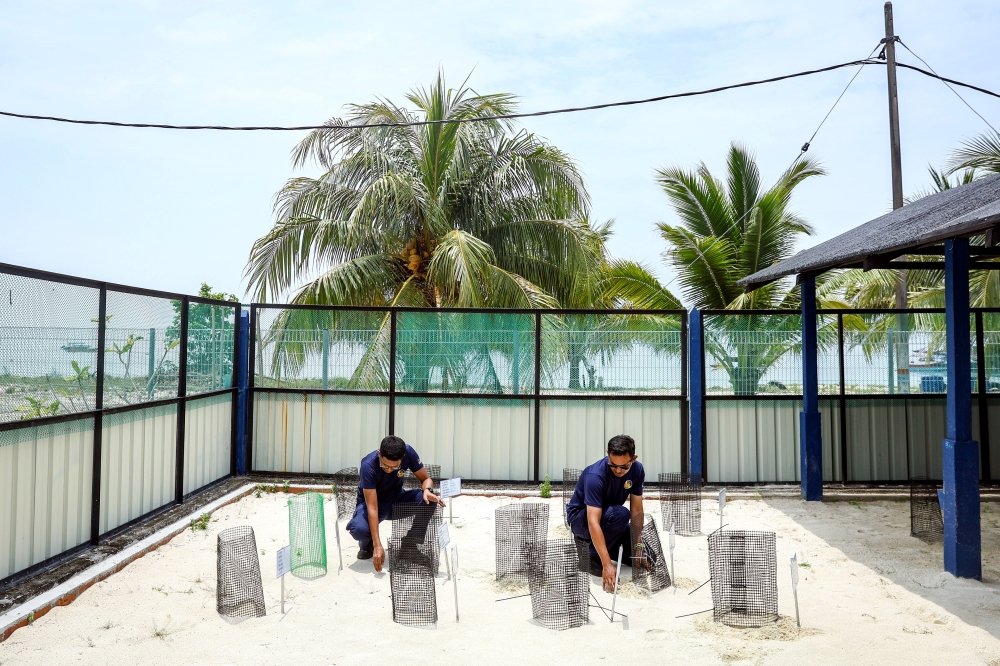
MERSING, October 2 — The conservation efforts in Johor, especially for hawksbill and green turtles, have yielded positive results, with approximately 5,000 hatchlings emerging annually through the protection at nesting sites and hatcheries. Johor Department of Fisheries director Rosmawati Ghazali highlighted the main turtle nesting sites, which include Pulau Apil, Pulau Dayang, Pulau Besar, and Pulau Tinggi.
Pulau Tinggi is recognized for its high number of hatchlings due to its remote location and low population, minimizing human disturbance and predator threats like dogs and monitor lizards. However, eggs left to hatch naturally have a low survival rate due to predation, leading to the transfer of eggs from nesting sites to hatcheries for closer monitoring.
Rosmawati explained this during an inspection of cheese block artificial reefs for coral restoration off Pulau Tinggi. She emphasized that only one in every thousand turtle hatchlings released into the sea typically reaches maturity, stressing the importance of ongoing conservation programs, including education and awareness initiatives for students and local communities, as well as deploying artificial reefs to preserve the marine ecosystem.
She explained that turtle hatchlings also face threats from predators and the need to find suitable feeding grounds post-hatching, with temperature playing a crucial role in determining the sex of hatchlings, with warmer temperatures producing more females. When unfertilized eggs are found, maintaining a specific temperature ratio of five males to ten females is crucial for successful fertilization, with a total of ten eggs required for one successful hatchling.
The Pulau Besar hatchery faces challenges with electricity and water supply, but eggs from Pulau Besar are transferred to the Pulau Tinggi hatchery for better monitoring and facilities. Rosmawati emphasized the importance of controlling human activity in hatchery areas due to their sensitive nature.
Written by urgent.news from Malay Mail's reporting — not their text. Machine-written — may contain errors; check the original before relying on it.
This story
This is one outlet's version. Read the fullest account.