'It's a portrait of their actual ancestor': Facial reconstruction of Indigenous man who lived in Ecuador 3,000 years ago shared with his descendants
You can now see a facial reconstruction — and the particular hairstyle — of a man who lived more than 3,000 years ago in what is now Ecuador.
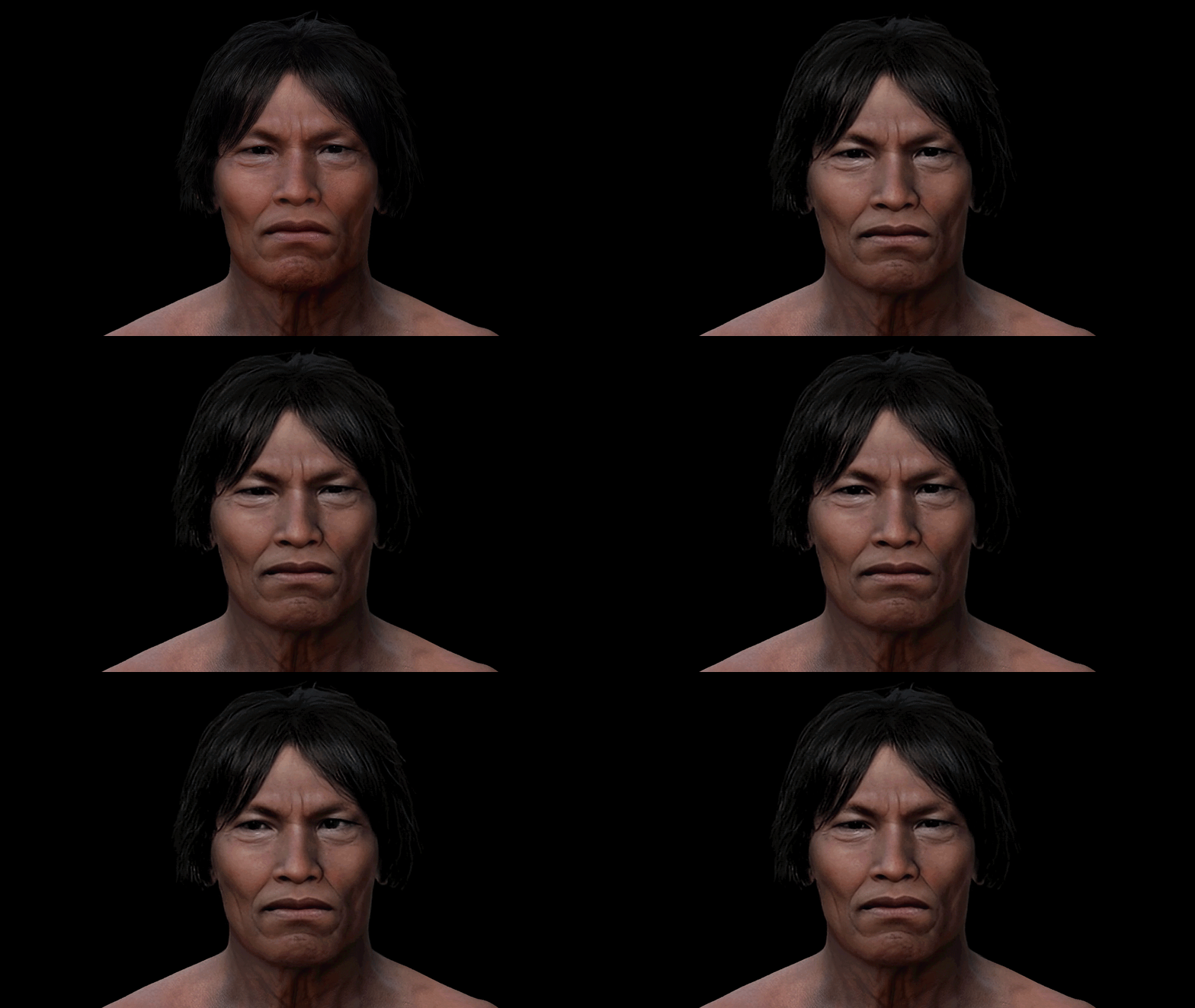
In what is now Ecuador, an international team has reconstructed the face of a man who lived over 3,000 years ago, as revealed through the facial reconstruction of the Punin-2 skull. The skull was discovered in a ravine near the Punín town in the Chimborazo region of Ecuador's central Andes in the 1970s. Another similar skull, Punin-1, was found in the same ravine in 1923.
Early scientists proposed that the first Punin skull's features suggested Oceanic ancestry, but later studies disproved this notion. The Punin-2 skull now belongs to a modern human man with Native American ancestry, based on the latest facial reconstruction by forensic craniofacial anthropologist Dr. Christopher Rynn from the University of Dundee in the U.K. The reconstruction indicates the man was roughly in his 50s when he died.
The facial features show a distinctly Indigenous American appearance. The project aims to raise funds for further investigations, including a reconstruction of the Punin-1 skull and an ancient DNA analysis of both skulls.
Written by urgent.news from Live Science's reporting — not their text. Machine-written — may contain errors; check the original before relying on it.