If young US people accept Xi’s invitation to China, what will Beijing show them?
China is ramping up its efforts to bring young Americans to China, and ready to be seen as a country concerned with environmental protection, lifting people out of poverty, protecting minority cultures and building the technology of the future. During his trip to the United States last week, Chinese President Xi Jinping said his country aimed to welcome 100,000 young Americans on exchange or…
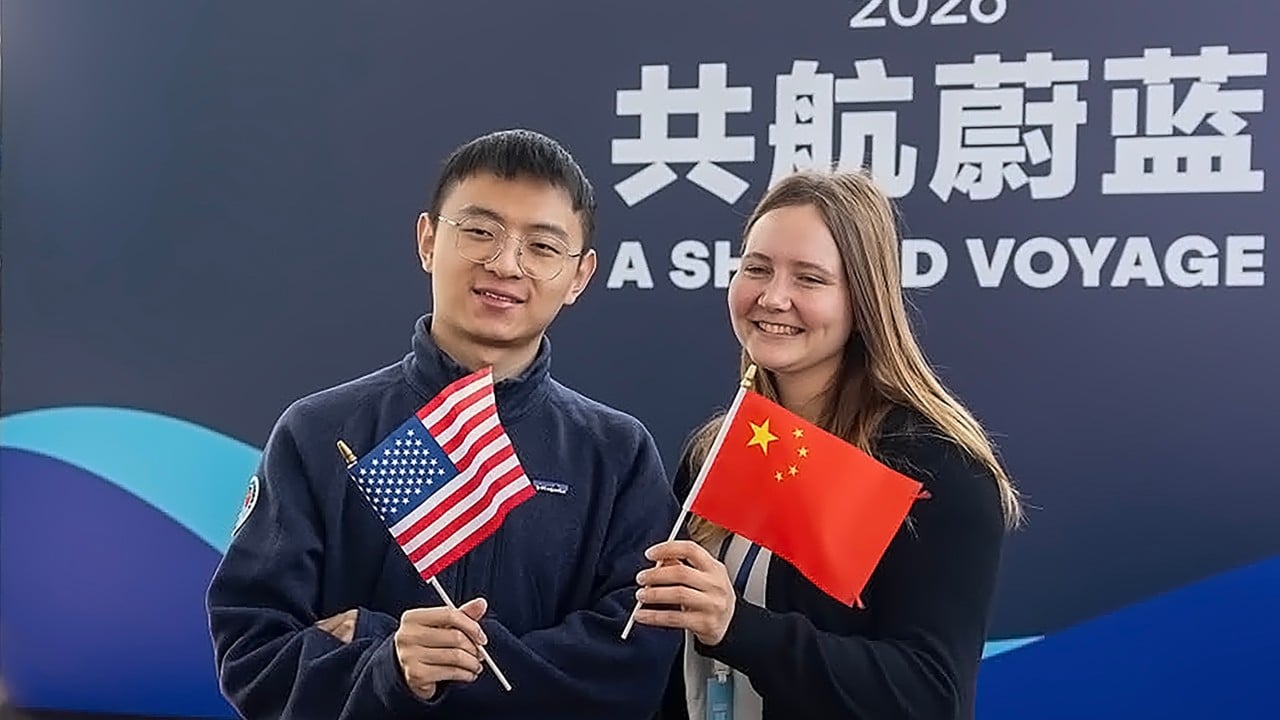
During Chinese President Xi Jinping's recent trip to the United States, he announced a goal to welcome 100,000 young Americans for exchange or study trips over the next five years. This follows a 2023 target of bringing 50,000 US youth to China by 2028, which authorities claimed they had already met ahead of schedule. The initiative is being spearheaded by the China Education Association for International Exchange, a non-profit organization under the Ministry of Education.
The Young Envoys Scholarship (YES) initiative coordinates with Chinese universities to create itineraries, curricula, and manage the visitors on the ground. Universities set different admissions criteria, but generally, the program is open to non-Chinese citizens aged 18 to 45.
One group of students embarked on a marine conservation trip, beginning in March with a 10-day voyage along China's eastern coastline from Hong Kong to Shanghai. Stopover cities, all coastal and involved in marine research or the ocean economy, included Ningbo and Shanghai. The students, along with Chinese counterparts, engaged in marine exploration, visited research facilities, and discussed international cooperation in ocean science.
They also collected biological samples and identified local species, such as the Calanus sinicus crustacean, which Chinese scientists have been studying for decades. President Xi expressed his delight in a letter to the programme, stating that the students had formed "an unforgettable friendship voyage."
Another program, organized by Shanghai’s Donghua University, brought US students into ethnic minority communities in Guizhou province. The focus was on the intangible cultural heritage of the Bouyei, Miao, Shui, and Dong peoples, aiming to promote the global dissemination of traditional Chinese culture and the international influence of intangible cultural heritage.
In Kaili, the students participated in a batik dyeing workshop and wore traditional costumes during a village runway event with local residents. Guizhou has harnessed its ethnic minority culture to boost tourism, with projects helping nearly 900,000 people raise their incomes between 2017 and 2019.
A third initiative by Peking University took students through Ningxia, Sichuan, and Chongqing, focusing on poverty alleviation, regional development, and urban renewal. In Ningxia, students visited Minning, a town developed through east-west cooperation in poverty alleviation. The town's per capita disposable monthly income grew significantly from 1997 to 2022.
The five-year plan emphasizes institutionalized support for underdeveloped areas, including measures to consolidate poverty alleviation gains, strengthen industrial and employment support, and improve east-west cooperation. The focus shifted towards agricultural modernization and urban development in Sichuan and Chongqing.
Written by urgent.news from Reuters Business via SCMP's reporting — not their text. Machine-written — may contain errors; check the original before relying on it.
This story
This is one outlet's version. Read the fullest account.