How violent was that planet crash? Astronomers check the dust.
NASA's James Webb Space Telescope and Spitzer study planet-collision dust around young stars that reveals how hard worlds hit.
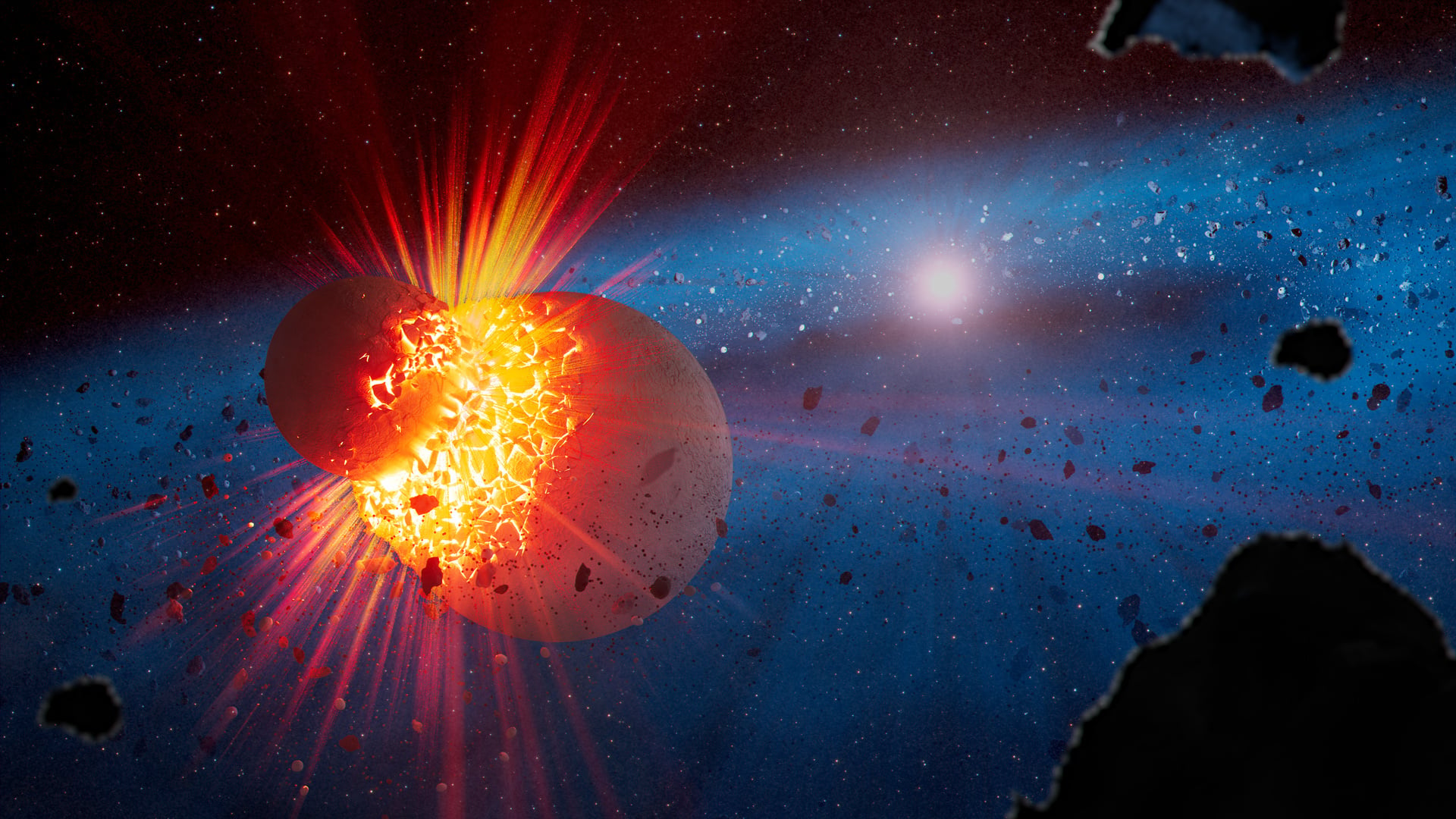
Astronomers have studied the aftermath of planet-forming collisions in young star systems, discovering that these violent crashes leave behind distinct types of debris. Two NASA telescopes, Spitzer and the new James Webb Space Telescope, helped uncover these clues. The Spitzer observatory first detected these odd dust clouds near the end of its mission, while Webb continued the research, nearly doubling the number of systems with detailed measurements.
The dust clouds can be categorized into two groups based on their composition. About one-third of the systems contain silica, the primary ingredient in volcanic glass like obsidian, which indicates the most intense crashes that vaporize rock. The remaining two-thirds have minimal silica and a higher percentage of forsterite, a green mineral similar to olivine in its gem form, peridot. These likely result from less severe collisions that merely graze the celestial bodies involved.
The glassy debris appears only around stars younger than approximately 300 million years, aligning with simulations that suggest rocky planets like Earth form within the first few hundred million years of a system. Interestingly, only about 1 percent of young stars exhibit this dusty phase, which is far fewer than previously predicted.
Researchers suspect hidden planets in these systems are still shifting orbits and causing smaller bodies to collide, a scenario that could help astronomers identify planets in the midst of a critical formation stage. Our solar system may have experienced a similar upheaval in the past, when its giant planets migrated and set off a wave of collisions. However, more observations are needed to determine if the high-energy crashes producing glassy dust cease after this age.
Written by urgent.news from Mashable's reporting — not their text. Machine-written — may contain errors; check the original before relying on it.