How the US went from ‘a position of strength’ to ‘gung-ho’ on China
Not so long ago, Washington’s approach to relations with Beijing was anchored by a single assertive phrase: dealing “from a position of strength”. It was rooted in a unipolar mindset: a belief that the United States could dictate terms, manage competition unilaterally and demand compliance from a distance. Yet, at their recent summit, Chinese President Xi Jinping and US President Donald Trump…
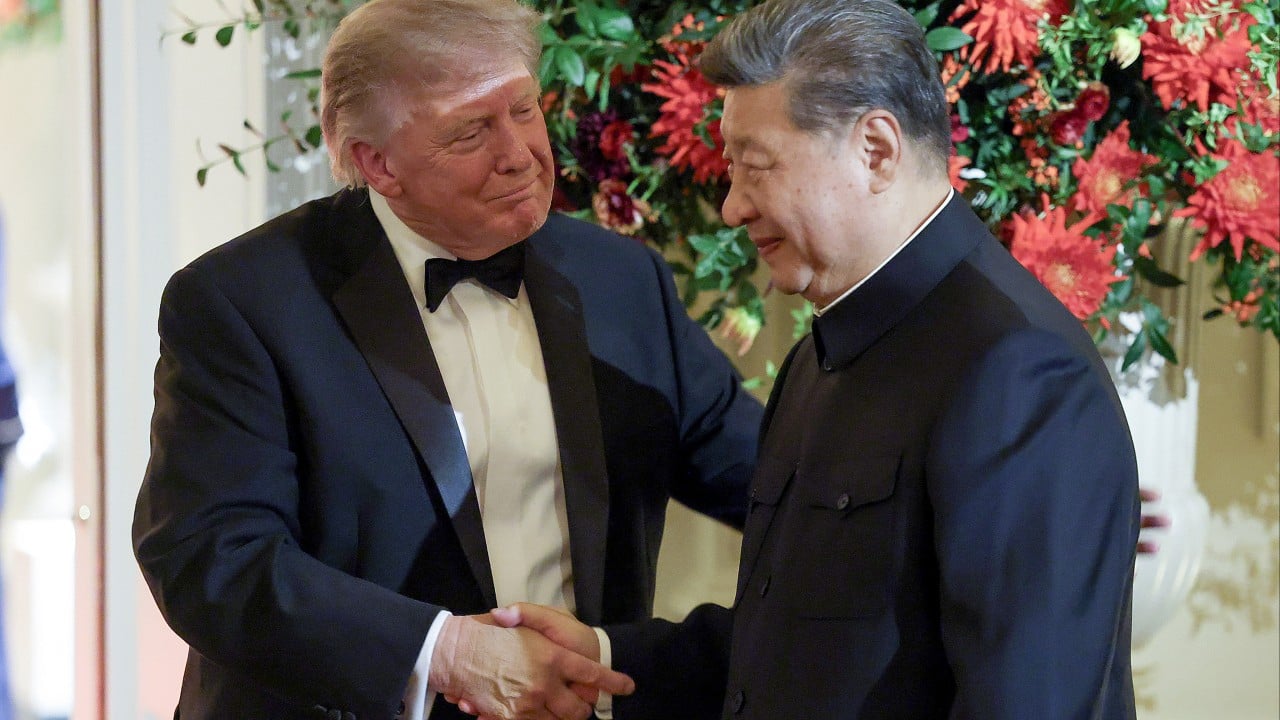
The United States' stance on China has undergone a significant transformation, transitioning from a unilateral "position of strength" to a more collaborative "constructive strategic stability relationship" based on mutual respect, fairness, and reciprocity. This shift in American sentiment was evident during the recent summit, where Chinese President Xi Jinping was warmly welcomed with a 21-gun salute, full military honors, and a dramatic fighter jet flyover at the White House.
President Donald Trump and First Lady Melania Trump recognized China as an equal global power, a stark contrast to the previous approach of dictating terms and demanding compliance from a distance. This change in American mindset was driven by the realization that decoupling and severing supply chains proved to be economically detrimental.
The summit resulted in tangible results, such as the formalization of trade and investment councils, the extension of Kuala Lumpur trade outcomes, and a US$30 billion reciprocal tariff reduction. Even in the highly competitive AI sector, both nations opted for maturity over recklessness by establishing communication channels for AI incidents and setting up a dedicated dialogue.
In addition to the evolving American approach, there is a noticeable shift in domestic opinion. Recent polling shows that younger generations, particularly Gen Z and millennials, now view China as a formidable civilizational power rather than an existential threat. They are exhausted by foreign policy brinkmanship and favor coexistence over coercion.
This change in perspective is reflected in the White House's choice of a grand state dinner, tastefully decorated in red, and a private tour of the National Archives, symbolizing mutual respect and shared history. The summit also highlighted the importance of soft power and cultural diplomacy, with the arrival of giant pandas Ping Ping and Fu Shuang at Atlanta Zoo.
The future of China-US relations hinges on the shoulders of their youth, with China's plan to invite 100,000 young Americans to study and collaborate promoting genuine empathy and dismantling propaganda.
Written by urgent.news from South China Morning Post's reporting — not their text. Machine-written — may contain errors; check the original before relying on it.