Google launches first datacenter satellite and research that finds orbiting bit barns can work
If SpaceX can launch 1,800 Starships, and researchers nail gnarly networking, design and formation flying problems,
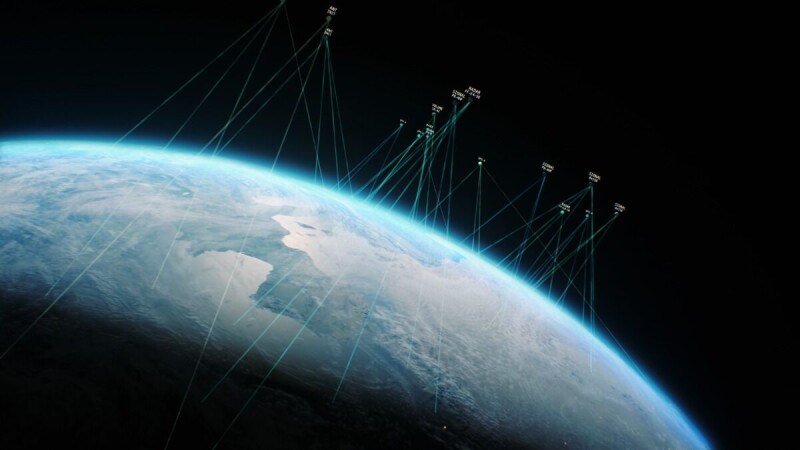
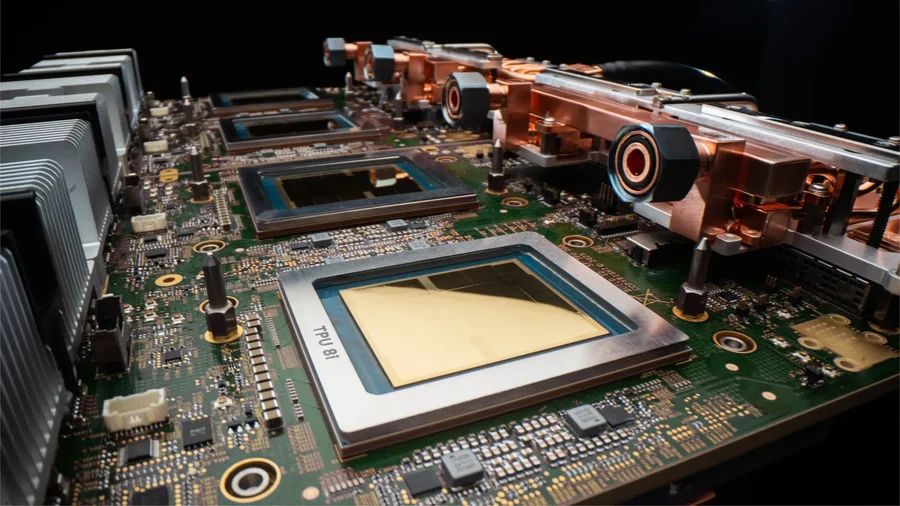
Google has successfully launched its first "Suncatcher" datacenter satellite into space, but questions remain about the feasibility of scaling this orbiting infrastructure. The Project Suncatcher aims to assess whether Google's tensor processing units (TPUs) can withstand launch and space conditions, potentially validating the cost-effectiveness of placing servers in orbit due to the abundant solar energy available.
In an announcement and accompanying peer-reviewed research, Google highlighted numerous challenges that must be overcome to make orbital datacenters viable.
The paper, titled "Toward a future space-based, highly scalable AI infrastructure system design," explains that SpaceX and other companies have suggested orbital datacenters could become practical when launch costs fall to $200 per kilogram. Google's researchers found that SpaceX has managed to cut launch costs by 20% with each doubling of cumulative mass launched.
If SpaceX maintains this trend, reaching 370,000 tons of additional cumulative mass (equivalent to approximately 1,800 successful Starship rocket launches) and reusing components 100 times, Google believes a $200/kilogram launch cost could be "plausible under reasonable assumptions."
While Google does not know the mass of its future datacenter satellites, they compared the cost of sending a satellite into space with the expense of powering servers on Earth. If launch costs reach approximately $200 per kilogram, the annualized cost per unit of power in space could become comparable to terrestrial spend. However, the paper notes that existing network technologies are likely insufficient for linking multiple satellites into functioning clusters.
To address this, Google's plans would require a highly integrated design, potentially incorporating next-generation architectures like computational substrates based on neural cellular automata.
Moreover, Google emphasized the need for robust optical satellite-ground communications, which will face challenges such as atmospheric turbulence, high-speed relative motion errors, and precision beam tracking. NASA's TeraByte Infrared Delivery (TBIRD) mission demonstrated 200 Gbps ground-low-earth-orbit communications and is cited as a promising approach.
Google concluded that achieving its space datacenter ambitions will require sustained research, iterative design refinement, and the accomplishment of several critical future milestones.
Written by urgent.news from The Register's reporting — not their text. Machine-written — may contain errors; check the original before relying on it.