The title is just the basis of what we offer
AI is forcing business schools to rethink almost everything: what they teach, how they check that a student has learned, and what job opportunities young people will find. Thomas Jeanjean believes that the answer is not to give up on the degree, but to redefine it.
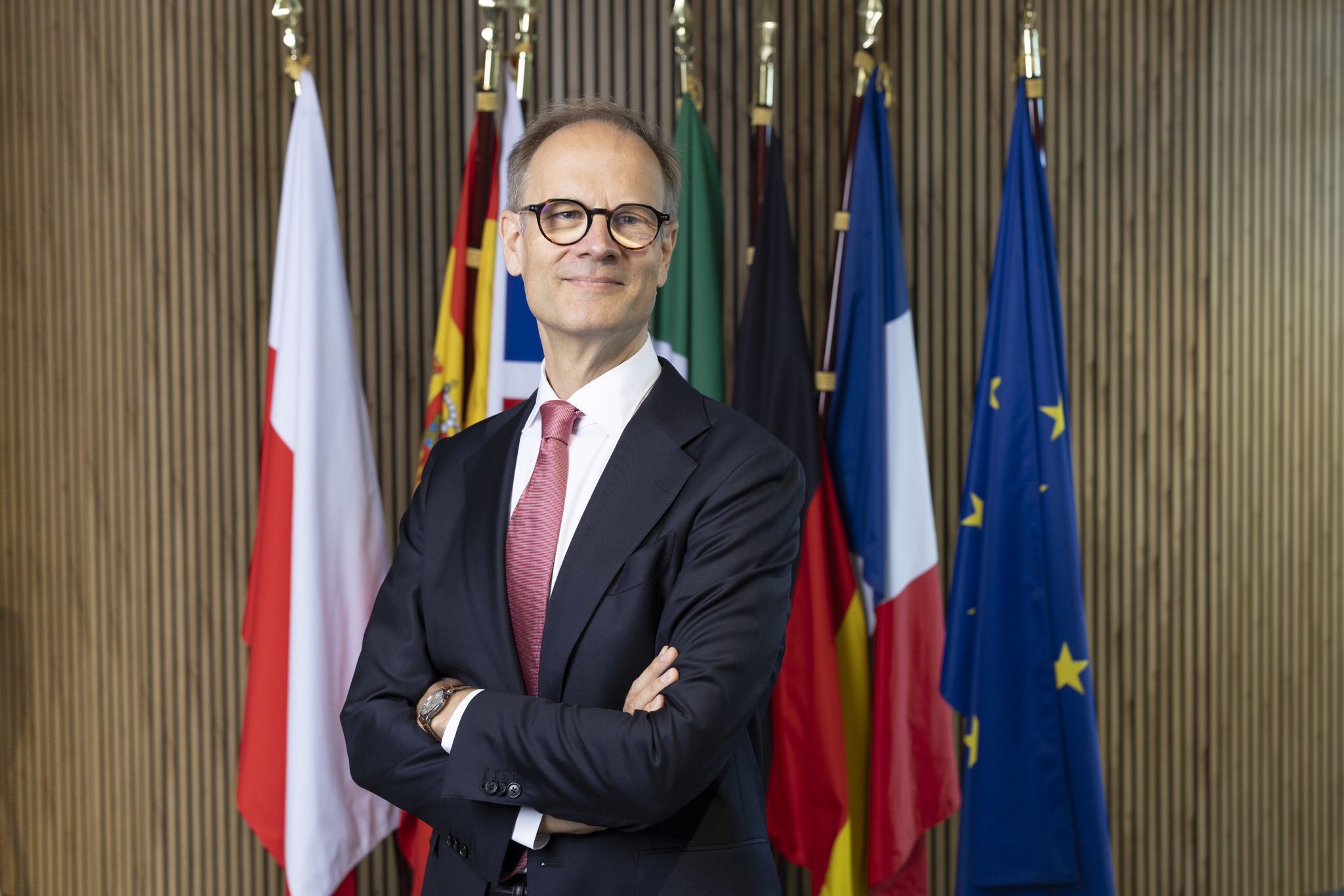
Thomas Jeanjean, the dean and chief executive of ESCP Business School, transitioned to the role after nearly a month at the helm in early 2023. A professor at HEC Paris, he previously served as the deputy general director of continuous education at ESSEC Business School and later as the deputy general director of CCI Paris �le-de-France, overseeing the education policy of 14 institutions with diverse profiles.
Now, Jeanjean manages ESCP, an international school with campuses in Paris, London, Berlin, Madrid, Turin, and Warsaw (with a presence in Dubai).
Jeanjean, an expert in accounting, financial reporting, and corporate governance, questions whether the same challenges faced by companies in managing financial results without improving underlying business performance may also arise in business schools. For a top business school, rankings are not the goal, but rather the outcome. Unlike companies, where financial indicators are crucial, Jeanjean believes that a dean's performance should be measured by the experience and future of their alumni.
The rise of artificial intelligence (AI) and new learning methods raises a fundamental question: what does a business school contribute when access to knowledge is now easier than ever? Jeanjean notes that schools are providers of education and compete not only with other academic institutions but also with consultancies, digital platforms, and AI tools.
While online resources can provide vast information, Jeanjean emphasizes that a degree is more than just a piece of paper; it certifies a student's selection process, learning, networking, and extra-curricular experiences. This value also signals quality to employers. However, Jeanjean cautions that a degree cannot guarantee success or employability for life.
The mission of a business school extends beyond simple graduation. The degree is just the starting point. Jeanjean stresses that the impact of AI on education requires careful consideration. While it remains unclear how AI will transform training or business schools, he believes that updating curricula to integrate AI is a necessary first step.
The second change involves reevaluating how students are assessed, as some AI tools can quickly solve practical cases or write elaborate responses, making traditional evaluation methods insufficient.
As AI becomes more prevalent in students' lives, Jeanjean predicts that future students will have a different relationship with information. With the ability to instantly obtain accurate answers to complex questions, educators must ensure that students develop critical thinking skills and learn to critically evaluate automated responses.
Additionally, the employment landscape faces potential disruption due to increased productivity through AI in sectors like consulting and banking, which may reduce junior hiring. While this could mean fewer entry-level positions, it could also create entirely new job areas, especially in cybersecurity and emerging fields where current job opportunities are not yet apparent.
Jeanjean suggests that maintaining lifelong learning will become increasingly important in long, rapidly changing careers, with periodic reenrollment in business school for professionals to update their skills in areas like AI and teamwork management.
Written by urgent.news from Expansion ES's reporting — not their text. Machine-written — may contain errors; check the original before relying on it.