Could an Earthlike planet with 2 stars be nearby?
A new astronomical model has found that an Earthlike planet could have a stable and potentially habitable orbit around a star in a nearby 2-star system. The post Could an Earthlike planet with 2 stars be nearby? first appeared on EarthSky .
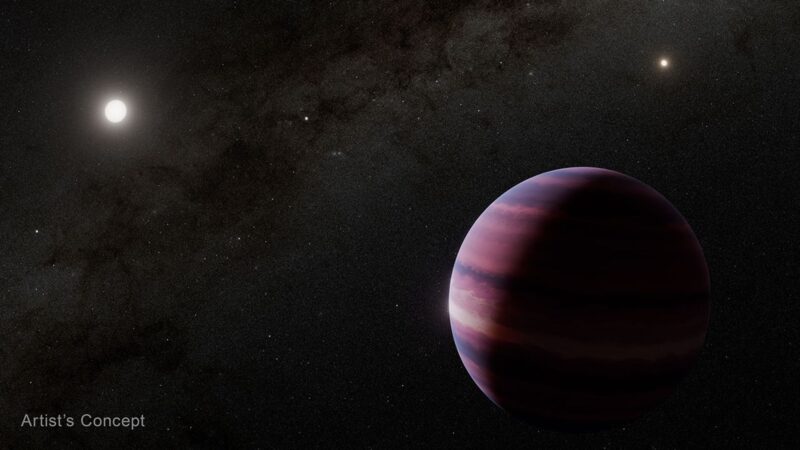
Researchers at the University of California, Riverside have modeled a nearby binary star system, 70 Ophiuchi, and found that it could potentially support an Earth-sized planet in a habitable zone orbit. This binary system, located about 16 light-years away, consists of two stars that are smaller and cooler than our sun. Although no planet has been found orbiting either star yet, the UC Riverside astronomers discovered that one could potentially exist in a stable orbit around one of the stars, possibly within the habitable zone where liquid water would be stable on its surface.
The study, published in The Astrophysical Journal, was based on decades of observational data, allowing the researchers to create a more accurate model of the system. Using computer simulations, they introduced an Earth-mass planet at various distances within the habitable zone of the primary star to observe its stability. Co-author Skylar D’Angiolillo explained that stable orbits are possible in the habitable zone of the primary star, and even though the second star might disrupt orbits, it does not always lead to the planet being ejected from the system.
This finding is significant as the majority of sun-like stars in the Milky Way have at least one companion, making Earthlike planets in binary systems an important step toward understanding potential habitable worlds around the most common types of stars in our galaxy. Co-author Stephen Kane emphasized that while a second sun may seem exotic, it is essential to consider habitable worlds that do not resemble Earth's neighborhood.
The research could prove useful for the Habitable Worlds Observatory, a NASA mission planned for the 2040s, which aims to search for potentially habitable worlds. The study may also lead to the discovery of an Earth-size planet in a habitable zone orbit around one of the two stars in 70 Ophiuchi before the observatory's launch.
Written by urgent.news from EarthSky's reporting — not their text. Machine-written — may contain errors; check the original before relying on it.