Arabic word of the week: 'Qadar' is the destiny we cannot control
What is destiny? How do we recognise it, and when does it arrive? Is it the moment two people meet by chance, the opportunity that appears unexpectedly or the road that closes despite every effort to keep it open? Or does destiny become visible only in retrospect, once a life has unfolded enough for seemingly unrelated events to form a pattern? Our Arabic word of the week , qadar, explores this…
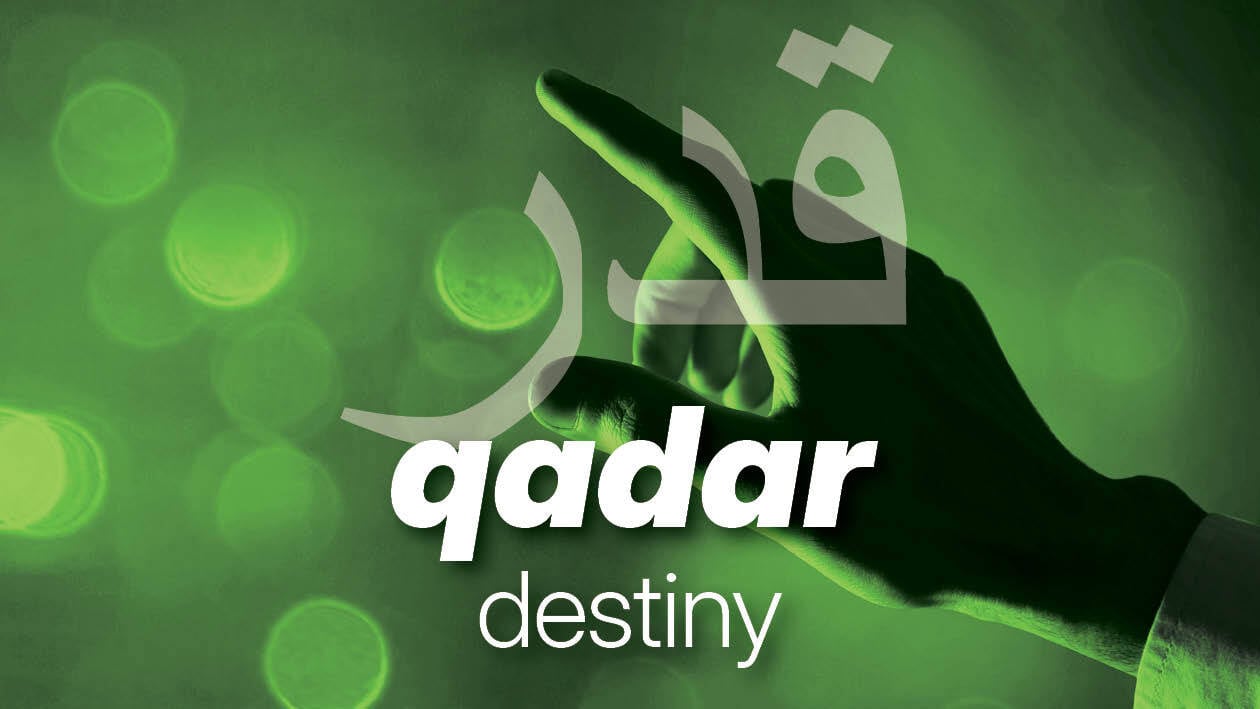
This week's spotlighted Arabic term is qadar, which denotes destiny or fate that transcends human control. Rooted in the Arabic letters qaf, dal, and raa, qadar signifies measurement, determination, and possession of power or ability. While seemingly deterministic, qadar suggests a larger cosmic order even when events appear random to those experiencing them.
Philosophers and theologians for centuries grappled with qadar, with influential Muslim thinker Al-Ghazali viewing events as part of a divine chain of causes. Human beings made choices, but those decisions also existed within God's predetermined knowledge. This tension between predetermined events and human agency lies at the core of qadar.
The word resonates in Arabic poetry, notably in Abu Al Qasim Al Shabbi's poem The Will to Live, where destiny is depicted as responsive to human desire. In Arabic music, qadar often appears in songs about love, separation, and events perceived as beyond control. It has become a symbol of fate in relationships, as seen in songs by Emirati singer Balqees and Saudi singer Rashed Al Majed.
Within Islamic belief, qadar represents divine decree and God's omniscience. Belief in it is fundamental to the faith, yet it doesn't negate human effort. Individuals pursue their goals, knowing the outcome remains uncertain. Qadar symbolizes the end of control and the beginning of accepting what cannot be changed.
The term's linguistic connections extend to qudra (ability) and qadr (measurement, value, or worth). Laylat Al Qadar, the Night of Power or Decree, celebrated during Ramadan, shares the same origin. Qadar endures as a compelling concept because we rarely perceive destiny in real-time. Our experiences are shaped by choices, accidents, disappointments, and coincidences, which only reveal themselves as qadar in retrospect.
Written by urgent.news from The National UAE's reporting — not their text. Machine-written — may contain errors; check the original before relying on it.
This story
This is one outlet's version. Read the fullest account.
- Arabic word of the week: 'Qadar' is the destiny we cannot control thenationalnews.com