Arabic word of the week: 'Qadar' is the destiny we cannot control
What is destiny? How do we recognise it, and when does it arrive? Is it the moment two people meet by chance, the opportunity that appears unexpectedly or the road that closes despite every effort to keep it open? Or does destiny become visible only in retrospect, once a life has unfolded enough for seemingly unrelated events to form a pattern? Our Arabic word of the week , qadar, explores this…
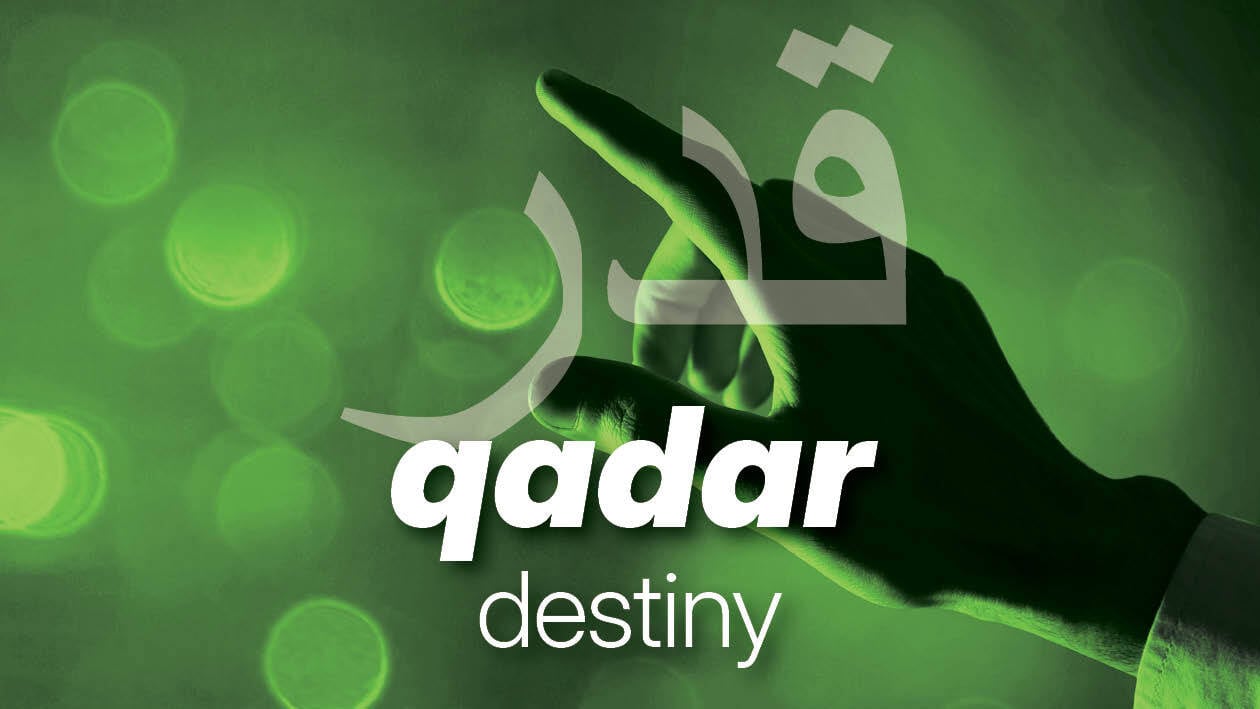
This week's Arabic word is qadar, which translates to destiny, fate, or divine decree. Derived from the Arabic root qaf, dal, raa, qadar signifies measuring, determining, and possessing ability or power. It is not simply an idea that something was predestined to happen, but rather that events exist within a larger order, even if that order remains unseen by those experiencing them.
Philosophers and theologians have pondered this concept for centuries, with Al-Ghazali seeing events as part of a chain of causes within divine knowledge and determination. Despite this, humans still act, choose, and intend, with their choices existing within a broader, incompletely understood order. This tension between what is predetermined and what remains changeable is central to qadar.
The word appears often in Arabic poetry, such as in Abu Al Qasim Al Shabbi's poem The Will to Live, where destiny is portrayed as responsive to human desires for life. In Arabic music, qadar frequently appears in songs about love, separation, and encounters perceived as beyond control. Emirati singer Balqees and Saudi singer Rashed Al Majed have both released songs titled Qadar, where destiny is closely linked to love and relationships.
In literature, describing a connection as qadar implies that two individuals were destined to meet, while a painful separation can be seen as predestined.
In Islamic belief, qadar specifically refers to divine decree and God's knowledge of all events. Belief in it is considered one of the articles of faith. However, this does not negate the expectation of human effort. A person can strive for a career, relationship, or ambition while acknowledging that the outcome cannot be guaranteed. Qadar essentially marks where control ends and acceptance begins.
The same root extends to qudra, meaning ability or capability, and qadr, which can signify measure, value, or worth. Laylat Al Qadar, the Night of Power or Night of Decree, observed during Ramadan, shares this linguistic family, which may explain why qadar remains such a compelling idea. We usually do not perceive destiny in the moment, but rather through choices, accidents, disappointments, and coincidences. Only with time do we sometimes retrospectively identify these events as qadar.
Written by urgent.news from The National Business's reporting — not their text. Machine-written — may contain errors; check the original before relying on it.
Also reported by 1 other outlet
- Arabic word of the week: 'Qadar' is the destiny we cannot control thenationalnews.com