Abdus Salam: Pakistan’s first (and so far only) Nobel prize-winner
Matin Durrani looks at the work of Abdus Salam, who was born a century ago this year. The post Abdus Salam: Pakistan’s first (and so far only) Nobel prize-winner appeared first on Physics World .
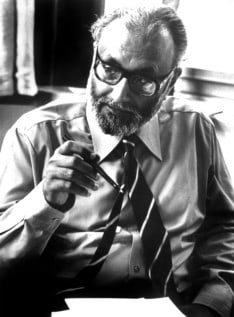
Abdus Salam, Pakistan's only Nobel laureate in the field of science, was honored with the prestigious 1979 Nobel Prize in Physics alongside Sheldon Glashow and Steven Weinberg. Their joint recognition was for their groundbreaking work in unifying the weak and electromagnetic interactions between elementary particles, including the prediction of the weak neutral current.
Salam's significant contribution was the incorporation of the Higgs mechanism, co-discovered by his colleague Tom Kibble, into the electroweak theory. This theory successfully unified the electromagnetic and weak forces, fundamentally altering our understanding of the physical world by emphasizing the importance of symmetry and demonstrating the interconnectedness of seemingly disparate forces.
Born in Jhang, Punjab, on January 29, 1926, Salam was a child prodigy who excelled in mathematics, completing his master's degree with top honors just one year after starting his studies. His academic success led him to pursue further education in the United Kingdom, where he earned a double first-class degree in physics from Cambridge in 1949.
Upon returning to Pakistan after completing his PhD, Salam struggled with a lack of scientific infrastructure and resources. Consequently, he left his homeland once again, this time to Cambridge, where he remained for three years before being appointed a professor of applied mathematics at Imperial College in London.
In 1957, Salam returned to Imperial College's physics department, where he established a renowned theoretical physics group that he led until the end of his life. He also founded the International Centre for Theoretical Physics (ICTP) in Trieste, Italy, in 1964 to support physicists from developing nations. Salam remained deeply connected to Pakistan throughout his career, serving as its presidential science adviser for 13 years and playing a role in the country's nuclear-weapon program during the 1970s.
Written by urgent.news from Physics World's reporting — not their text. Machine-written — may contain errors; check the original before relying on it.