A New Exhibition Spotlights 4,500 Years of Broken, Shot-Up and Degraded Artworks to Explore the ‘Power of the Fragment’
The show, on view in Florence and coming to D.C. next year, examines the history and impact of destroyed sculptures throughout time and across cultures
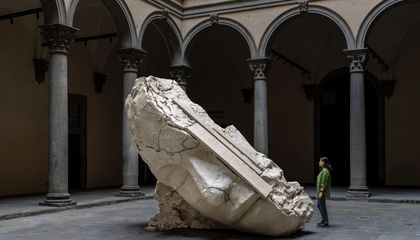
In Florence, an exhibition titled "Broken: The Power of the Fragment" showcases more than 80 fragmented artworks spanning 4,500 years of broken, shot-up, and degraded pieces. Curators, C. D. Dickerson III and Andrew Sears, sought to explore the circumstances of the destruction or fragmentary creation of these artifacts and the inherent beauty of a piece separate from the whole.
One notable artifact, the Nose and Lips of Akhenaten, features only the pharaoh's straight nose and lips from a 14th-century B.C.E. limestone bust. Its curators describe fragments as evocative and thought-provoking, as they compel viewers to scrutinize objects differently. Dickerson highlights the "subtle way that the lip has been crisply carved" as an example.
The exhibition delves into historical reasons for artwork damage, including politics, religion, war, colonialism, natural disasters, and theft. A leg from a 3rd-century B.C.E. Greek equestrian statue, toppled in Athens' Agora, serves as a poignant example of politically motivated destruction, while a 1923 bust of Benito Mussolini showcases a bullet hole inflicted by Italian partisans post-liberation.
Artworks damaged by looters, war, or natural disasters are also on display. These include an 8th-century bronze Buddhist sculpture from Vietnam, a neo-Hittite sculpture of a woman from Syria, and a 14th-century Tuscan Christ sculpture marred by Florence's 1966 floods. The exhibition concludes with a celebration of the cultural significance of fragmented pieces, emphasizing how their damage often enhances their enduring power.
Written by urgent.news from Smithsonian's reporting — not their text. Machine-written — may contain errors; check the original before relying on it.