The Next Front
The Baltics are getting ready for a Russian attack.
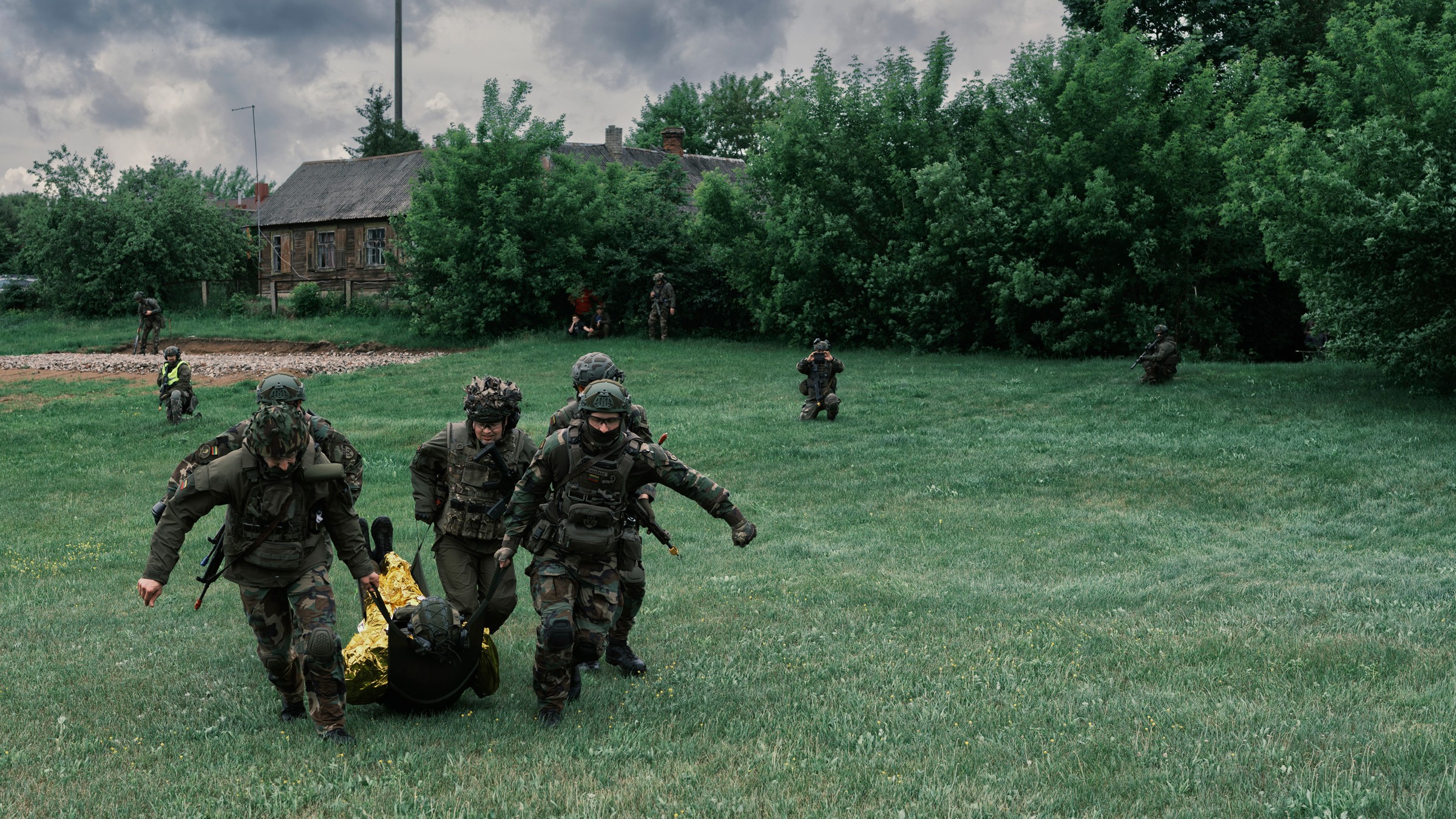
On a summer evening in Bezdonys, Lithuania, a platoon of riflemen arrived at an enemy occupied train station. Some Lithuanians fired from across the tracks, holding the adversary in place as the rest of the unit advanced. As the firefight escalated, wounded soldiers were taken to makeshift medical tents where an enemy soldier lay dead against the station’s yellow clapboard siding.
The exercise was part of a nationwide simulation involving the Lithuanian Riflemen’s Union, a militia group with historical ties to Lithuania’s struggle for independence following World War I. The riflemen, who hold various civilian professions, suddenly found themselves responsible for ambushing Russian outposts and transmitting intelligence to the army.
General Raimundas Vaikšnoras, Lithuania’s defense chief, emphasized that the enemy needed to know that Lithuania would strike back if they stepped into their territory. This sentiment reflects the ongoing concern in the Baltic states about Russian aggression, which has been a source of tension since Russia's invasions of other former Soviet nations.
The three Baltic states – Lithuania, Latvia, and Estonia – are small, located on the shores of the Baltic Sea, and have been under constant threat from Russia, which views them as buffer zones. Despite regaining their sovereignty after the collapse of communism, the Baltic states remain vulnerable, surrounded by Russia and former Soviet satellite states.
Their defense spending is a priority, with Lithuania spending more than any other NATO country. The threat of Russian expansion may seem distant to the United States, but for the 6 million people living in the Baltic states, the prospect of Russian invasion is a very real possibility.
Written by urgent.news from The Atlantic's reporting — not their text. Machine-written — may contain errors; check the original before relying on it.