Talus Bio’s Structure-Free AI Model Targets Unstructured Proteins in Their Native Cellular Context
Intrinsically disordered proteins have resisted structure-based drug discovery because they lack a stable fold to model. Talus Bio's structure-free AI model sidesteps that limitation, targeting these proteins in their native environment instead of in isolation or from a predicted structure. The post Talus Bio’s Structure-Free AI Model Targets Unstructured Proteins in Their Native Cellular Context…
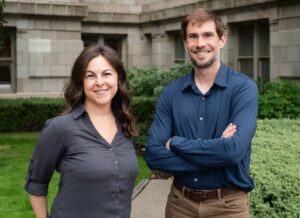
Alex Federation, PhD, co-founder and CEO of Talus Bioscience, has been captivated by undruggable targets since his time as a trainee at Dana-Farber Cancer Institute. The lab there focused on identifying molecules that could bind to genomic targets, several of which eventually reached clinical use. During this period, genome sequencing technologies were becoming increasingly accessible, sparking Federation's curiosity about leveraging these advancements to tackle challenging targets.
This interest led to the co-founding of Talus Bioscience, a company that utilizes AI to facilitate drug discovery for the disordered proteome, alongside Lindsay Pino, PhD, who serves as the CTO and oversees the development of the company's screening platform.
Federation credits Pino with introducing him to proteomics as an effective method for addressing the undruggable target problem. The two co-founders met in Seattle about a decade ago and have since collaborated on various projects, including the technology that powers Talus' platform. This platform measures proteins in their native cellular environment, generating substantial proprietary data that forms the basis of the AI models developed by the company.
Recently, Talus unveiled Ptarmigan-1, a solution driven by their MARMOT platform. This marks the debut of the company's structure-free AI model, capable of accurately predicting small molecule binding sites across the entire human proteome, even those proteins notoriously resistant to traditional 3D modeling tools. The name Ptarmigan-1 and the company's products draw from Seattle's mountains and wildlife, with the approach being metaphorically linked to navigating disordered proteins.
The company's name and product titles reflect the boulder field and wildlife found in their surroundings, symbolizing the obstacles they aim to overcome in studying disordered proteins.
Talus' strategy is centered on the roughly 40% of human proteins residing within cells that lack stable, defined 3D structures, making them challenging to study or target using conventional structural biology methods. These proteins become unstable outside of cells, complicating their purification and analysis using standard experimental workflows.
Federation explains that the company's method allows for observing these proteins in their native state within cells without extracting them, enabling the identification of molecules that can interact with them in their native context.
One unique aspect of Talus' methodology is its label-free approach. Adding tags to these proteins would alter their dynamics, so the company employs a label-free proteomics method to capture snapshots of proteins in their native context. This approach allows them to determine if a compound binds and where on the protein it binds, a capability absent in other AI drug discovery tools that rely on fitting a molecule onto a defined protein pocket.
Written by urgent.news from GEN Biotechnology's reporting — not their text. Machine-written — may contain errors; check the original before relying on it.