Physicists unveil the most accurate atomic clock ever — and it could literally redefine the second
Physicists have used radioactive lutetium to create what they say is the most accurate atomic clock ever, keeping time perfectly up to 19 decimal places.
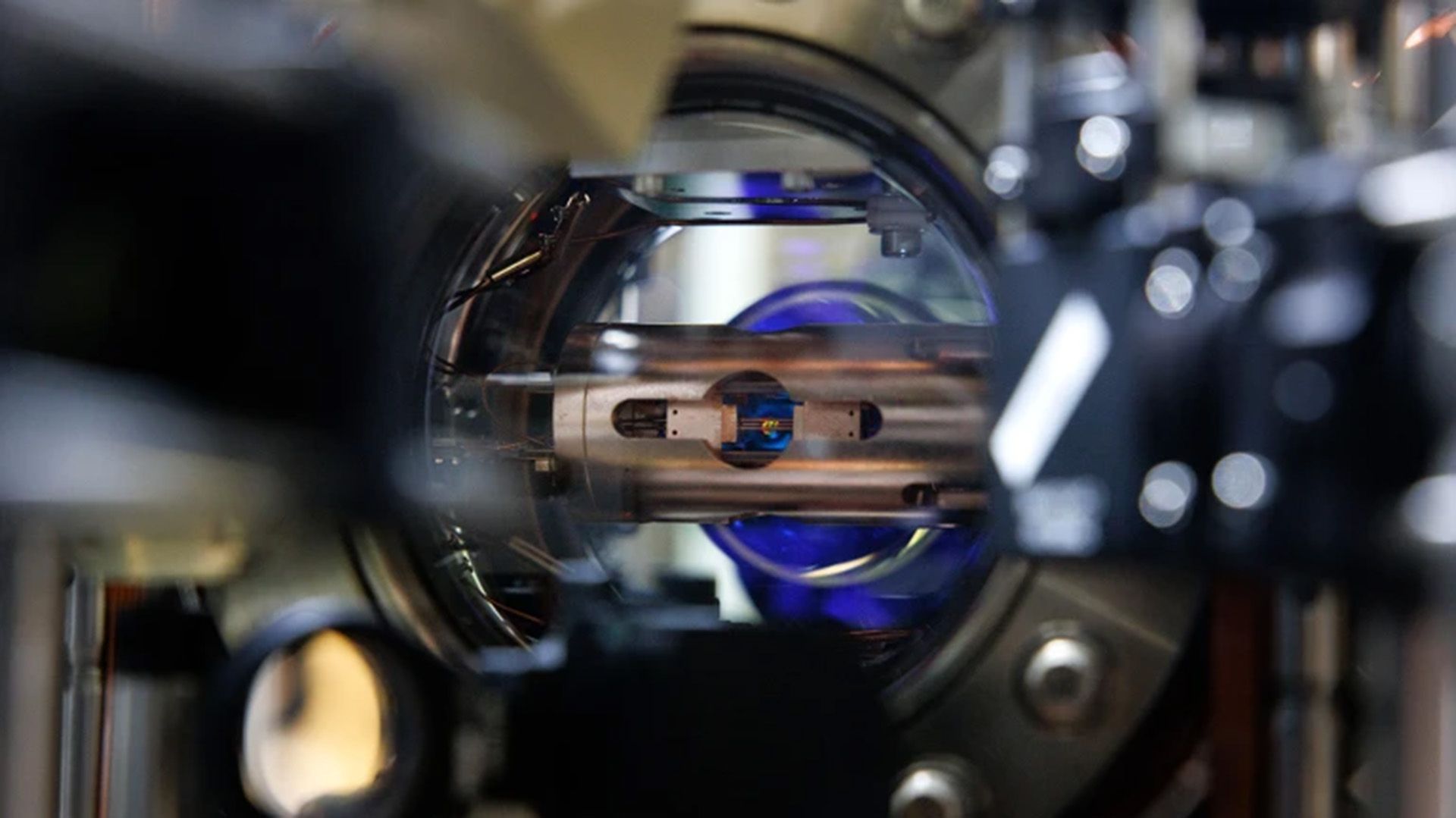
Scientists have created the most accurate atomic clock ever made, potentially redefining the second. The device uses the vibration of atoms of lutetium to precisely measure each microsecond, with an accuracy of up to 19 decimal places — a 41% improvement over the previous record holder. The results were published in Nature on September 23.
Atomic clocks have been around since the 1950s, with cesium atoms initially used as the gold standard for timekeeping. The International Bureau of Weights and Measures revised its definition of the second in 1968, based on the radiation emitted from cesium-133, setting a second at 9.19 billion vibrations of that atom. Cesium clocks helped standardize the second for scientific and everyday use.
Other radioactive metals, such as ytterbium and strontium, have been employed in atomic clocks since the 1960s, becoming the cornerstone for systems like GPS, the internet, and military technology. However, these modern, ultraprecise clocks still face limitations due to external factors like temperature, magnetic fields, and gravity.
The newly developed clock from the National University of Singapore largely sidesteps these issues. Study co-author Murray Barrett, a physicist, compared precise timekeeping to an ultramarathon, with the clock's core isotope as the runner. Lutetium, the element used in this clock, is a natural-born endurance athlete, maintaining accuracy even with significant temperature swings.
The team also developed a technique called hyperfine averaging to minimize the impact of environmental factors, such as gravitational fields. This sensitive atomic clock could become the International System of Units' new gold standard, potentially being adopted by the BIPM in 2030. The clock could also help scientists explore whether fundamental constants, like the gravitational constant, are as constant as we think, as some speculate these constants may actually be changing.
Written by urgent.news from Live Science's reporting — not their text. Machine-written — may contain errors; check the original before relying on it.