Bhopal Master Plan 2047 Raises Lake Protection Questions As City Expands
Bhopal (Madhya Pradesh): The proposed Bhopal Development Plan 2047 aims to transform the capital, but its scale also raises questions over whether infrastructure and ecological protection can keep pace with expansion, particularly when compared with Ahmedabad, Delhi, Hyderabad and Bengaluru. Bhopal's draft plan covers 1,016.90 sq km and 254 villages, compared with about 601 sq km and 146 villages…
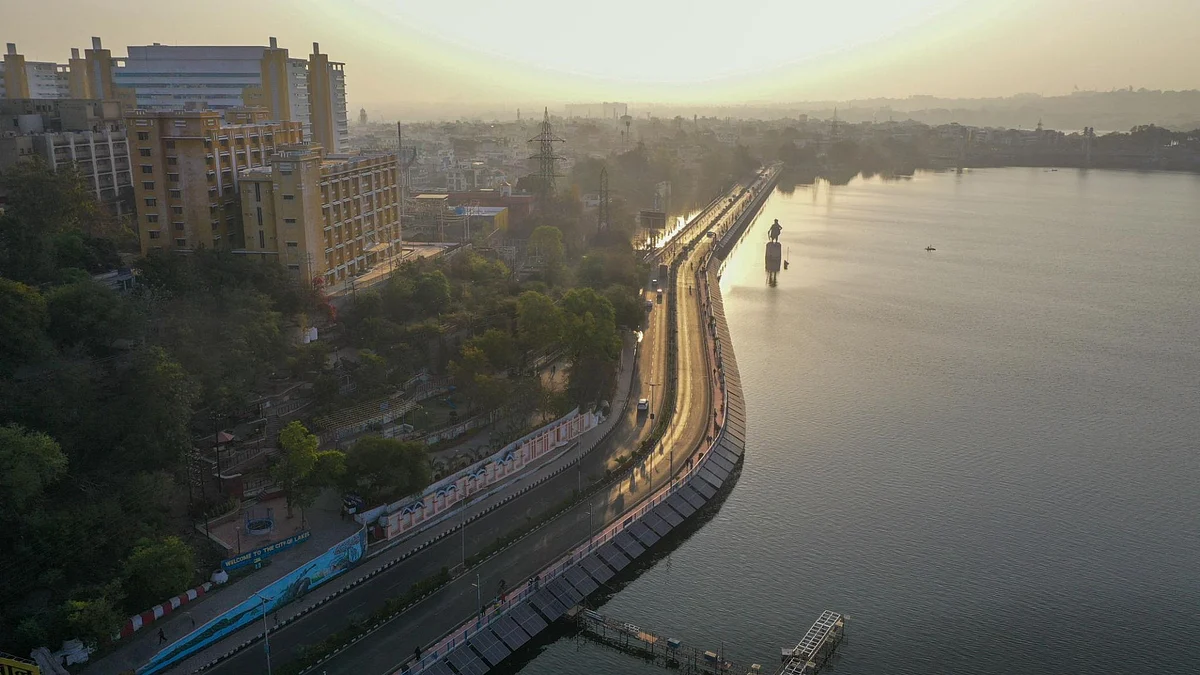
The proposed Bhopal Development Plan 2047 aims to transform the capital city as its population expands, but its scale has raised concerns about whether infrastructure and ecological protection can keep pace, particularly when compared to cities like Ahmedabad, Delhi, Hyderabad, and Bengaluru. The draft plan covers an area of 1,016.90 sq km and includes 254 villages, a significant increase from the previous planning framework which covered approximately 601 sq km and 146 villages.
The plan allocates nearly 50% of the land to residential use and 27% to green areas. While Ahmedabad's Urban Development Authority has a 2041 Town Planning Scheme that integrates land readjustment with roads, open spaces, utilities, and social infrastructure, Bhopal's plan faces challenges such as delays, financing constraints, and resistance from landowners. These issues raise questions about the feasibility of mixed land-use provisions based on road width.
Similarly, Delhi's MPD 2047 includes dedicated blue-green infrastructure, water supply, wastewater management, drainage, mobility, parking, transit-oriented development (TOD), and plan monitoring, with responsibilities assigned to individual departments. Urban experts believe that the MPD 2047 framework provides valuable lessons for Bhopal's planning efforts.
Comparing Bhopal with other cities highlights several key challenges. Ahmedabad, Delhi, Hyderabad, and Bengaluru have implemented various strategies to manage their urban expansion, including integrated land-use planning, dedicated lake protection committees, and comprehensive water management systems. These approaches emphasize the importance of catchment-level lake and drainage planning, rigorous encroachment removal, and sewage diversion to ensure the protection of water bodies and groundwater resources.
Bhopal's lake system, particularly the Bhojtal, plays a critical role in the city's water security. However, rapid urbanization, sewage discharge, and encroachments have degraded the interconnected lake network, leading to groundwater depletion, pollution, and loss of ecosystem services. To safeguard Bhopal's water resources, it is crucial to implement a catchment-level lake and drainage planning strategy, as opposed to merely focusing on lake buffers.
In conclusion, while the Bhopal Development Plan 2047 presents an opportunity for the city's growth and development, it also raises significant questions about the ability to protect its natural assets, such as the lake system and groundwater resources. By drawing lessons from successful urban planning practices in cities like Ahmedabad, Delhi, Hyderabad, and Bengaluru, Bhopal can develop a more holistic approach to sustainable urban expansion that balances infrastructure needs with ecological protection.
Written by urgent.news from Free Press Journal's reporting — not their text. Machine-written — may contain errors; check the original before relying on it.