18th Century Pirate’s Jolly Roger in Portsmouth, England
The National Museum of the Royal Navy in Portsmouth displays a genuine Jolly Roger, captured from pirates off the North African coast in 1790 by Admiral Richard Curry. Surviving pirate flags are almost unheard of anywhere in the world, since they were cheap, disposable items never meant to outlast the voyage, let alone two and a half centuries. Only two or three historically authentic, preserved…
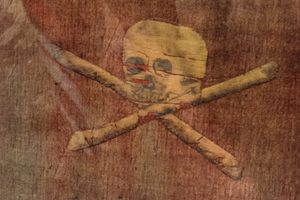
In 1790, a pirate flag known as the Jolly Roger was captured off the North African coast by Admiral Richard Curry and is now on display at the National Museum of the Royal Navy in Portsmouth, England. This flag, which has survived for over two and a half centuries, is one of only a handful of genuine pirate flags still in existence worldwide.
Most historians learn about pirate flag design from sources like Captain Charles Johnson's 1724 book, A General History of the Pyrates, which provides primary evidence for pirate signaling and intimidation tactics at sea. Prior to the widely recognized black flag with a white skull and crossbones, early Jolly Rogers were often red, intended to convey a warning that no mercy would be shown if the crew did not surrender immediately.
The skull-and-crossbones symbol itself originated from a ship's log notation used to mark a death on board, and the pirate flag's legacy extends beyond the 18th century. During World War I, Royal Navy submarine crews adopted the Jolly Roger as a badge of pride, literally sewing the symbol onto their own flags to document successful wartime patrols.
Written by urgent.news from Atlas Obscura's reporting — not their text. Machine-written — may contain errors; check the original before relying on it.