What can steam trains teach us about progress in AI?
Contrary to popular belief, Stephenson’s Rocket did not hail the dawn of the steam age. Likewise, AI has actually been in development for decades, but progress could now begin to move faster than steam trains ever could, says Paul Ormerod The economics Nobel Laureate Robert Solow famously stated in 1987: “you can see the computer [...]
Paul Ormerod, an Honorary Professor at the Alliance Business School at the University of Manchester, draws parallels between the development of steam trains and the progress of AI in a recent article. He notes that while the steam locomotive did not initiate the steam age, AI has been in development for decades but could now see accelerated progress.
Ormerod cites Robert Solow, an economics Nobel Laureate, who famously observed in 1987 that the computer age seemed to be absent from productivity statistics. However, significant advancements in computing had occurred years before Solow's remark, including the widespread adoption of personal computers, which replaced the need for large mainframe computers and transformed office work.
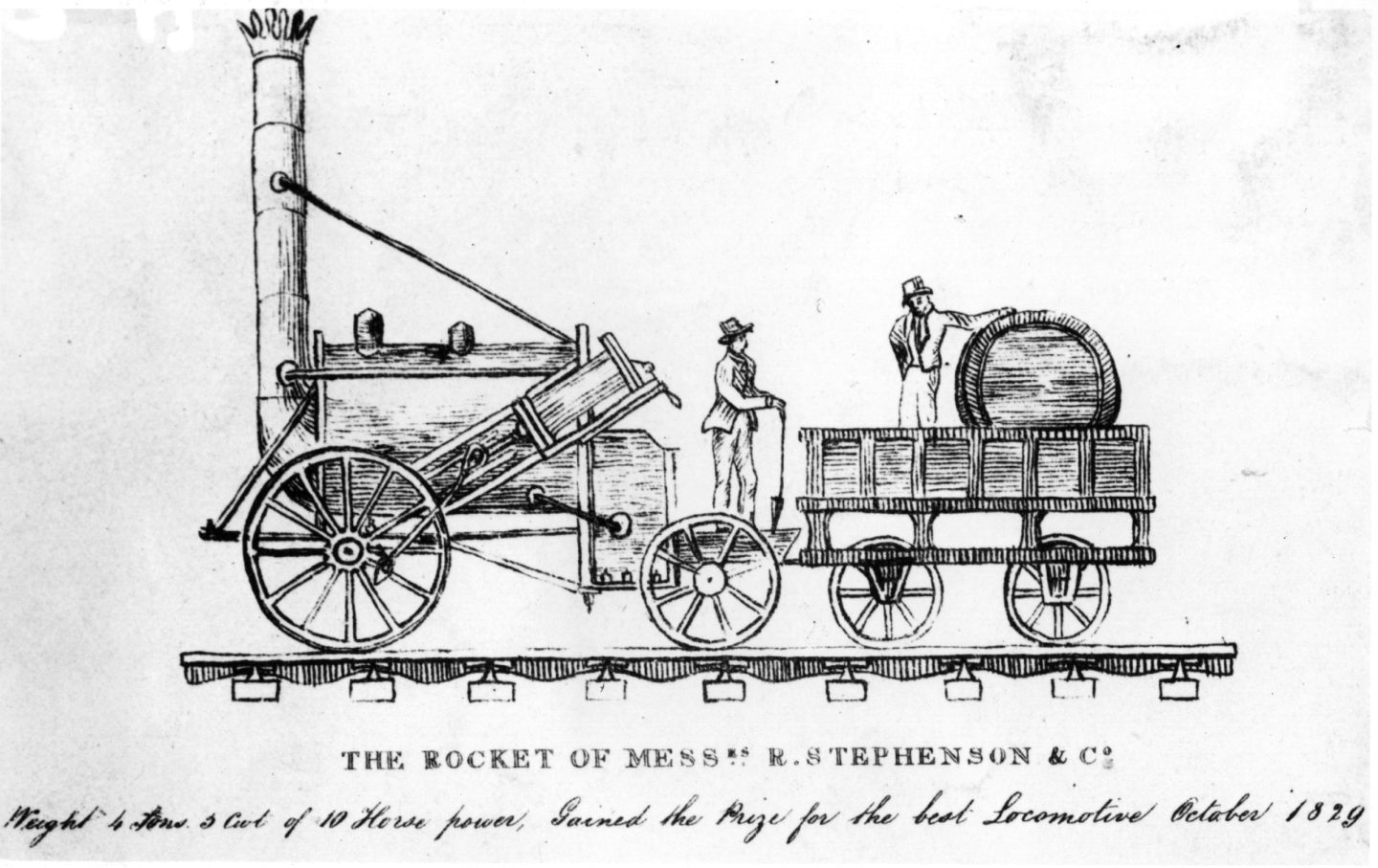
He compares this to the era of steam locomotives, which emerged in the 19th century. The Rainhill trials of 1829 showcased the superiority of Stephenson's Rocket, a revolutionary steam engine that set the foundation for the future of rail transportation. Similarly, in the world of AI, neural networks, the basis for modern large language models, can be traced back to the 1940s. However, they did not become truly operational until the development of backpropagation in 1986.
Ormerod recounts that the development of AI was initially promising, with his company partnering with UCL to apply neural network technology. However, the results were underwhelming, much like Trevithick's early steam engine that demonstrated potential but ultimately fell short of expectations.
Interest in AI waned until a breakthrough paper by Yoshua Bengio in 2003, followed by further advancements in the 2010s. It wasn't until the publication of ChatGPT at the end of 2022 that AI reached a "Rocket moment," akin to the impact of Stephenson's Rocket on the steam age. This current surge in AI's capabilities has raised concerns about the potential risks, such as the possibility of AI leading to humanity's extinction.
Despite these concerns, Ormerod believes that modern AI will bring about significant progress in the coming decades.
Written by urgent.news from City AM's reporting — not their text. Machine-written — may contain errors; check the original before relying on it.