Used Cooking Oil Could Help Turn Old Asphalt Into New Roads, Studies Find
Used cooking oil, usually treated as kitchen waste, could help increase the amount of recycled material used in road construction. Laboratory research has found that waste cooking oil can soften the hardened binder in old asphalt, making it possible to incorporate larger quantities of reclaimed pavement into new asphalt mixtures. A 2019 study published in the Journal of Traffic and Transportation…
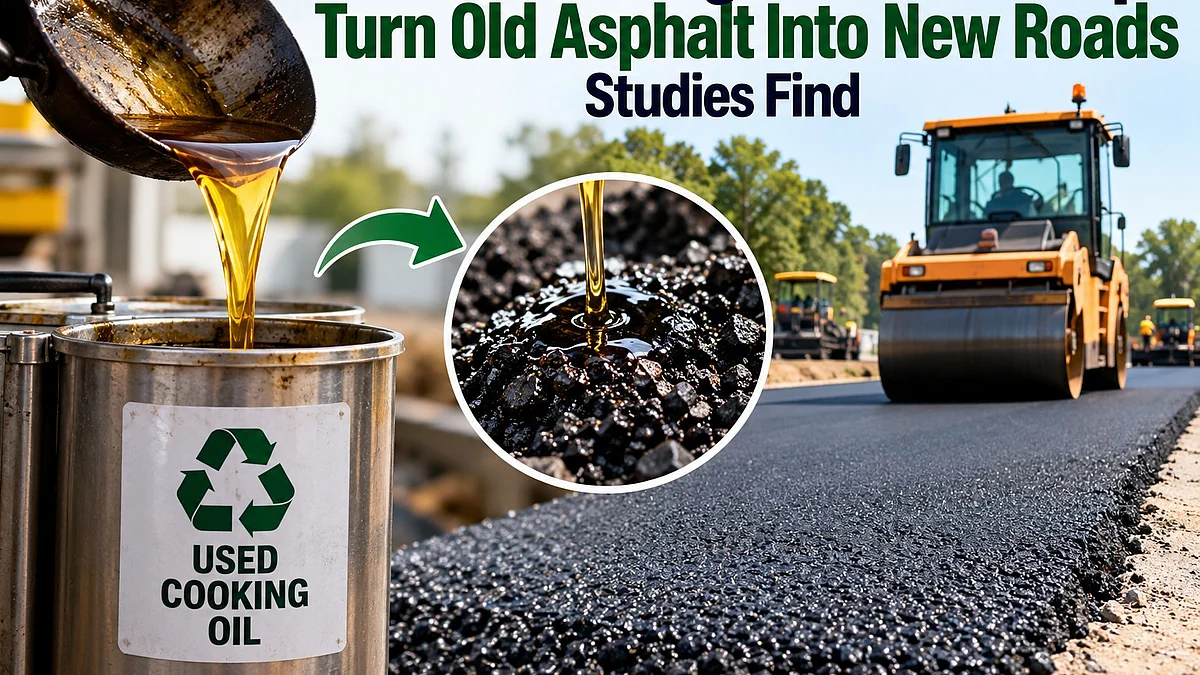
Used cooking oil, typically discarded as kitchen waste, may prove beneficial in road construction. Laboratory experiments have shown that this waste can soften the hardened asphalt binder, enabling the use of more reclaimed asphalt pavement (RAP) in new asphalt mixtures. A 2019 study published in the Journal of Traffic and Transportation Engineering revealed that asphalt mixtures with 60% to 100% recycled material could be formulated using waste cooking oil as a recycling agent.
However, the researchers emphasized that the quantity of oil is crucial, as excessive amounts could diminish certain pavement attributes. The study was conducted by Hamed Majidifard, Nader Tabatabaee, and William Buttlar. Majidifard and Buttlar were associated with the University of Missouri, while Tabatabaee was linked to Sharif University of Technology in Iran, where the Asphalt Pavement Lab tests were carried out.
Rewritten by urgent.news; may contain errors — check the original.
Source: freepressjournal.in