Astronomers discover 'backward' planet orbiting its star in the wrong direction
A newly discovered exoplanet orbits its star backward, and it's a mystery why. The system and others like it could shed light on how some complex planetary systems form.
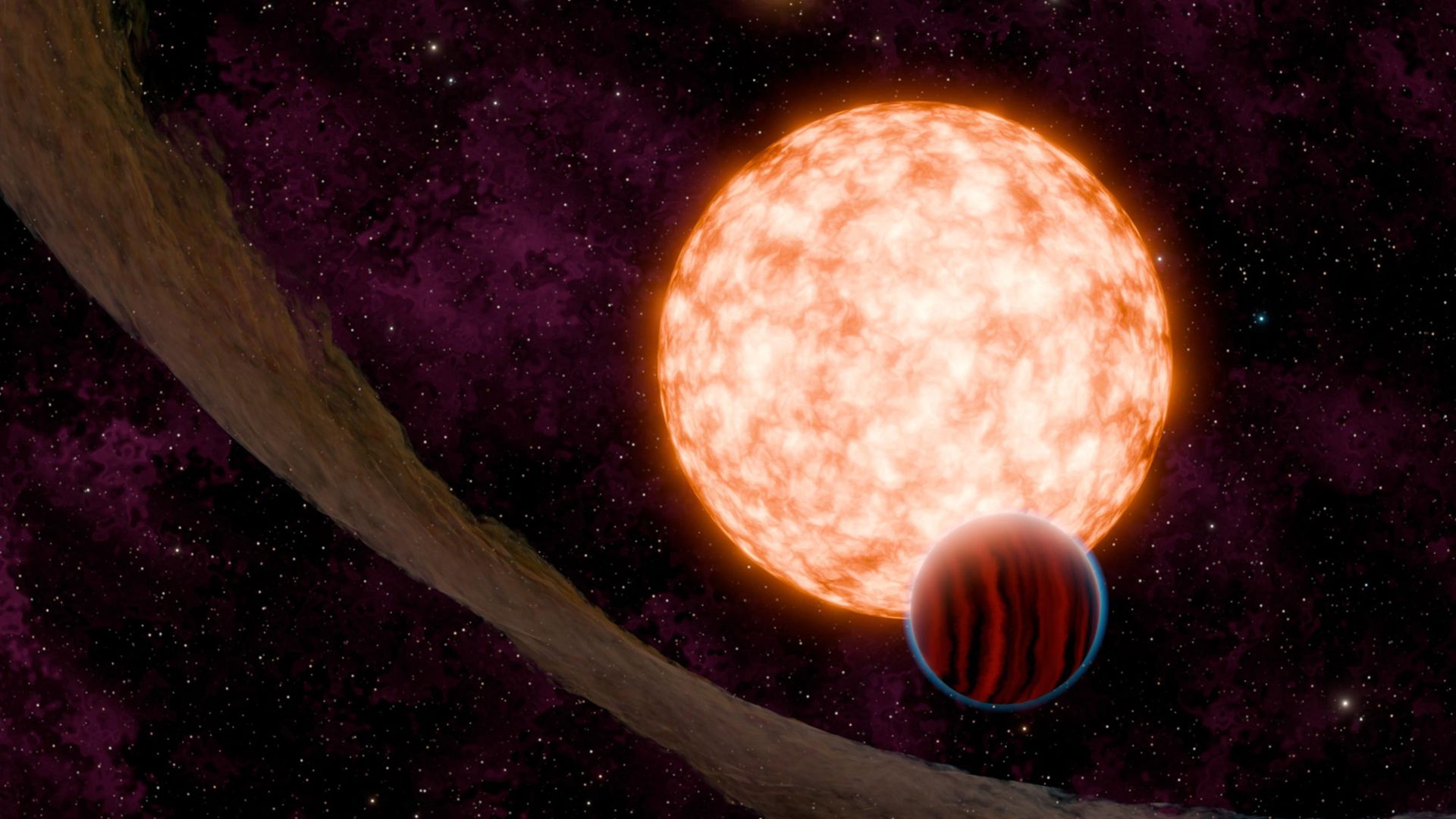
Scientists have uncovered a perplexing exoplanet, designated GJ 3090 b, that orbits its star in a reverse direction, unlike most celestial bodies. This backward orbit, or retrograde orbit, is a significant finding that could shed light on the formation of exoplanets around stars that are abundant in our galaxy.
The researchers, led by Yann Carteret from the University of Geneva, analyzed 23 hours of observations from two instruments on a 12-foot-wide telescope at the La Silla Observatory in Chile. They observed the planet crossing in front of its star ten times, which provided information about the planet's size and orbit.
The star in question is an M dwarf, a small, cool, and dim star that is the most common type in our galaxy. These stars are particularly important for understanding exoplanets as about three-quarters of the stars in the Milky Way are M dwarfs. The system consists of two, or possibly three, planets smaller than Neptune, with GJ 3090 b being the innermost, completing an orbit every 2.9 days.
The retrograde orbit is one of the most misaligned ones detected so far, at 136 degrees out of alignment with the star's spin, effectively making the planet nearly upside down. This unusual alignment is unlike any other observed, leading researchers to question the planet's formation process.
The study suggests that the planet may have been born upside down, possibly due to the addition of a second, differently oriented disk of gas and dust at a different angle to the original. This theory could potentially explain how planetary systems acquire their unusual architectures.
Written by urgent.news from Live Science's reporting — not their text. Machine-written — may contain errors; check the original before relying on it.