US sanctions forced Xinjiang cotton to adapt, but survival comes at a cost
The fields in Xinjiang’s Awati county – a cotton hub hit by US sanctions – were nearly ready for the October harvest. Yusup Molamaiti, a 36-year-old technician, recalled what it was like manually planting and harvesting 37 mu (about 2.5 hectares or 6 acres) of scattered plots of land. “Planting a single mu took up to three hours with two people laying plastic film by hand,” he said. Harvesting…
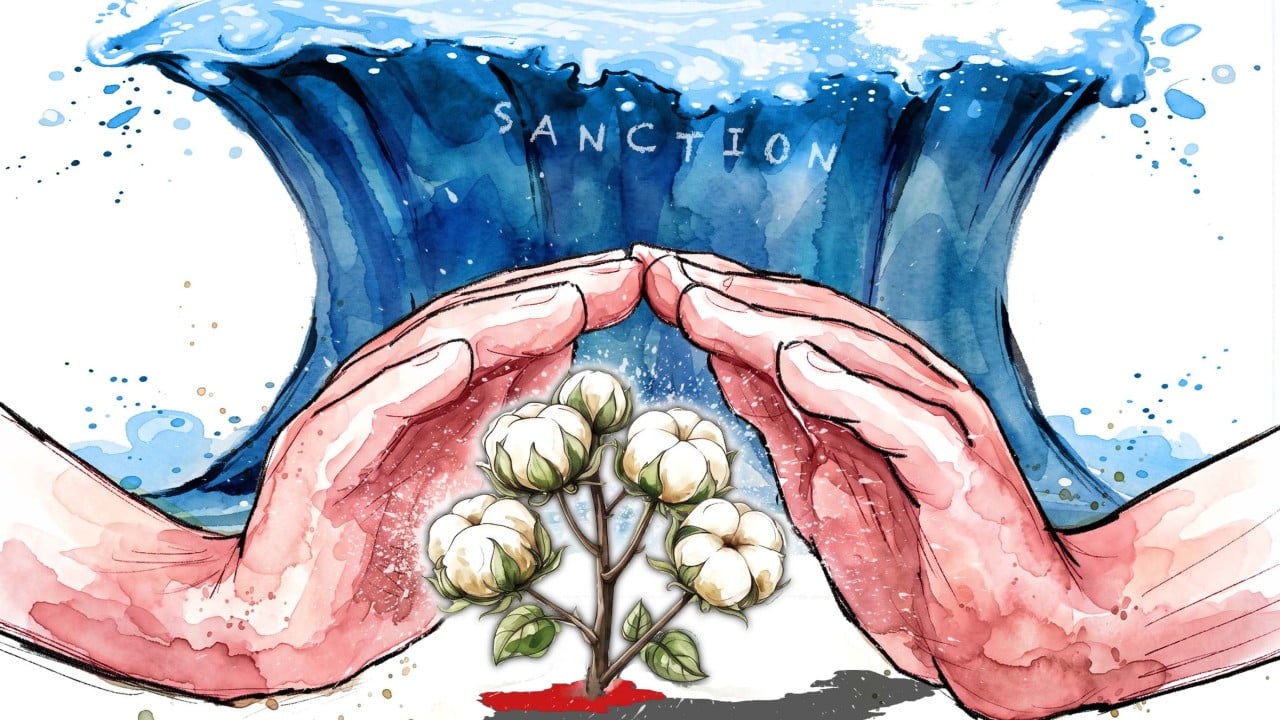
In Xinjiang's Awati county, a cotton hub impacted by US sanctions, the fields were almost ready for the October harvest. A technician, Yusup Molamaiti, recounted the labor-intensive process of planting and harvesting his 2.5-hectare plot, which required up to three hours of work with two people laying plastic film. Harvesting yielded a low 250-300kg per mu, with the entire village now a model for agricultural modernization.
Over 90% of the region's cotton is now harvested by machine, with yields increasing to 400kg per mu. For Yusup and his wife, mechanization has significantly boosted their income, now exceeding 90,000 yuan annually, a 125% increase from pre-mechanization levels. Despite the mechanization efforts, there are concerns about the hidden costs, including squeezed profit margins, a chilling effect leading to domestic decoupling, and unintended spillover into European markets.
Written by urgent.news from Reuters Business via SCMP's reporting — not their text. Machine-written — may contain errors; check the original before relying on it.
This story
This is one outlet's version. Read the fullest account.