US sanctions forced Xinjiang cotton to adapt, but survival comes at a cost
The fields in Xinjiang’s Awati county – a cotton hub hit by US sanctions – were nearly ready for the October harvest. Yusup Molamaiti, a 36-year-old technician, recalled what it was like manually planting and harvesting 37 mu (about 2.5 hectares or 6 acres) of scattered plots of land. “Planting a single mu took up to three hours with two people laying plastic film by hand,” he said. Harvesting…
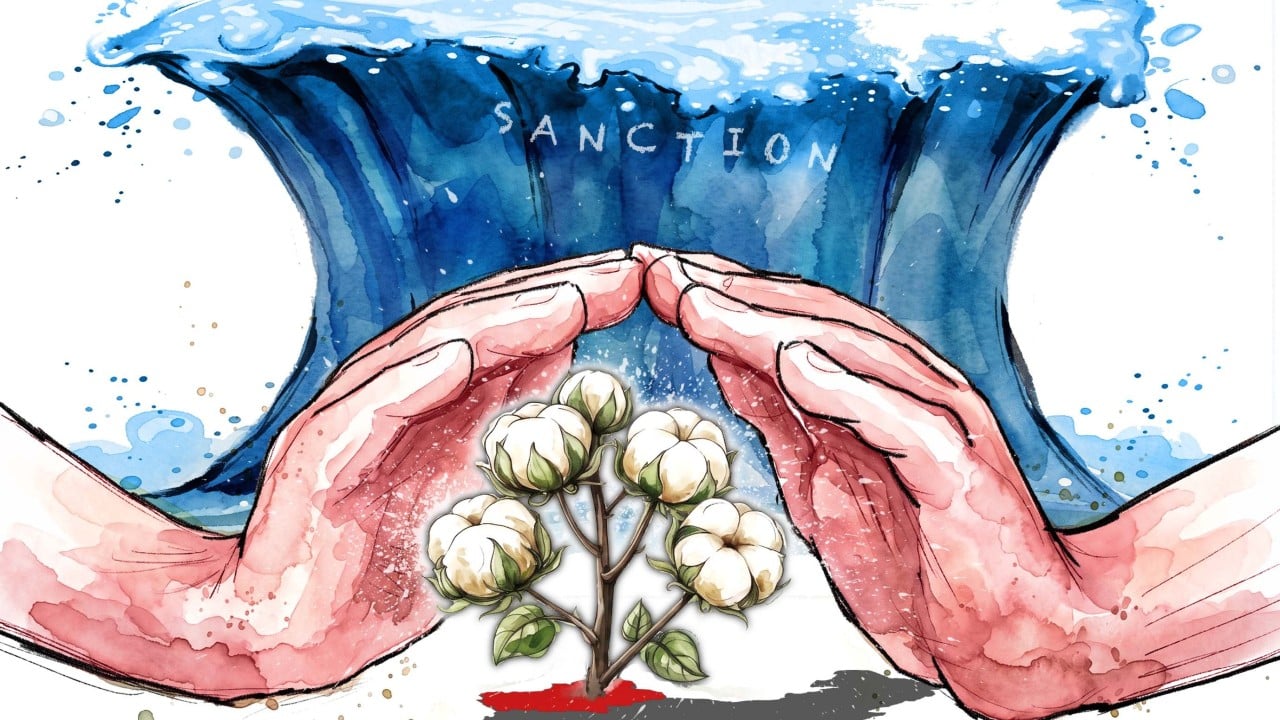
In Xinjiang's Awati county, cotton fields were nearly ready for the October harvest when the US sanctions hit. Local technician Yusup Molamaiti recalled the manual planting and harvesting process, which involved laying plastic film by hand and required three hours of labor per mu (about 2.5 hectares or 6 acres). Today, his 100-household village serves as a model for the region's agricultural transformation.
Over 90% of Xinjiang's cotton is now harvested by machine, up from just a fraction before. This mechanization boost has increased yields to 400kg per mu, according to the village leader.
The cooperative members, including Yusup and his wife, have seen their annual household income increase by over 125% due to mechanization and livestock farming. This transformation is part of Xinjiang's broader campaign to showcase its development and push back against Western allegations of forced labor. The US has blacklisted 187 companies involved in Xinjiang's industrial sector under the Uygur Forced Labour Prevention Act, with these targeted companies attempting to fight the restrictions with legal remedies and foreign audits.
However, the high burden of proof and low incentives make it difficult for US fashion brands and retailers to challenge the rebuttable presumption. As a result, textile producers have pivoted towards domestic markets and non-Western trade corridors, redirecting 60 to 70% of their capacity to domestic Chinese apparel powerhouses like Anta Sports.
Written by urgent.news from South China Morning Post's reporting — not their text. Machine-written — may contain errors; check the original before relying on it.