UK banks are Europe’s biggest coal financiers, report finds
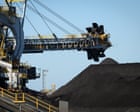
Study says UK-based banks provided $8.3bn in coal financing in four years, with Barclays and HSBC leading rise UK banks are Europe’s biggest financial backers of the global coal industry, providing billions of pounds in funding for the climate-wrecking fossil fuel in the past four years, according to a report. The study found UK-based banks had provided $8.3bn (£6.2bn) in coal financing since…
Last week, a ship laden with 90,000 tonnes of Libyan crude oil docked at the port of Kulevi on Georgia's Black Sea coast. This marked the second shipment from Libya to the Kulevi Oil Refinery in under a month, following a delivery in August. The refinery, owned and operated by Black Sea Petroleum (BSP), commenced operations in October 2025 and exclusively processes non-Russian crude oil.
The Libyan deliveries are part of a long-term supply agreement, with the refinery's existing capacity to meet EU market demands. Plans for expansion could further increase volumes and expand the range of fuels available.
Europe relies heavily on fuels for transport and industry, importing approximately 15.7 million tonnes of oil equivalent for gasoil and diesel, and 11 million for jet fuel in 2024, according to Eurostat data. The Kulevi Oil Refinery's expansion aims to supply EU markets, alongside Georgia, Armenia, and Azerbaijan, utilizing non-Russian crude and the Black Sea's shipping connections. This additional refining capacity, connected to maritime trade, could provide Europe with more sources of transport fuels.
BSP's Kulevi Oil Refinery is equipped with four pipelines running three kilometers to the nearby port and terminal, handling crude oil, naphtha, gasoil, and fuel oil. The terminal, operated by SOCAR, facilitates the movement of both incoming crude and refined products. The refinery has invested €200 million thus far and plans to invest an additional €650 million by 2029 to expand capacity and introduce new fuel production units.
The planned expansion aims to increase annual refining capacity from 1.2-1.5 million tonnes to 4.5-5 million tonnes by 2028, with Euro 5 fuel production units set to come online by 2029. The product range will include petrol, diesel, jet fuel, liquefied petroleum gas, marine fuel, and bitumen, catering to road transport, aviation, shipping, and construction needs. This expansion aligns with the EU's demand for imported diesel and jet fuel, while also supporting exports to neighboring countries.
Written by urgent.news from Politico EU's reporting — not their text. Machine-written — may contain errors; check the original before relying on it.
This story
This is one outlet's version. Read the fullest account.