UAE warns of fake jobs and deepfakes in new cyber campaign
Dubai: The UAE is stepping up its fight against increasingly sophisticated cybercrime, with authorities warning that artificial intelligence is giving fraudsters new ways to deceive victims, steal data, hijack accounts and disguise the proceeds of crime. The Ministry of Interior, in cooperation with Dubai Police and the Dubai Electronic Security Centre, has launched the “UAE Safe Through Your…
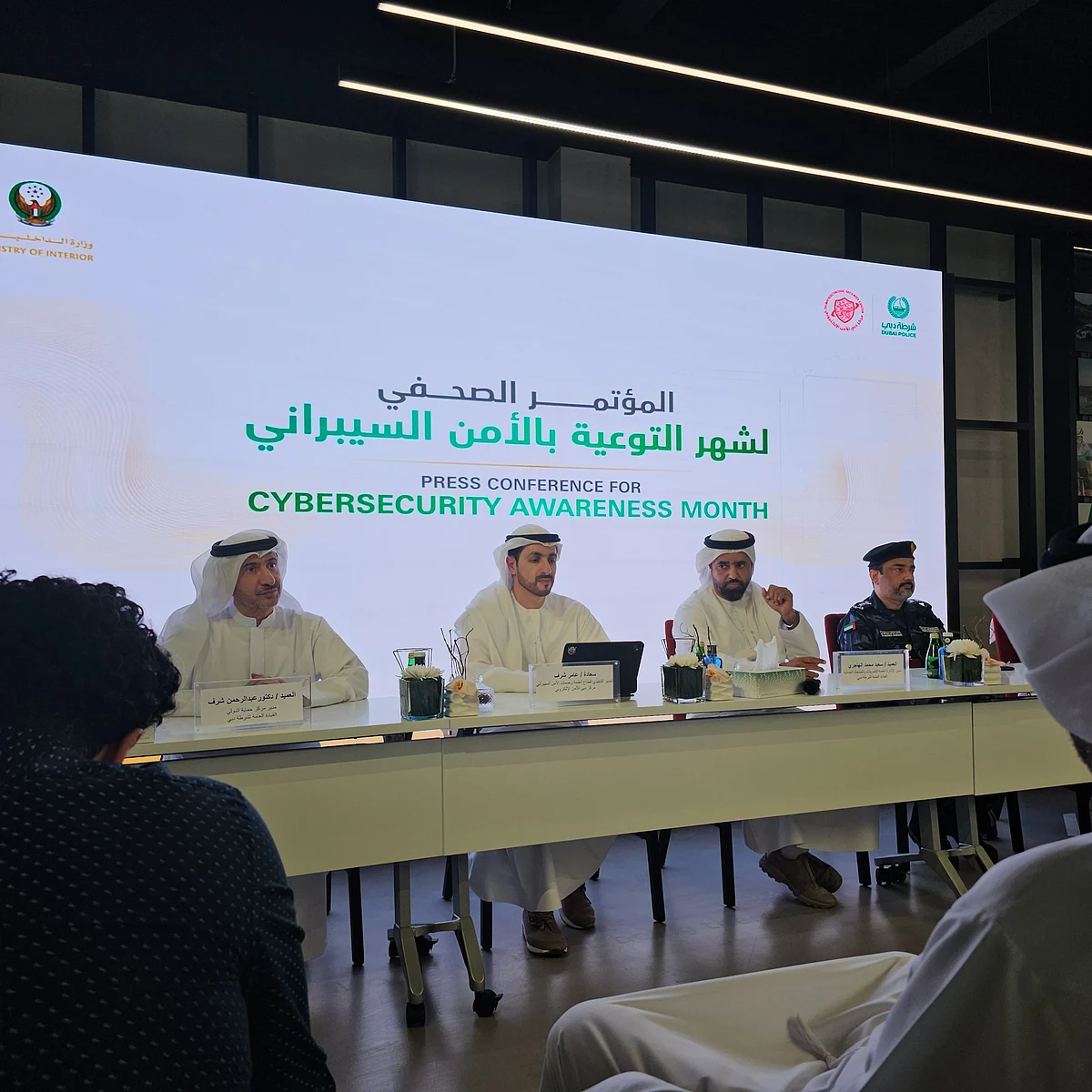
The United Arab Emirates is intensifying its efforts to combat the growing threat of cybercrime, particularly with the rise of artificial intelligence (AI) in fraud and deception. The Ministry of Interior, along with Dubai Police and the Dubai Electronic Security Centre, has launched the "UAE Safe Through Your Digital Awareness" campaign to raise public awareness about cybercrime risks, data protection, and ways to prevent criminals from accessing personal information.
The campaign, which aligns with Cybersecurity Awareness Month in October, targets various sections of society, with a focus on educating the public about the rapidly evolving techniques used by cybercriminals.
Brigadier Saeed Mohammed Al Hajeri, Director of the General Department of Criminal Investigations at Dubai Police, emphasized the initiative's goal to reach zero victims of cyber gangs and increase public awareness of electronic crime. Cybercriminals are increasingly leveraging AI to create convincing fraudulent pages, advertisements, and deepfakes, as well as employing AI to move illicit proceeds through multiple digital wallets to conceal the money trail.
One significant threat is the use of AI to generate professional-looking fake job offers on social media, where victims may unknowingly provide access to their bank accounts or transfer money as part of a supposed remote employment scheme.
The rapid advancement in AI-generated synthetic content, including images, audio, and video, poses new challenges for investigators. Dubai Police has upgraded its digital forensics laboratory to examine faces, voices, and video recordings for signs of AI manipulation, enabling the preparation of detailed reports on AI misuse, including deepfakes. The laboratory also prepares specialized units to address emerging crimes associated with AI, such as system breaches and data access methods.
Amer Sharaf, Executive Director of the Cybersecurity Systems and Services Sector at the Dubai Electronic Security Centre, highlighted that AI is being utilized by both cybercriminals and cybersecurity teams. Criminals exploit AI to identify and exploit vulnerabilities swiftly, while security teams deploy AI to monitor threats, anticipate attacks, and analyze large volumes of data.
Sharaf stressed the critical need for rapid security updates and preventive measures due to the swift development of new cyberexploitation methods.
The Dubai Electronic Security Centre has developed "Sarab," an AI-powered tool that assesses the authenticity of video content and detects deepfakes. This program, developed by UAE talent, is available as an open-source project for users and specialized organizations. Cybersecurity awareness efforts have reached over 11 million people in the past year, with cybercrime and electronic fraud accounting for approximately 60% of awareness lectures.
The center aims to increase this proportion to over 80% this year, based on monitoring cybercrime, blackmail, and fraud patterns. Al Maamari also emphasized the heightened risks faced by children and young people, who may spend over seven hours daily on electronic devices, necessitating increased education about online threats for both young people and their families.
Written by urgent.news from Gulf News's reporting — not their text. Machine-written — may contain errors; check the original before relying on it.