'Special surprise' as rare moth found in nature reserve for first time
Experts called it a "special surprise" to find an "incredibly sparse moth" in this habitat.
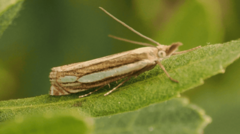
In north Wales, conservationists have made a rare discovery - the Bog Grass Moth has been observed in the Cors Geirch National Nature Reserve on the Llŷn Peninsula for the first time. Experts hailed this as a "special surprise" given the moth's scarcity and previous sightings are limited to a few English counties. The fen habitat, which comprises low, flat, wetlands, is being monitored by the Llŷn and Ynys Môn project, an initiative to safeguard some of north Wales' most threatened species.
During a recent survey, moth traps were set up by conservationists from Natur am Byth's project, resulting in the collection of 446 moths of 91 different species in a single night. Among these, 19 were identified as Bog Grass Moths, marking the first recorded sighting in this region. The habitat's wet sedges provide the only food source for the larvae of the Bog Grass Moth, a plant family that is abundant in wet environments.
Other rare species, such as the Six Spotted Crane Fly and the Black Nightrunner Ground Beetle, have also been identified at the site. Lepidopterists Steve Palin and Charles Aron commented on the unpredictability of moth trapping, highlighting the significance of the Bog Grass Moth's discovery. They emphasize the value of targeted moth recordings in specialist fen habitats, where much remains undiscovered.
Clare Sampson, a project manager for RSPB Cymru, praised the efforts of staff, contractors, and volunteers in opening up the wetland and preserving the habitat for these rare invertebrate species. She also highlighted the alarming loss of 80% of UK peatlands, which are crucial for carbon storage and the survival of rare species dependent on specific habitats. Sampson stresses the importance of maintaining these important fen sites for future generations to continue making new discoveries.
Written by urgent.news from BBC Science's reporting — not their text. Machine-written — may contain errors; check the original before relying on it.