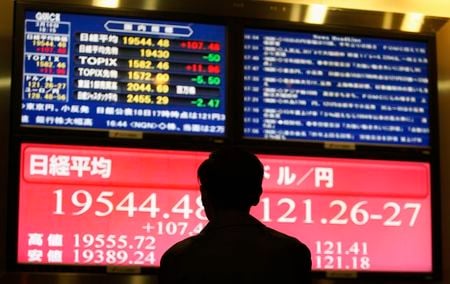
Sensex, Nifty set to post worst 9-month show in 15 years
Earlier, in the first nine months of the calendar year 2011, the BSE Sensex and Nifty had plunged 19.8 per cent and 18.9 per cent, respectively.

Mumbai's stock markets commenced their trading session on Wednesday, September 30, at a modestly reduced level, as varied global cues and ongoing foreign investor selling instilled an atmosphere of caution. Despite a dip in the Sensex and Nifty indices, certain sectors demonstrated strength. The Nifty started at 22,665, slipping by around 50 points, or 0.23 percent. Concurrently, the Sensex opened at 72,441.15, experiencing a decline of 87.92 points, or 0.12 percent.
The Nifty MidSmall IT & Telecom index emerged as the sector leading the early gains, surging more than 1 percent. PSU banks, chemicals, oil and gas, cement, and media indices also witnessed a rise by up to 1 percent. However, metal stocks encountered selling pressure, with the Nifty Metal index falling by 0.42 percent.
Foreign institutional investors marked their continued selling spree, extending it for four consecutive days on Tuesday. Provisions indicated a substantial sale of approximately Rs 10,000 crore worth of equities. Domestic institutional investors, on the other hand, managed to mitigate some of the market pressure by purchasing shares worth nearly Rs 7,000 crore.
Experts linked the sustained foreign outflows to the specter of elevated US bond yields. Nevertheless, they opined that the existing market correction had brought about some largecap companies with growth potential to appear more attractively valued. Technical analysts were particularly attuned to a hammer candle observed in the preceding session, indicating buying interest at lower levels. Additionally, gains in certain heavyweight stocks had contributed to containing losses.
The market outlook, as assessed by BSE, suggested a sideways to mildly bullish trend for the near term. This assessment was underpinned by support levels of 22,650–22,700 and resistance levels of 22,950–23,000. Following a rebound from 22,600, analysts recognized the market structure as potentially resilient. They identified key support at 22,650–22,700 and resistance at 22,950–23,000.
Experts suggested that a decline in crude oil prices could potentially aid a market recovery, potentially propelled by the performance of largecap market leaders. Asian markets showed a generally positive start to trading, even as the Wall Street session exhibited a slightly weaker performance. Investors remained vigilant, scrutinizing impending US economic data, global bond yields, and foreign fund flows to gauge future market direction.
These factors remained pivotal in shaping market sentiment as benchmarks endeavored to stabilize following a series of declines.
Written by urgent.news from Free Press Journal's reporting — not their text. Machine-written — may contain errors; check the original before relying on it.
This story
This is one outlet's version. Read the fullest account.