POLLUTION LEGACY: State refinery ‘renaissance’ plan raises fresh questions over pollution, health and taxpayer risk
News that the country’s largest fuel refinery is to be reopened – and expanded considerably – has stirred Durban fence-line communities who fear a resumption of noxious petrochemical fumes seeping in to their homes and lungs.
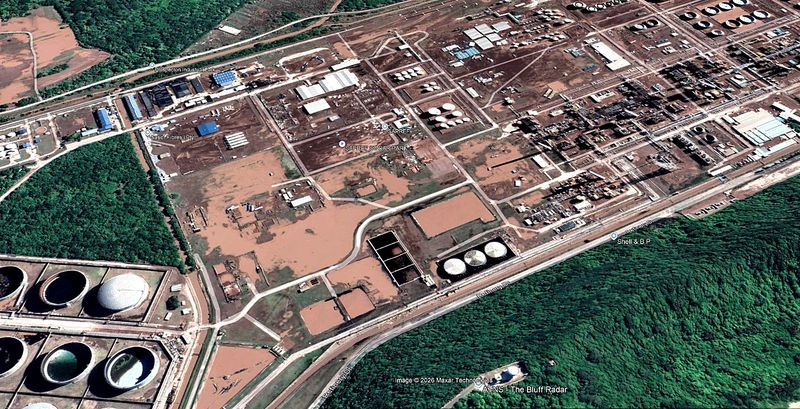
News has emerged that South Africa's largest fuel refinery will be reopened and expanded, raising concerns among local communities about the potential for a resurgence of toxic petrochemical emissions. The Sapref refinery, operated by Shell and BP since 1963, processed up to 180,000 barrels of crude oil daily until it was abandoned in April 2022 due to floodwaters and damaged fuel storage tanks.
The state-owned Central Energy Fund, with backing from Minister Gwede Mantashe, plans a R117-billion investment to revive and expand the now-called South African National Petroleum Company (SANPC) refinery.
Mantashe's renaissance vision involves recommissioning the facility in three stages, ultimately increasing its capacity from around 400,000 to 650,000 barrels per day. While the Central Energy Fund touts the investment as "commercially disciplined, technically credible, and financially sustainable," critics warn that taxpayers could be burdened with a costly white elephant, potentially becoming a stranded asset within 10 to 15 years.
Community groups in South Durban, home to several low-income neighborhoods, fear that the refinery's reopening and expansion will worsen health issues arising from chemical pollution in the area. A meeting with Central Energy Fund officials highlighted studies conducted by the University of KwaZulu-Natal and the University of Michigan in 2007, which found a higher asthma rate among children living near the Sapref and Engen refineries compared to those in northern Durban.
These studies also revealed significant exposure to benzene, a cancer-causing pollutant present in petrol, in the southern industrial zone's airborne fumes.
Bongani Mthembu, an air quality and health officer at the South Durban Community Environmental Alliance, highlighted ongoing concerns about air pollution monitoring stations' reliability and the legacy of underground fuel leaks and contamination at the old Sapref refinery. A 2001 leak released nearly a million liters of petrol beneath homes in the Bluff and Wentworth areas, forcing some evacuations.
The Department of Forestry, Fisheries and the Environment acknowledged the contamination, noting that remediation began before 2014 and is ongoing under the polluter-pays principle.
The South Durban Community Environmental Alliance demands a comprehensive, independently verified environmental and health impact assessment, including the assessment of soil and groundwater contamination, risks to residents, potential impacts on the marine environment, and longer-term human health consequences. They also insist on a site visit to verify the refinery's condition and the Central Energy Fund's responsibilities for ongoing monitoring and management of contamination under the Waste Act.
Written by urgent.news from Daily Maverick's reporting — not their text. Machine-written — may contain errors; check the original before relying on it.