Mike Rowe on America’s great tradesperson shortage: ‘I don’t care what your politics are. Math doesn’t care, either’
At Ford Pro Accelerate, Rowe sparred with Education Secretary Linda McMahon and Defense's Mike Duffy about the divide between college and the trades.
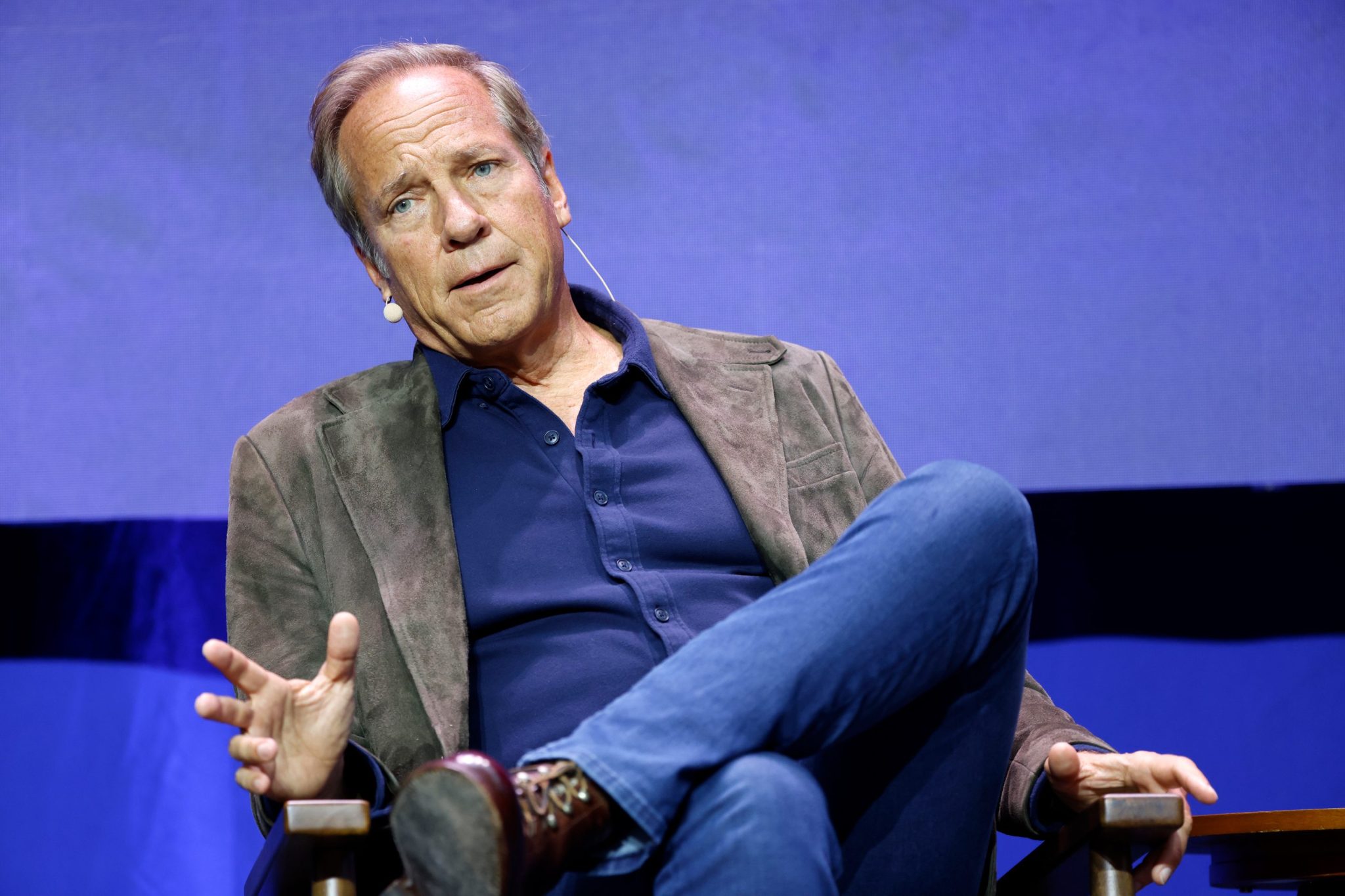
Mike Rowe, host of the television show "Dirty Jobs," offered a blunt description of America's skilled-worker shortage: for every five tradespeople who retire, only two replace them. "Five out, two in," he said during a Ford Pro Accelerate panel on workforce development. "I don’t care how you vote. Math doesn’t care either." Rowe has argued this point for years, but at Ford’s gathering, his warning about welders, electricians, and other skilled workers became the starting point for a broader discussion with Education Secretary Linda McMahon and Under Secretary for Acquisition and Sustainment, Michael Duffy.
Rowe emphasized that the shortage extends beyond just the trades. It is a "real," "wide," "getting wider," and "dangerous" problem that affects fields like manufacturing and national defense. He cited the submarine-industrial base as an example, describing a shortage of welders and electricians at a time when the United States is trying to expand production capacity.
BlueForge, which oversees 16,000 companies, estimates that 100,000 workers in critical manufacturing trades will be needed over the next decade for the next-generation submarine fleet.
Rowe suggested that the solution lies in rethinking the "blue collar" and "white collar" labels that traditionally separate intellectual and practical work. He proposed using the term "purple" to describe a workforce that blends both. He also argued that the country should not view skilled work as a fallback for those who cannot get a college education. Instead, skilled work should be seen as a legitimate career path with its own merits and potential for growth.
Under Secretary for Acquisition and Sustainment, Michael Duffy, agreed with Rowe's premise but focused on the institutional changes needed to build a larger pipeline of skilled workers. He suggested that high schools should work more closely with community colleges, technical schools, and vocational programs to allow students to graduate with both a high-school diploma and a usable credential.
McMahon urged schools to introduce hands-on learning, such as virtual welding and electronics programs, to make technical work more attractive to younger students. She emphasized that all students, regardless of their academic background, should be encouraged to pursue skilled trades as a viable career option.
Written by urgent.news from Fortune's reporting — not their text. Machine-written — may contain errors; check the original before relying on it.