How AI is creating a UK super-museum and revealing our planet's history
More than 70 million specimens from 100 UK collections will be put into an online digital museum
Researchers are harnessing artificial intelligence to construct a colossal digital museum encompassing millions of specimens from UK collections, potentially revolutionizing our comprehension of the natural world. Eventually, visitors can view an estimated 70 million animals, plants, fossils, and rocks via smartphones and computers.
Robots and AI expedite the digitization process, diminishing the time required from centuries to a mere decade. This novel digital repository will allow researchers to grasp the evolution of the UK throughout Earth's entire history and forecast forthcoming climate, food, and biodiversity alterations. Dr. Joanna Dunster, an associate director at the Arts and Humanities Research Council (funding body), expressed excitement in exploring the resource with her young son.
Currently, only a fraction of the nation's collections are searchable, primarily from prestigious institutions like the Natural History Museum and Kew. However, fresh funding will enable the inclusion of countless more specimens.
Comprehending the distributed system of scientific collections, DiSSCo UK, is crucial. Scanning the specimens is labor-intensive, requiring photography and recording details from small handwritten labels dating back centuries. What once would have taken hundreds of years manually can now be accomplished in a decade using robotic and AI technology.
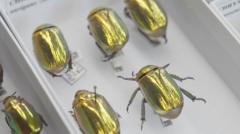
One hundred institutions, including museums, botanic gardens, universities, and more, contribute to the project. The initial phase scans beetles, butterflies, moths, flies, pressed flowers, and ferns – specimens that hold valuable records of the country's transformations. Cardiff's team will digitize half a million insect and plant specimens, while Scotland's Royal Botanic Garden Edinburgh and National Museums Scotland house 13 million specimens among 50 smaller collections.
These specimens represent landscapes from sea level to mountain tops, capturing a century of change.
Every museum specimen represents a snapshot of the past, making natural history detective work challenging yet rewarding. The new initiative will simplify piecing together these clues to construct a vivid picture of Earth's changes, from the Industrial Revolution to future climate change predictions. Natural History Museum researcher Dr. Vincent Smith emphasizes that this digital museum will supercharge research into the natural world, allowing scientists to refine models and predict the impacts of climate change and other developments on species loss.
By uniting these collections, DiSSCo UK will provide a stronger understanding of global trends, benefiting future challenges such as green technology resource preparation.
Written by urgent.news from BBC Science's reporting — not their text. Machine-written — may contain errors; check the original before relying on it.