Gulf Investors Look to Libya and Algeria
The Iran conflict is pushing GCC countries to boost energy investments across North Africa. The post Gulf Investors Look to Libya and Algeria appeared first on Global Finance Magazine .
In July of this year, Qatar's UCC Holding inked a $1 billion agreement with Libya's National Oil Corp. and the Libyan Investment Authority to boost production at the Ghadames Basin from 33,000 to 80,000 barrels daily. Earlier, Oman's OQEP signed a comparable contract to scout investment prospects in Libya, "ensuring our production won't solely depend on exports from the Strait," remarked OQEP Board Chairman Ashraf Al Mamari in July.
Libyan Prime Minister Abdul Hamid Dbeibah journeyed to the UAE and Qatar in July to foster fresh collaborations. Despite energy market turbulence domestically, Gulf nations are escalating overseas investments and expanding engagement in more hazardous locales. Libya, replete with substantial oil reserves, is an alluring prospect; however, it has been a challenging terrain for foreign investors.
Following Muammar Gaddafi's demise in 2011, Libya fractured into rival administrations and became a magnet for militias. Nonetheless, Gulf states—led by the UAE, and to a lesser extent Qatar—have cultivated ties with both Tripoli and Benghazi. Mohamed Dorda, head of business intelligence at Libya Desk, a consultancy aiding businesses venturing into Libya, stated, "Gulf states have been maneuvering this scenario for some time.
It's essentially about first establishing a foothold, and then determining where to place your feet. In Libya, they've been investing in political capital for quite some time now."
Presently, the landscape displays signs of improvement. Both parties have taken measures towards enhanced stability, such as the reunification of the central bank in 2023 and the endorsement of a joint state budget in April this year. Libyan officials are now poised to invite foreign investors back into the energy sector. In February, the nation reinitiated licensing for the first time since 2007, enticing oil giants like Italy's Eni SpA, France's TotalEnergies SE, Spain's Repsol SA, and U.S.-based Chevron Corp. This renewed interest extends beyond Libya.
Recently, the U.S. administration has ramped up engagement with North Africa, with Middle East adviser Massad Boulos touring several countries. European nations, like Turkey, along with China, are likewise striving to secure market shares. Mohamed Dorda elaborated, "North Africa is gaining significance in global trade due to its closeness to Europe and its ability to help fill supply gaps created by the wars in Ukraine and the Middle East.
Libya and Algeria are among the strongest candidates to meet global energy demands, which creates opportunities."
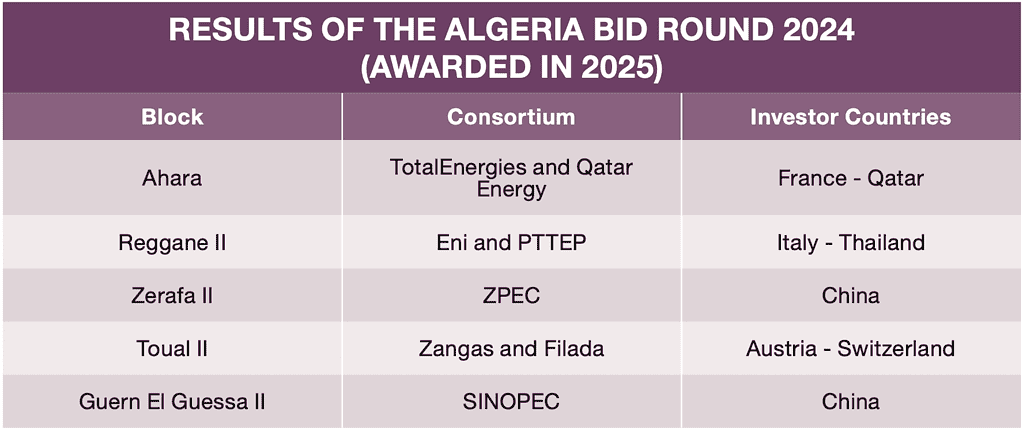
Algeria has attracted approximately $9 billion in Gulf-backed ventures over the past 18 months, spearheaded by Saudi Arabia's Midad Energy's $5.4 billion oil and gas deal in October 2025 and Qatar's $3.5 billion Baladna dairy project, now in its second phase. Algerian state-owned hydrocarbon firm Sonatrach aims to augment production and drill 1,450 wells by 2030, but it requires foreign expertise and capital to modernize infrastructure.
In April, Algiers launched a brand-new licensing round for seven oil and gas blocks; bids are being submitted, and contracts are anticipated to be finalized in January. Chloe Domat, a contributing writer based in France, penned this report for Global Finance Magazine.
Written by urgent.news from Global Finance's reporting — not their text. Machine-written — may contain errors; check the original before relying on it.