E-Auto laden: Lade-Apps für E-Autos: So urteilt Stiftung Warentest
Ladesäulen finden, Preise checken, flexibler bezahlen – Lade-Apps bieten Vorteile. Aber auch physische Karten können manchmal noch sinnvoll sein, so Stiftung Warentest im Rahmen eines App-Tests.
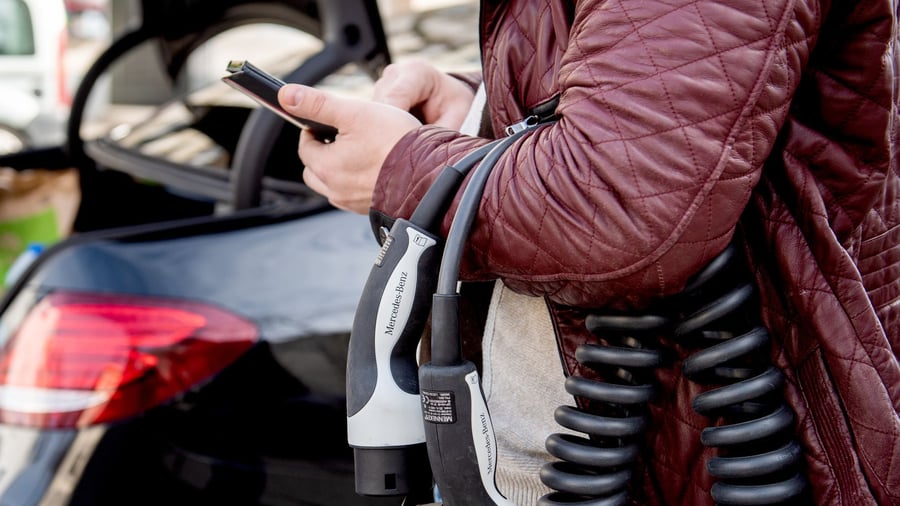
Stiftung Warentest examined 14 e-auto charging apps, including those from energy companies like EnBW and Eon, as well as services such as Digital Charging Solutions (Charge Now) and Plugsurfing, and even apps from car manufacturers like Tesla and VW (Elli). Some apps from petrol station chains like Aral and Shell were also tested.
Most of these apps support both normal and fast charging, while Ionity and Tesla's apps only offer fast charging. The tests looked at various factors, including ease of use, the ability to search for charging stations, the reliability of the information provided during charging, the history of the charging process, the privacy protection of personal data, and any defects in the terms and conditions.
Out of the 14 apps, six received a "good" rating, and eight were deemed "satisfactory." The app "EnBW Mobililty+" emerged as the clear winner, receiving a score of 1.7. Most of the tested apps performed well, with "Maingau Autostrom" (2.0), "Plugsurfing App" (2.0), "EWE Go" (2.1), "Allego App" (2.2), and "Ionity App" (2.4) also receiving "good" ratings.
However, some apps received lower scores due to issues such as the charging station not functioning even though the app indicated it was available, incorrect data about charging, inability to end the charging process as desired (requiring the car to be charged to 80% even though this was not the user's preference), and connection problems between the app and the charging station due to differing charging station numbers.
The testers emphasize that these free apps simplify payment significantly and may eventually make physical charging cards obsolete. They note that apps not only store payment data but also help users find charging stations and compare prices, as different providers can offer varying prices at the same charging station. Additionally, apps can showcase a larger network of charging stations due to roaming partnerships with other providers, potentially offering attractive prices.
The cost of charging varies depending on the tariff, with half of the apps evaluated receiving a "good" or "satisfactory" rating. The EnBW Mobililty+ app was the tests' clear winner, earning a rating of 1.7. In most test categories, it performed well or very well. Specifically, the app "tadellos" functioned perfectly during the practical test.
Among the apps rated "good" were "Maingau Autostrom" (2.0), "Plugsurfing App" (2.0), and "EWE Go" (2.1). Other apps received ratings of 2.2 and 2.4. Some apps were also included in the evaluation because their data privacy statements were found to have significant flaws, such as the charging station appearing available in the app when it was not, incorrectly reporting a charge when none was given, or failing to allow the charging process to be stopped as desired (requiring the car to be charged to 80% even though this was not the user's preference).
The absence of a connection between the app and the charging station due to differing numbers was also a common issue. Overall, the presence of e-auto charging apps is beneficial as they simplify payment processes, provide additional information in one place, and enable users to compare prices offered by different providers at the same charging station.
These apps also help users determine the optimal tariff for their driving habits, with some tariffs offering lower rates if a basic fee is included. While physical charging cards may still have advantages in certain situations, such as when an app fails to start or stop a charging process, most app providers offer charging cards for a one-time fee of up to around 10 euros, often for free.
Users can also choose to charge without a contract, a charging card, or an app altogether - what is known as ad-hoc charging. While this option may be convenient, it is almost always more expensive. Additionally, operators of newer public charging stations are legally required to offer ad-hoc charging.
Written by urgent.news from Handelsblatt's reporting — not their text. Machine-written — may contain errors; check the original before relying on it.