Curative Plea Seeks Recall Of Supreme Court’s Split Verdict On CEC Appointment Law
New Delhi, September 30, 2026: A curative petition has been filed in the Supreme Court seeking recall of its September 23 split verdict on the validity of the law governing the appointment of the Chief Election Commissioner (CEC) and Election Commissioners (ECs). The petition, filed by Jaya Thakur, raises what it describes as a “reasonable apprehension of bias and propriety” over reports that the…
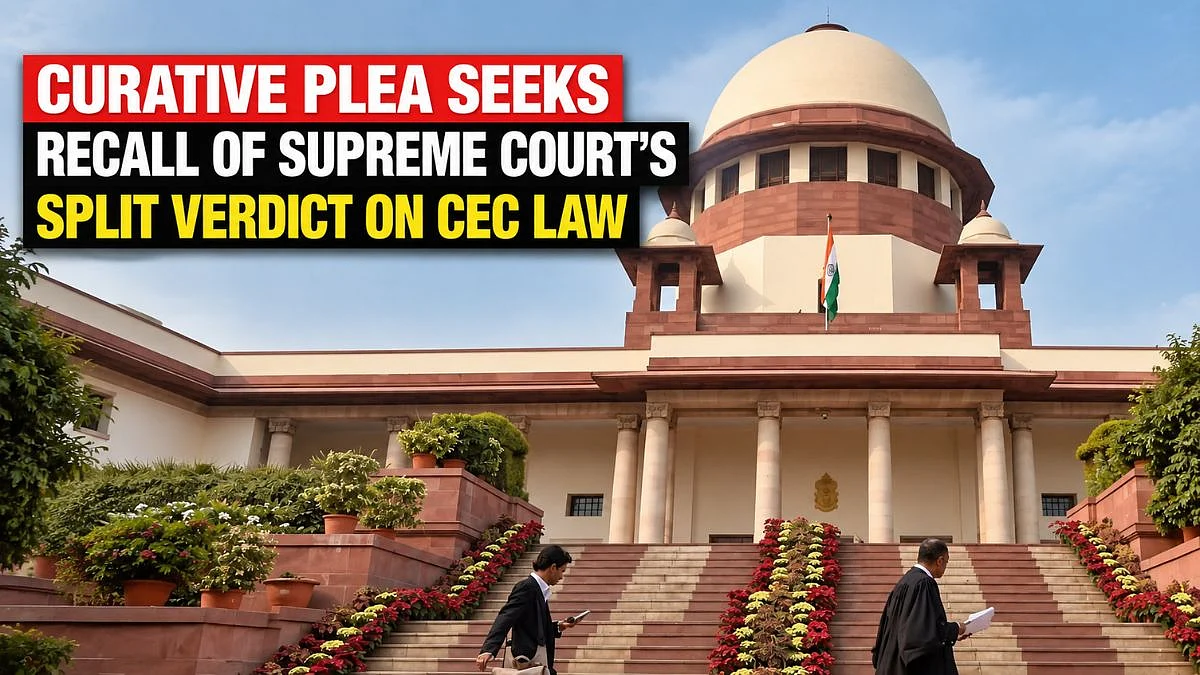
New Delhi, September 30, 2026: A curative petition has been filed in the Supreme Court, requesting the reversal of its September 23 split verdict concerning the law governing Chief Election Commissioner (CEC) and Election Commissioner (EC) appointments. The filing, initiated by Jaya Thakur, raises concerns over "reasonable apprehension of bias and propriety" following reports that Justice Satish Chandra Sharma's son, Siddharth Sharma, is now representing the Election Commission of India (ECI) before the Madhya Pradesh High Court.
This revelation emerged after Thakur learned of the connection only after the split verdict was announced. Thakur, through her advocate, Varun Thakur, submitted that the petitioner became aware of Siddharth Sharma's association with the ECI following media reports. The petition asserts that this conflict of interest poses a direct threat to the professional integrity of Siddharth Sharma in adjudicating a case challenging the election commissioner appointments.
The petitioner argues that a judge cannot effectively decide a case involving a party represented by a family member, even if the representation occurs in a different forum. The plea emphasizes that the judge's presence on the bench violates the "reasonable likelihood of bias" and "real danger test" established by the Supreme Court.
The petition seeks to bypass the standard review route, invoking the Supreme Court's inherent jurisdiction under Articles 32 and 142 of the Constitution and Rule 1 of Order 48 of the Supreme Court Rules, 2013. It cites the Rupa Ashok Hurra v. Ashok Hurra case as the basis for its curative petition request. Jaya Thakur has argued that a review petition would typically proceed before the same bench, rendering it redundant.
Under Supreme Court procedures, aggrieved parties can request a review after a judgment's finality, typically necessitating an open-court hearing by the full bench or a bench of three senior judges if the original decision-drafting judges are unavailable. The split verdict dealt with petitions challenging the constitutionality of the 2023 law, which prohibits the Chief Justice of India from participating in the selection panel for the Chief Election Commissioner and Election Commissioners.
The central issue in these petitions was their potential to raise significant constitutional concerns warranting referral to a five-judge Constitution bench. The Centre argued that these petitions raised seminal constitutional questions and should be directed to a larger bench.
Written by urgent.news from Free Press Journal's reporting — not their text. Machine-written — may contain errors; check the original before relying on it.