CHIME telescope unlocks new way to study the universe's bafflign expansion
After seven years of work, Canada's CHIME telescope has a measurement of dark energy from 2019. More detailed studies are planned to expand the research.
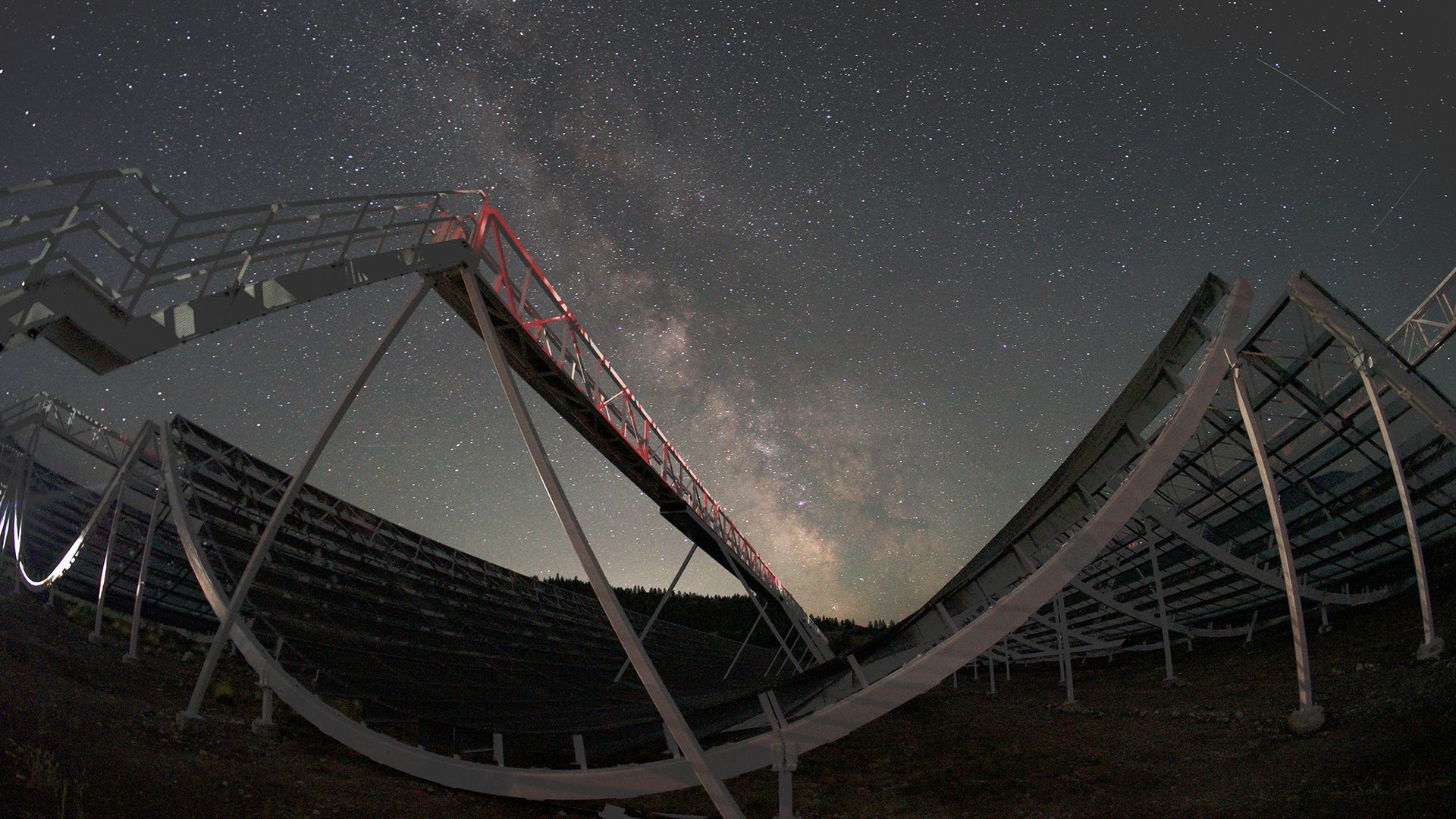
Scientists have unveiled a groundbreaking tool for exploring the universe's accelerating expansion. A Canadian telescope, the CHIME, has shown it can map the distribution of hydrogen gas across the ancient universe without relying on data from other telescopes. The telescope's findings, published on September 28 in The Astrophysical Journal, could offer a cost-effective method for studying dark energy, the mysterious force behind the universe's accelerating expansion.
Hydrogen, the most prevalent element in the cosmos, acts as a cosmic tracer, revealing the distribution of matter. The CHIME, located near Penticton, British Columbia, maps the entire northern sky daily. Prior to the new study, the telescope had to cross-verify its observations with other telescopes, a costly and time-consuming procedure.
The team chose to rely on CHIME's independent data to ensure accuracy. The study, which took nearly a decade to complete, is based on 94 nights of observations in 2019. The telescope can detect radio signals as far back as 3 billion years after the Big Bang. The findings confirm that about 2% of hydrogen is in a neutral state, a result consistent with other telescopes' measurements.
The team plans to analyze CHIME's other seven years of data to further investigate the universe's hydrogen gas.
Written by urgent.news from Live Science's reporting — not their text. Machine-written — may contain errors; check the original before relying on it.