Building AI Products For Indian Users: The Challenge Of Scale, Access, And Cost
The challenge of taking AI products to millions of Indian users is making them work across budget smartphones, multiple languages,…
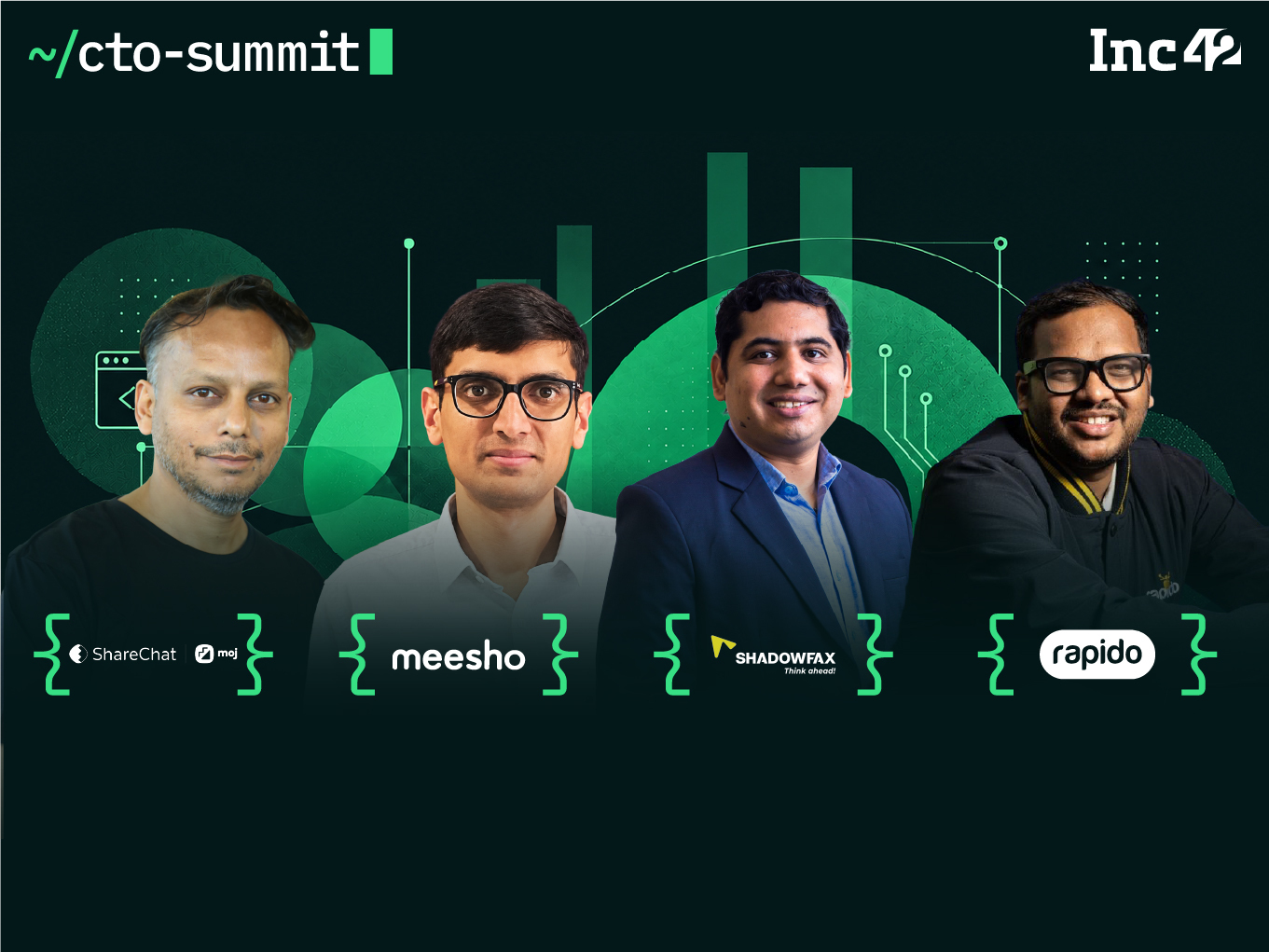
Tackling the hurdles of delivering AI products to the millions of Indian users requires making them compatible with budget smartphones, various languages, and inconsistent networks while controlling expenses. At Inc42's inaugural 'The CTO Summit 2026' in Bengaluru, leaders discussed methods to overcome these obstacles to broader usage.
Speaking on "Building AI Systems For Indian Scale," executives from ShareChat and Moj, Meesho, Rapido, and Shadowfax shared their strategies, such as voice-led shopping assistants and tools aiding delivery personnel in locating consumers. The swift evolution of AI models poses another challenge, necessitating infrastructure that enables firms to switch providers without rebuilding their applications.
Nitin Jain, CTO at ShareChat and Moj, cautioned against becoming overly dependent on a single model or strategy. "If we get married to one specific type of model or approach, that won't work," he emphasized. ShareChat prioritizes infrastructure that empowers teams to replace models, leverage contextual data, and measure performance when altering providers.
Jain also explained how India-specific constraints influenced the company's technology. Many users favor mid-range phones with limited bandwidth, while the business must accommodate multiple languages and maintain competitive performance despite lower revenue margins. These prerequisites have spurred investments in data processing and recommendation systems to serve a broad user base affordably.
Enhancing Product Discovery Accessibility Meesho tackled user requirements by creating Vaani, a voice-led shopping assistant that aids shoppers in articulating what they seek. Anand Jain, head of engineering at Meesho, stated that the feature was crafted to assist users, particularly those with minimal digital experience, in navigating product discovery.
Meesho observed a 22% rise in conversions among Vaani users compared to non-users in specific Tier III and IV groups. The emphasis on interpreting shoppers' intent also influenced Flipkart's presentation at the summit, where CTO Balaji Thiagarajan discussed how the company integrates search, conversational interactions, voice, and visual inputs to customize product discovery.
Meesho is also investigating open-weight models and testing on-device AI to manage the expense of serving a vast user base. Jain explained the team's assessment of how executing AI requests on phones impacts memory, battery life, and user experience, particularly on lower-spec devices. Controlling AI Costs Rapido's cofounder, Rishikesh SR, mentioned that the firm has developed software layers facilitating teams to collaborate with diverse models and established guidelines for their usage while granting employees access to advanced AI models.
He quantified combined model acquisition and personnel costs at less than four paise per ride, stressing the significance of accountability as usage expands. Shadowfax uses historical delivery data and AI-based address matching to rectify a long-standing logistics issue: aligning incomplete or inaccurately written addresses with precise locations.
Vaibhav Khandelwal, cofounder and CTO of Shadowfax, stated that the company leverages historical delivery data and AI-based address matching to enhance location identification. Mistyped pincodes and ambiguous addresses can delay deliveries and escalate logistics costs, he explained, attributing the effect to approximately 1% of the company's margins.
Written by urgent.news from Inc42's reporting — not their text. Machine-written — may contain errors; check the original before relying on it.