When Old Workflows Meet New Code: Preventing Temporal Replay Failures in Production
Learn how Temporal replay breaks after workflow changes and how versioning, patching, and replay testing keep long-running workflows safe.
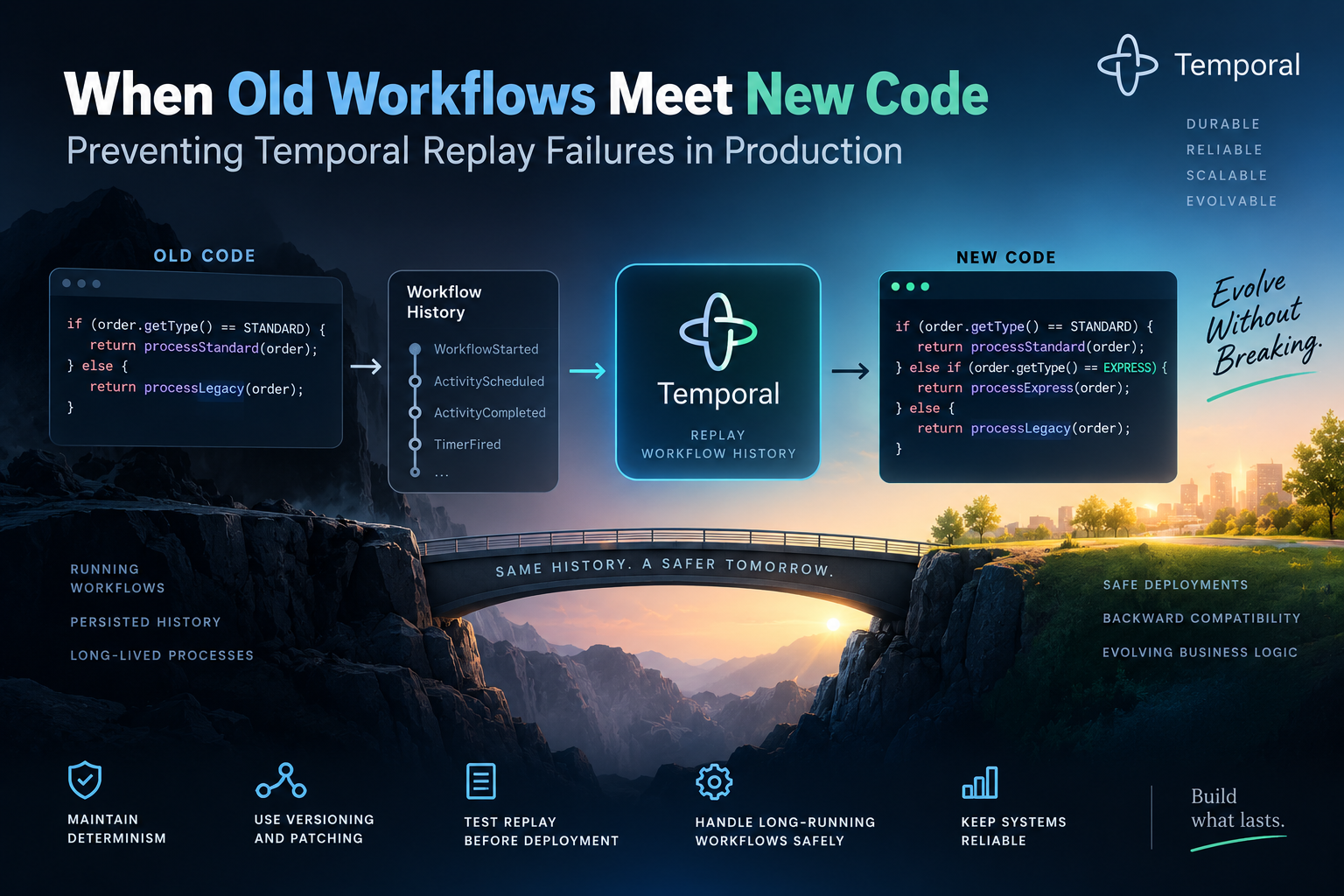
When Workflow code evolves, it can break existing operations due to temporal changes. The Temporal Service records events, and Workers replay this history when executing Workflows. If replayed code differs from the original, it can cause nondeterministic behavior. Temporal recommends treating Workflow code as a durable protocol, documenting compatible changes.
Java SDK provides getVersion to version changes alongside workflows. This marks new executions and returns a stable value for replay. Activities, timers, and timers are safe to change as long as they don't alter the Command sequence. Changing Activity or Child Workflow type can cause incompatibility. Java SDK allows pinning a Workflow version to a Worker Deployment Version, keeping old code alive while new code runs on newer versions.
This separation prevents older executions from being affected by incompatible code. However, replay testing is still crucial to ensure smooth deployment.
Written by urgent.news from HackerNoon's reporting — not their text. Machine-written — may contain errors; check the original before relying on it.