What trap? US-China relations show conflict is far from inevitable
For a decade, foreign policy circles have treated war between the United States and China as something close to destiny. The theory has a fancy, fashionable name borrowed from ancient Greece: the “Thucydides Trap” – the idea that a rising power and an established one are fated to collide, the way two articulated lorries merging into a single lane rarely ends well. The term is widely used in…
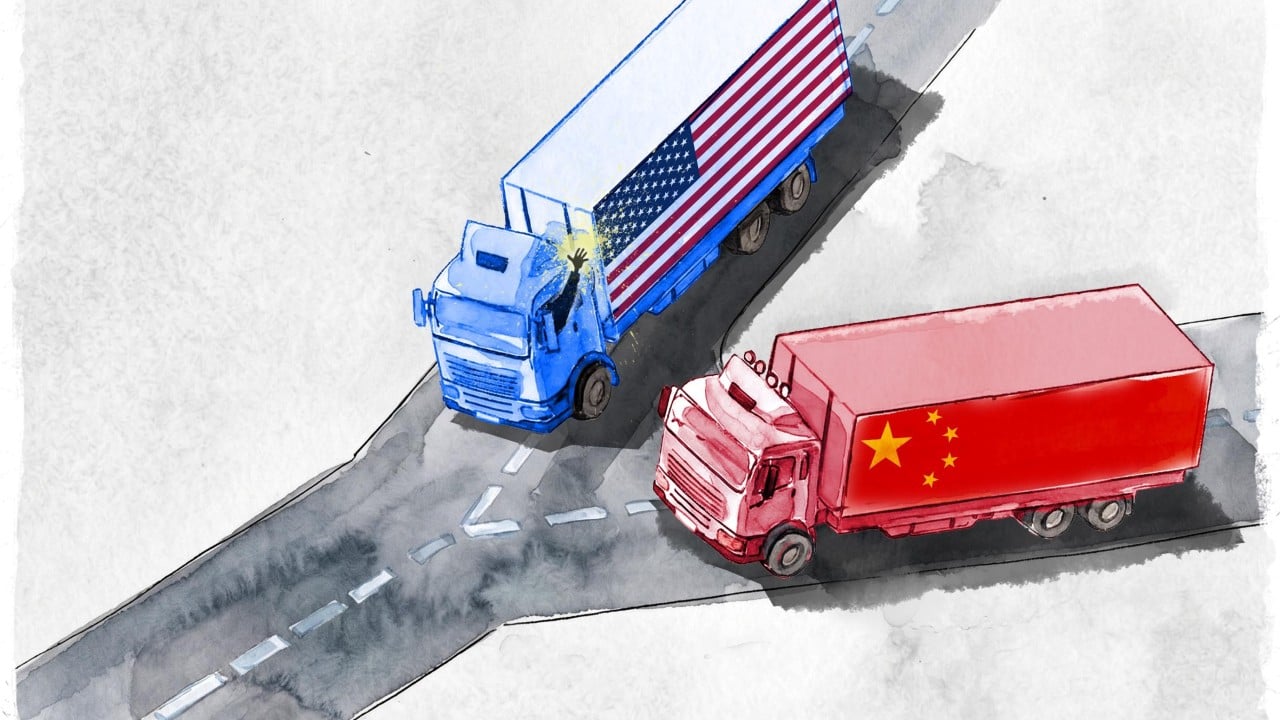
For over a decade, many in foreign policy have viewed a potential war between the United States and China as an inevitable outcome, adopting the "Thucydides Trap" theory which suggests that a rising power challenging an established one usually leads to conflict. This idea has been widely cited in analyses of US-China relations. However, a deeper examination of the governments' actions rather than just their rhetoric reveals a different narrative.
At present, the US and China stand in a delicate balance. The US economy, measured in market terms, is valued at roughly $30.6 trillion compared to China's $19.4 trillion, roughly accounting for 63% of the US economy. China has maintained the world's leading position in manufacturing value added for the past 16 years, reaching $5.2 trillion in 2025.
China's research and development spending surpassed $3.9 trillion in 2025, with notable strengths in renewable energy, artificial intelligence, electric vehicles, and robotics. Meanwhile, the US retains advantages in certain areas, such as the US dollar's status as the world's reserve currency, extensive basic scientific research, a global network of allies, and military projection capabilities.
The rivalry between the US and China does not necessarily lead to war due to several factors. First, the existing guardrails remain effective. Nuclear deterrence, complex global supply chains, and shared issues like climate change and public health present a stabilizing force. The regular summits between the leaders of both countries serve as a mechanism to prevent a minor misunderstanding from escalating into a major one.
Second, US policy towards China often appears more like a barroom argument than a well-thought-out strategy. Political polarization, congressional gridlock, and the struggle between federal and state powers make it challenging for the US to maintain a consistent approach towards China beyond a single electoral term. Lastly, the US-China relationship is only one of many global tensions.
Under President Donald Trump, the US had contentious relationships with various allies, some of which were as intense as those between the US and China. The growing influence of the Brics bloc, the deepening of the Shanghai Cooperation Organisation, and the increasing connection between the Global South provide alternative perspectives, exerting restraint on both China and the US.
While the potential for conflict remains a constant threat, particularly in the Taiwan Strait or the South China Sea, the development of rules capable of containing this competition and preventing military confrontation is crucial. The Thucydides Trap, while containing a hint of truth, does not fully capture the complexities of the current US-China relationship.
This rivalry is not a zero-sum game, and the two superpowers can coexist peacefully, shaping global stability without resorting to military action.
Written by urgent.news from Reuters Business via SCMP's reporting — not their text. Machine-written — may contain errors; check the original before relying on it.