US drivers are finally getting the adaptive headlights Europe has had for years
Rather than switching between high and low beams, ADBs can dim or shut off only the parts of the beam that would reach another driver's eyes while keeping the rest of the road illuminated. That can be especially useful on rural two-lane roads and curves, where standard low beams often... Read Entire Article
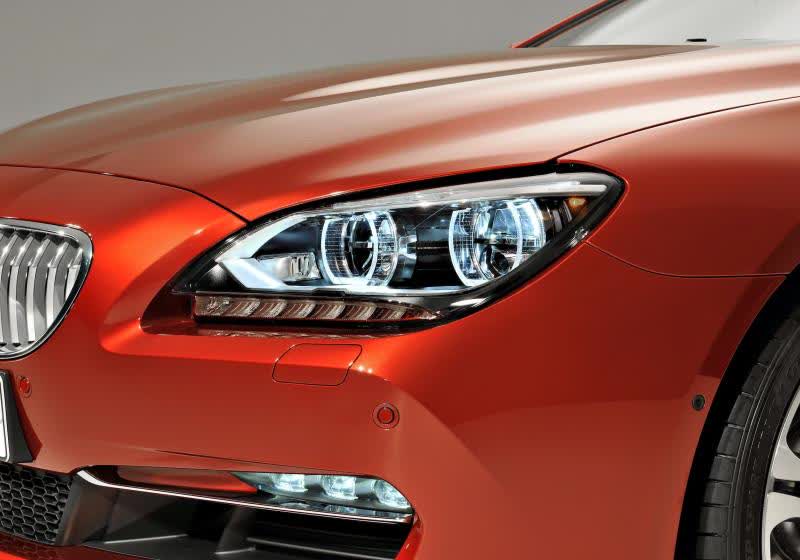
Adaptive headlights, a feature previously only available in Europe and Asia, are now beginning to make their way to the United States. Known as adaptive driving beams (ADB), these systems utilize cameras, sensors, and software to control groups of LEDs inside the headlamps, providing more light on dark roads while avoiding blinding oncoming traffic with high beams.
Unlike traditional high and low beams, ADBs can dim or completely shut off the parts of the beam that would reach another driver's eyes, keeping the rest of the road well-lit. This capability is particularly useful on rural two-lane roads and curves, where standard low beams often provide limited range.
The technology has been discussed for years, yet US regulations kept it off American roads until the National Highway Traffic Safety Administration (NHTSA) updated its lighting rules in 2022. These new standards are more stringent than those in many other markets, requiring automakers to demonstrate that their systems meet the agency's detailed performance requirements.
According to Carlos Montes, Rivian's senior manager of lighting systems, the NHTSA's requirements are much more rigorous, favoring measurable criteria over subjective results.
The primary challenge for automakers lies in the software. An ADB system must process data from cameras, steering-angle sensors, accelerometers, and, in some cases, GPS data. It needs to identify vehicles ahead and oncoming traffic, consider road shape, and determine which LED segments to dim in real time. Rivian plans to make the technology available across its lineup, including the upcoming R2 SUV, developing its lighting-control logic and ADB software in-house.
This approach allows for software updates to improve beam performance, a feature Tesla has already implemented on several models.
Other automakers, such as Audi, Volvo, and Mercedes-Benz, are also planning to bring adaptive headlights to the US market, with planned implementations as early as 2027. Some vehicles currently on the market already feature matrix-style headlights capable of controlling multiple LED segments, but federal limits prevented them from operating at full capability while the vehicle was moving.
In many cases, these vehicles mainly used the hardware for welcome and departure animations. As LED lighting, cameras, and vehicle software become more common, adaptive headlights are expected to spread to more affordable vehicles.
For drivers, the main benefit of adaptive headlights is improved visibility on dark roads without compromising the sightlines of other motorists. Although initially concentrated in more expensive vehicles, the technology is likely to become more widespread as the underlying components become more commonplace. Non-compliant headlamps can lead to penalties, including escalating fines and driver's license suspensions, as highlighted by Sean Ruston of NHTSA.
Written by urgent.news from TechSpot's reporting — not their text. Machine-written — may contain errors; check the original before relying on it.