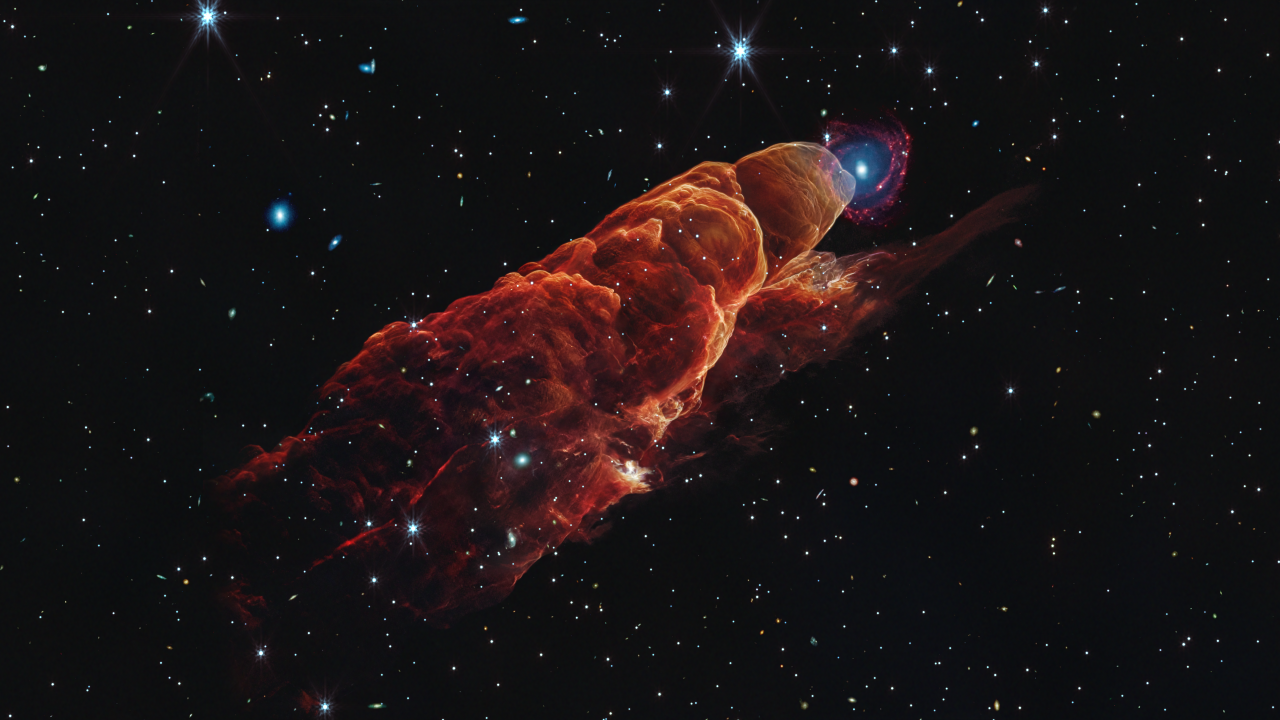
Under the Microscope: NASA-made material for moon manufacturing
Photos taken using a microscope reveal the colorful, kaleidoscope-like crystal structure of a new NASA-made material that could be used for manufacturing during future space missions. Developed at NASA's Glenn Research Center in Cleveland, the material could be created directly on the moon or Mars, allowing NASA to pack fewer supplies—saving weight and reducing launch costs.

Credit: NASA Credit: NASA Photos using a microscope have revealed the colorful, crystal-like structure of a new material created by NASA. Developed at the agency's Glenn Research Center in Cleveland, this material could be manufactured directly on the Moon or Mars, reducing the amount of supplies needed for future space missions and saving weight and launch costs.
Research chemical engineer Allison Christy and her team, including summer interns Tyler Klinchuch, Ethan Bilodeau, and Emma Levenson, mixed a biodegradable plastic with simulated Moon and Mars dust. The plastic is created by bacteria fed with crew waste or carbon dioxide, growing within their bodies. Christy explained that the plastic literally grows inside the bacteria's cells.
Adding various types and amounts of dust adjusted the material's properties, making it stronger and easier to process. This material could be used to manufacture equipment inside future Moon or Mars habitats, such as structural brackets, wrenches, or chairs. By enabling on-demand, fully recyclable fabrication with lunar or Martian surface material, this could help NASA achieve its goal of establishing a permanent Moon Base by decreasing the need for resupply and allowing crews to build and repair essential equipment on-site.
The team plans to further analyze the material's potential use in the harsh environments of the Moon or Mars, subjecting it to extreme temperatures in Glenn's Lunar Environment Structural Test Rig. Samples will also launch aboard the upcoming Materials International Space Station Experiment 23 (MISSE-23) mission, exposed to intense conditions outside the station.
The research is funded through NASA Glenn's 2026 Center Innovation Fund, managed by the agency's Research and Technology Mission Directorate.
Written by urgent.news from NASA Science's reporting — not their text. Machine-written — may contain errors; check the original before relying on it.
This story
This is one outlet's version. Read the fullest account.