Tech to Replace Animal Testing Is Almost Ready. Scientists Are Not
Seventeen years ago, cell biologist Donald Ingber and his colleagues at Harvard University’s Wyss Institute for Biologically Inspired Engineering submitted a paper to the journal Science describing their model human lung. It was smaller than a USB stick and made of a clear polymer slab containing narrow channels, which were lined with the type of cells that line a lung’s air sacs and blood…
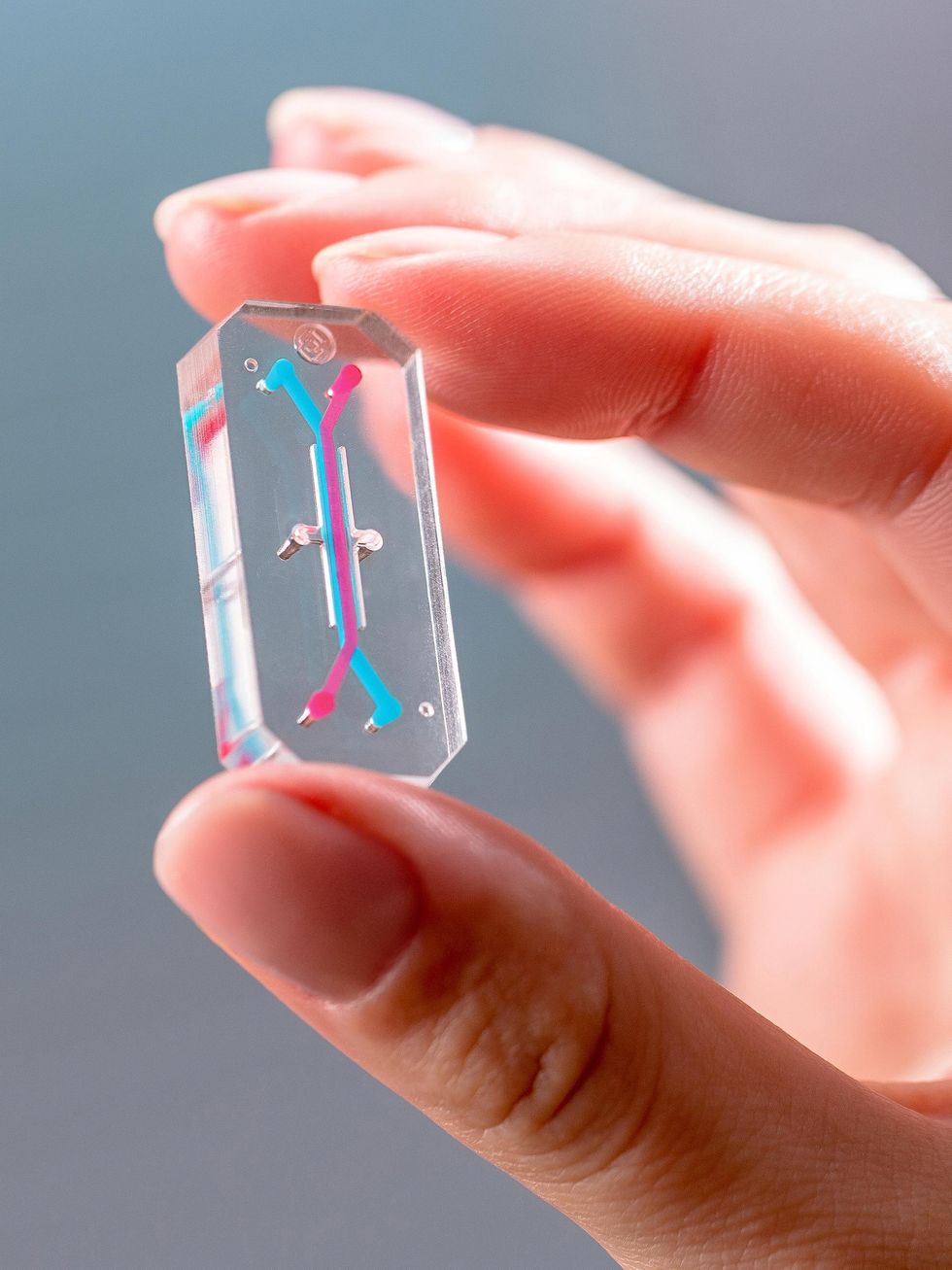
Seventeen years ago, scientists at Harvard University's Wyss Institute for Biologically Inspired Engineering unveiled the world's first lung-on-a-chip. The device was a clear polymer slab with narrow channels lined with human cells, mimicking the structure and function of a real lung. This innovation marked a significant departure from traditional lab models, which often relied on static cultures that couldn't replicate crucial lung movements.
When exposed to inflammatory proteins and bacteria, the artificial lung behaved similarly to a living lung. Furthermore, tests with silica nanoparticles used to simulate the effects of ultrafine particulates revealed that movement in the artificial lung influenced how tissues absorbed them. Donald Ingber, the lead scientist behind the lung-on-a-chip, aimed to create a tool that could test drugs and chemicals, offering an alternative to animal testing.
However, when the team submitted a paper detailing their work to the journal Science, it was initially rejected. The editors requested that the team validate their findings by conducting tests on mice, a suggestion Ingber deemed unnecessary due to the newness of their approach. After running the suggested experiments and resubmitting the study, their work was finally published a year later and has since been cited nearly 5,400 times.
This initial setback highlights the deep-rooted reliance on animal models in biomedical research. Recently, Ilka Maschmeyer, a researcher at the German biotech company TissUse, shared an example of how the landscape has changed. A pharmaceutical company approached TissUse after being denied permission by the U.S. Food and Drug Administration (FDA) to conduct a clinical trial based on animal data.
The FDA requested data from organ-on-a-chip systems, signaling a growing acceptance of these alternative methods. Despite the emergence of numerous alternatives to animal testing, collectively known as NAMs (new approach methodologies), their widespread adoption faces several challenges. Validating these systems through standardization and head-to-head comparisons with animal experiments is a significant undertaking.
Moreover, simply surpassing animal models in accuracy is not enough; policy changes, training, and cultural shifts are also necessary for successful implementation. Experts like Thomas Hartung, a toxicologist and director of the Center for Alternatives to Animal Testing at Johns Hopkins University, emphasize that the transition away from animal testing is more about managing change than merely technological advancements.
Written by urgent.news from IEEE Spectrum's reporting — not their text. Machine-written — may contain errors; check the original before relying on it.