Start-ups: Zehn Einhörner 2026 – Deutschlands neue Wachstumshoffnung
Isar Aerospace, Helsing und Neura Robotics stehen für eine neue Generation deutscher Tech-Firmen. Eine Studie zeigt, was sich ändern muss, damit nicht nur einzelne Start-ups glänzen.
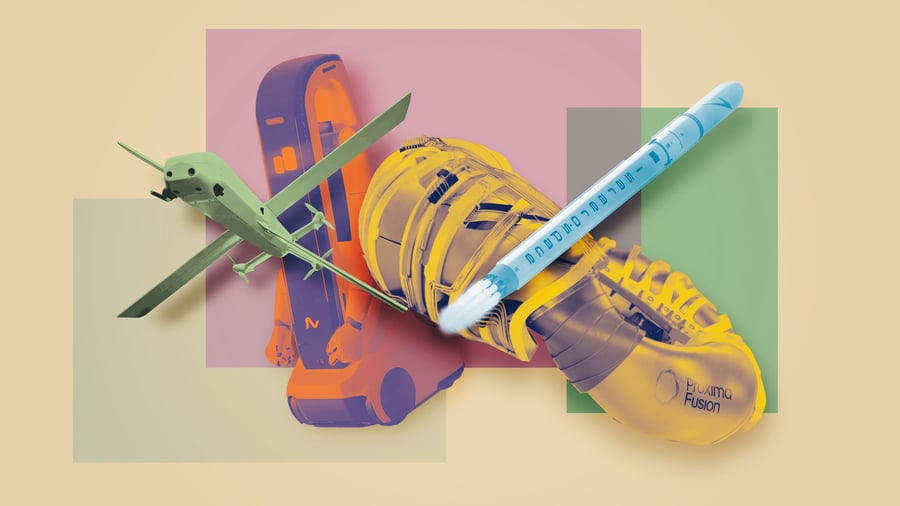
Germany's start-up sector is increasingly viewed as the country's hope for economic growth. Notable growth companies such as the AI defense firm Helsing, robot lab Neura Robotics and fusion startup Proxima Fusion contribute to optimism about the future of German tech leaders beyond Siemens and SAP. However, the momentum must continue to be built upon, as German startups still face challenges.
According to the unpublished market data from the "Deutsche Start-up-Monitor" (DSM), which is exclusively available to the Handelsblatt, there are several areas in which German startups need improvement. The market research organization surveyed around 1,800 startups each year to gauge their economic situation. Currently, the sector is solid, aligning with Germany's economic upswing.
Nonetheless, better financing conditions are needed for all startups, not just those in the AI and defense sectors that currently excel. The absence of long-term substance is also due to the decline in collaborations with established corporations and mid-sized enterprises. This development is encouraging, as ten new Einhörner – companies valued at over $1 billion with potential for significant growth and value creation – have emerged so far this year.
The 2026 Einhörners include software companies Osapiens and Camunda, AI firm Dash0, car subscription startup Finn, fintech Moss, defense company Stark Defence, fusion company Proxima Fusion and Focused Energy, Neura Robotics and battery storage provider Cmblu. In the previous year, five new Einhörner were established. Meanwhile, over €8 billion was invested in startups between January and September, surpassing the entire amount invested in the previous year.
With eight billion euros invested from January to September, it marks a significant increase from the previous year. The number of startups established between January and June this year reached a record 3,053, a 52% increase from the second half of 2025 and more than the entire year of 2024. Furthermore, founders are increasingly receiving support from their universities, with nearly 70% of respondents stating that their universities played a crucial role in their startup's development.
The focus on spin-outs from universities is also gaining traction, thanks to the ten startup factories established last year, inspired by the Gründerschmiede at the Technical University of Munich (TUM). This positive trend is reflected in the general business climate, which improved to 33.2 points this year, up from 31.7 points last year.
However, the value still does not reach the level before and during the pandemic. Start-up business association chief Verena Pausder, a fellow entrepreneur, speaks of an "unbelievable potential" in Germany due to recent events, such as the successful rocket launch by Isar Aerospace. Nevertheless, she calls for a willingness to pave the way for startups and place entrepreneurship at the center of political agendas.
As a positive example, she cites the WIN initiative, which aims to improve the fiscal, legal and financial conditions for young companies. In the coming weeks, the second edition of the WIN initiative is set to launch, doubling the funding to €25 billion. New funding sources, including pension funds, foundations and insurance companies, are expected to contribute capital to the initiative for the first time.
Despite the negative trend in collaborations, established corporations and mid-sized enterprises still have a role to play. Supply chain relationships between these firms and startups, pilot projects, strategic partnerships and equity investments are crucial for the development of startups. However, these collaborations have reached their lowest point since 2020.
According to the DSM, only 54.1% of startups collaborated with a corporation or mid-sized enterprise this year, down from 56% the previous year. The peak of around 72% reached in 2020 is now far behind. Eric Weber, CEO of the Leipzig start-up factory Spinlab, explains that when corporations and mid-sized enterprises implement cost-cutting measures and focus on their core business, they often discard external innovation activities.
This leaves many startups without the initial traction needed to convince investors. Companies, in turn, lose out on external innovation impulses. Despite the negative trend in collaborations, there are still examples of successful partnerships. In the defense sector, most established corporations like Rheinmetall or Hensoldt work closely with startups and continuously expand these projects. Similar partnerships exist in other industries.
Written by urgent.news from Handelsblatt's reporting — not their text. Machine-written — may contain errors; check the original before relying on it.
This story
This is one outlet's version. Read the fullest account.
- Start-ups: Ten unicorns by 2026 – Germany's new growth hopes handelsblatt.com